Hannah Arendt, 50 Years On: Why Her Warnings Matter in the Age of AI
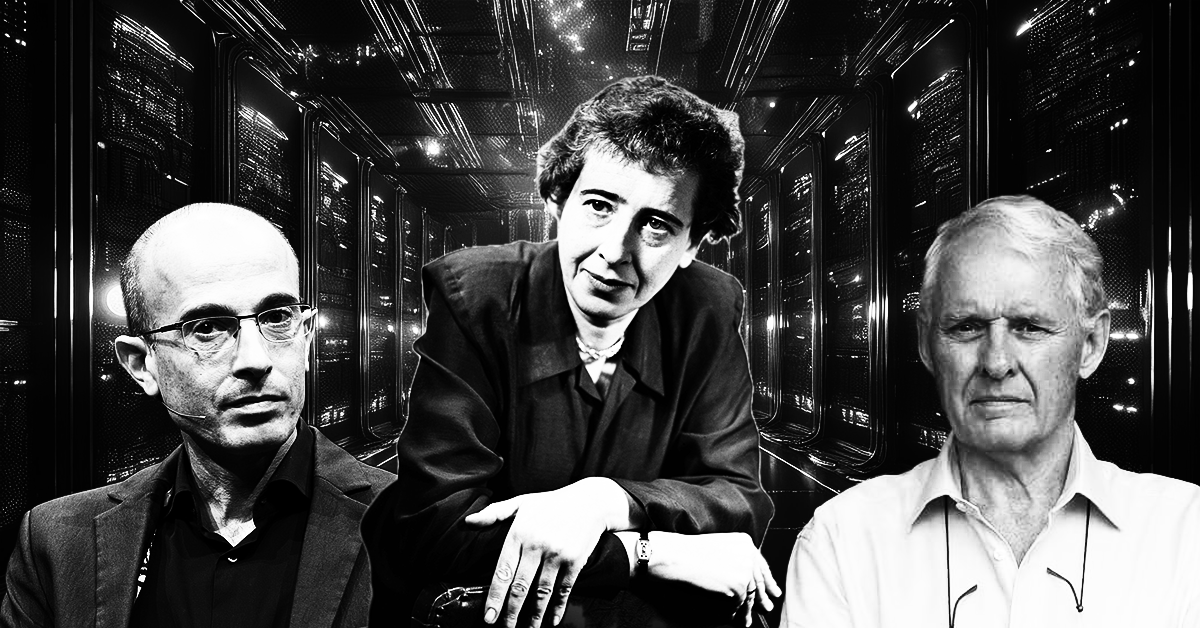
This year marks 50 years since the death of Hannah Arendt (1906–1975), the German-Jewish thinker who gave us some of the most haunting insights into the dangers of modernity. Best known for coining the phrase “the banality of evil” in her reporting on the trial of Nazi bureaucrat Adolf Eichmann, Arendt spent her career asking how ordinary people, in times of great technological and political change, can lose sight of responsibility and allow systems to act in their place.
In her book The Human Condition (1958), Arendt warned that technological progress, divorced from judgment and moral responsibility, risks hollowing out the very qualities that make us human. She worried that people, overwhelmed by the scale of modern systems, would surrender decision-making to bureaucracies and machines — not out of malice, but out of thoughtlessness.
Half a century later, her insights could not feel more relevant.
The Global Call for Red Lines
Last month at the United Nations, more than 200 leaders — including 10 Nobel Prize winners, AI pioneers Geoffrey Hinton and Yoshua Bengio, and cultural figures like Yuval Noah Harari and Stephen Fry — released the Global Call for AI Red Lines. Their urgent message: AI’s “current trajectory presents unprecedented dangers,” and governments must agree on binding limits by 2026.
The proposed red lines include bans on lethal autonomous weapons, AI systems that can self-replicate, and any use of AI in nuclear warfare. Harari captured the gravity of the moment, warning that:
AI is an unprecedented threat to humanity because it is the first technology in history that can make decisions and create new ideas by itself.
This is precisely the kind of warning Arendt anticipated: the fear that human beings, dazzled by technical power, might surrender their responsibility to machines and systems that cannot feel, judge, or care.
Beyond Regulation
Of course, international agreements matter. History shows we can draw red lines: biological weapons have been outlawed, and global cooperation restored the ozone layer. But Arendt would remind us that treaties alone cannot save us if people themselves abdicate responsibility.
This is why voices from across disciplines are weighing in. Philosopher Nick Bostrom warns that human oversight is the weak link in AI safety. Tristan Harris (from the Center for Humane Technology) cautions that algorithms are already warping human attention. Shoshana Zuboff describes how digital capitalism manipulates behaviour at scale. Elon Musk calls AI “more dangerous than nuclear weapons.” And biologist Jeremy Griffith of the World Transformation Movement argues that technology will always mirror our unresolved psychological conflicts — for better or worse. As Harari noted,
The rise of AI poses an existential danger to humankind, not because of the malevolence of computers, but because of our own shortcomings.
What unites all these voices is recognition that the real safeguard is not technical control but human maturity: the willingness to think, judge, and take responsibility rather than surrendering to systems.
Why Arendt Still Matters
Arendt, a Jewish refugee who fled Nazi Germany, understood better than most how fragile human freedom can be when people stop thinking for themselves. Her reflections on responsibility, judgment and the dangers of thoughtlessness resonate powerfully in today’s AI debates.
Fifty years on, her warning still stands: progress without responsibility risks hollowing out our humanity. The current call for AI red lines is one example of how leaders are beginning to grapple with these dangers. But in the end, as Arendt insisted, safeguarding humanity will never be about machines. It will always be about us.