
Hanukkah Under Fire: the Test for Free Societies
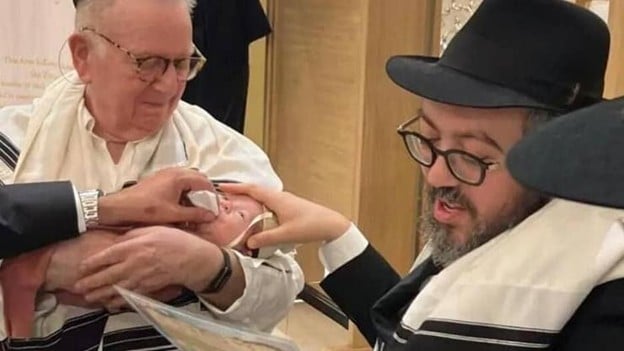
A Holocaust survivor shielding his wife during a Hanukkah attack exposes how the world’s oldest hatred adapts to modern democracies, and what Jewish continuity and civic responsibility now demand.
He was a Holocaust survivor.
She was his wife.
In a moment that should never exist in a modern democracy, he did what Jews have been forced to do across too many centuries. He shielded the person he loved with his own body.
That image should stop us. Not only as Jews, but as citizens of free societies.
Because nothing about that moment belongs to the past. It has happened now, in the present.
___________________________________________________________________________
“The oldest hatred in the world announces itself in new language, but it advances through permission.”
___________________________________________________________________________
A public Hanukkah celebration near the beach in Sydney was exactly what it should have been: visible Jewish life. Families gathered. Children came with their parents. Candles were lit in public, as they have been for generations. In contemporary culture, antisemitism rarely announces itself as hatred. It arrives clothed in the language of morality and politics, of context and complexity. It speaks of power and resistance, of selectively told histories and endlessly explained grievances. It reframes Jewish visibility as provocation and Jewish continuity as something to be debated. This language does not yet shout. It persuades. It delays It hollows out the very values democratic societies claim to defend.
Then one day it no longer arrives as language at all.
It arrives with fire. Then with bullets.
The oldest hatred in the world announces itself in new language, but it advances through permission. Permission granted through explanation. Through exhaustion. Through institutions hesitating to draw clear lines. Through people insisting that this hatred is different, contextual, complicated, political. It gains legitimacy while moral clarity is delayed and responsibility is deferred. When violence finally comes, it is treated as tragic and inevitable, severed from the words that made room for it. Timed not only to kill, but to humiliate, to sabotage a holy day, to turn public gathering into fear.
This is why what happened in Australia matters far beyond Australia: it happened in a democracy, where violence is meant to be prevented, and incitement is meant to be confronted, not explained away.
When Radical Ideology Learns Democracy’s Language
The greatest danger of radical ideology is not only that it hates. It is that it learns to use the freedoms of democratic societies against the very people those freedoms exist to protect. It studies open systems. It recruits in plain sight. It hides behind free speech while practicing dehumanization. It normalizes intimidation as expression. Then it crosses the final line into violence while everyone debates terminology.
That is why the identity of a shooter is not the center of this story.
This is not about Islam; it is not about any faith.
Faith is not the issue. Radicalization is.
The worldview that decides a specific group of people must be erased from public life, silenced, punished for existing. The ideology is what spreads. The ideology is what recruits. The ideology is what returns, again and again, wearing new slogans, always carrying the same intent. It is absolutely destructive– not just to Jews, but to entire societies. It is destructive not only to Jews, but to the foundations of democratic society itself.
__________________________________________________________
“Antisemitism is older than every argument now used to excuse it. “
__________________________________________________________
Antisemitism did not begin with borders, wars, or modern politics. It did not begin on October 7. It predates every argument now used to rationalize it.
Israel is one Jewish answer to the threat of recurring hatred against our people: a return to self-determination in our ancestral homeland, and the capacity to defend ourselves rather than rely on the tolerance of others. It is the right to exist, to defend oneself, and to exercise self-determination not as a concession, but as a fact.
And yet, even with Israel, Jews live in the diaspora. Jews worship publicly. Jews raise children. Jews build schools, community centers, and holiday gatherings in the open, enjoying the promise of pluralistic societies committed to safety and equality.
When radicals target Jews, they are not only attacking one minority. They are attacking the civic contract itself, the idea that one can live visibly, faithfully, and safely as who they are.
Jewish communities often serve as an early warning, not because they are uniquely fragile, but because antisemitism is historically the first hatred societies learn to tolerate. When it is normalized against Jews, it rarely stops there.
The Heroes of This Moment
That is why the heroes of this moment matter so deeply.
Because in that same darkness, another human being ran toward the violence to do good. A bystander, a citizen, disarmed a shooter. He did not ask who was Jewish or Muslim or otherwise. He did not ask who deserved protection. He acted on a most basic democratic instinct: that life is sacred, that courage is a responsibility, and that evil does not get the final move.
This is the society that must prevail.
One of those we lost was Rabbi Eliyahu Schlinger, a Chabad emissary who had served the Jewish community of Sydney for nearly two decades. He was not a symbol. He was a builder. He organized public Jewish life openly, proudly, and without apology, so people in his city could find meaning, community, and belonging. He believed that Judaism must be lived visibly, that fear cannot dictate presence, and that Jewish continuity depends on showing up, again and again, in the public square.
Only weeks before his murder, Rabbi Schlinger had written to Australia’s prime minister a warning that now reads with tragic clarity, urging him not to betray the Jewish people, not to confuse political convenience with moral responsibility. He understood something essential: that darkness does not begin with violence, but with hesitation, when leaders fail to draw lines against incitement, excuse radical hate, or trade moral clarity for convenience. Rabbi Schlinger’s legacy is not that he was killed lighting Hanukkah candles. It is that he lived teaching others to do so without fear. That legacy belongs not only to Chabad, but to the Jewish people, and to every free society that claims to stand for life, freedom, decency, and democracy.
________________________________________________________________________
“Hanukkah is about continuity, the deliberate transmission of memory and responsibility across generations.”
________________________________________________________________________
Hanukkah, Continuity, and the Refusal to Disappear
Hanukkah is often described as bringing light into darkness. But its deeper demand is clarity. The candles are not meant merely to beautify the moment. They are meant to force recognition, to remind each generation who we are, what our values are, what has been tried against us before, and what is required to endure. Light, in this sense, is not comfort. It is responsibility and opportunity.
That is why Hanukkah has always unsettled those who hate Jews. It speaks across centuries. It reminds every generation of antisemites that Jews have been targeted before, that violence has been tried before, that erasure has failed before. The methods change. The inclination toward hatred does not. And the Jewish response, memory, continuity, defiance, remains.
The candles do not erase darkness. They testify against it. They say, we remember, we persist, and we are still here. That message is not only Jewish. It is a warning to every free society that believes hatred can be tolerated until it turns violent, and then somehow managed. There comes a point when it actually can’t be managed; when real people get murdered; when the tolerance of intolerance demands a price in blood.
A Test for Free Societies
This is an existential struggle over whether democracies will defend the values that made them free. Darkness wins when decent people retreat. Darkness wins when institutions avoid moral clarity in the name of balance or fear of retribution. Darkness wins when radicals set the boundaries of what can be said, taught, and enforced.
Democracy endures only when it is exercised with honesty, clarity, and resolve
It requires education that inoculates young people against propaganda, teaching how scapegoating works, how conspiracy theories recruit, and how dehumanization becomes violence.
It requires transparency, universities, unions, and public institutions enforcing clear standards consistently, not selectively, not quietly, and not only when cameras are present. It requires having strong positive values so that every passerby with an agenda can’t simply subvert the crowd for their own pursuits.
It requires early intervention, treating threats, vandalism, arson, and intimidation as part of an escalation pattern, not as isolated incidents.
It requires civic coalition, Jewish leaders, Muslim leaders, Christian leaders, secular leaders, and others naming radicalism together, separating it from faith, refusing collective blame. It is no coincidence that the bystander who disarmed one of the attackers was Muslim.
And it requires refusing the central goal of antisemitic terror, to make Jews disappear from public life– the first minority, easily targeted, before others, because doing so can normalize the process while others sit quietly hoping to avoid attention.
When Jewish life must be practiced under guard, something essential in a democracy has already begun to erode.
This is not a Jewish moment. It is a test for free societies.
Will we allow ourselves to be countries where Holocaust survivors must once again shield their loved ones from radicals enacting bigotry through violence, or will we make ourselves countries where courage, law, education, and moral clarity stop radicalism before it reaches blood?
Hanukkah does not ask us to feel better. It asks us to remember clearly, and to act while there is still time.