Hard Not To Lose Faith
Although it was a good week in Merhavim, I would like to begin this post with an account of the events that took place after I returned home.
Following a very difficult year marked by Jewish pogroms in the West Bank, humanitarian initiatives have been launched. Every week, people my age (in their 70s) travel to those stricken areas to protect Palestinians with their own bodies from settler attacks. These settlers are, of course, not representative of the majority of the residents of Judea and Samaria, but they are violent enough to endanger the lives of their Palestinian neighbors.
So yesterday, Friday, peaceful activist groups organized a day of solidarity in the Occupied Territories, standing together with those who are under attack. I signed up to join a group traveling to the South Hebron Hills. At 8:30, we boarded a bus to this impoverished area, where Palestinian shepherds are being cruelly expelled and denied access to water sources and food for their herds. However, we only made it as far as the checkpoint on Highway 3755, the Tunnels Road. We were stopped for no apparent reason: most of us elderly Israelis, all of us law-abiding citizens, and were sent back. We never made it to the Occupied Territories.
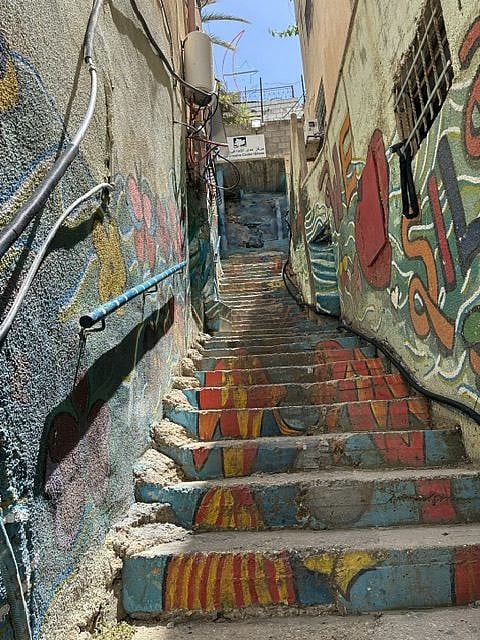
Instead, we drove to East Jerusalem, to the Silwan neighborhood, where disputes over the original ownership of land and homes in this overcrowded area have caused hundreds of Palestinians, many of whom have lived there for more than 70 years, to lose their homes. It was heartbreaking to hear firsthand testimonies and to witness the destruction of the neighborhood. The new owners are similar settlers to those who terrorize Palestinians in the West Bank. We left Silwan and returned home distraught and powerless, confronting the cruelty and arbitrary use of the justice system, devoid of compassion or any understanding of context.
The earlier part of the week, however, was very interesting, as for the first time I had the opportunity to visit the rehabilitation village of Adi Negev where many of my friends from the Service Year volunteer. It is an oasis in the desert, where disabled individuals, children and adults alike, live in beautiful and thoughtfully designed surroundings.
Visiting the village together with my friends from the Service Year who showed me around, and pointed out their contributions and responsibilities, gave me a renewed sense of purpose and meaning regarding our year of service.