Harmonious Heritage: Rabbi Joseph Dweck’s Vision and the Echo of the Abraham Accords
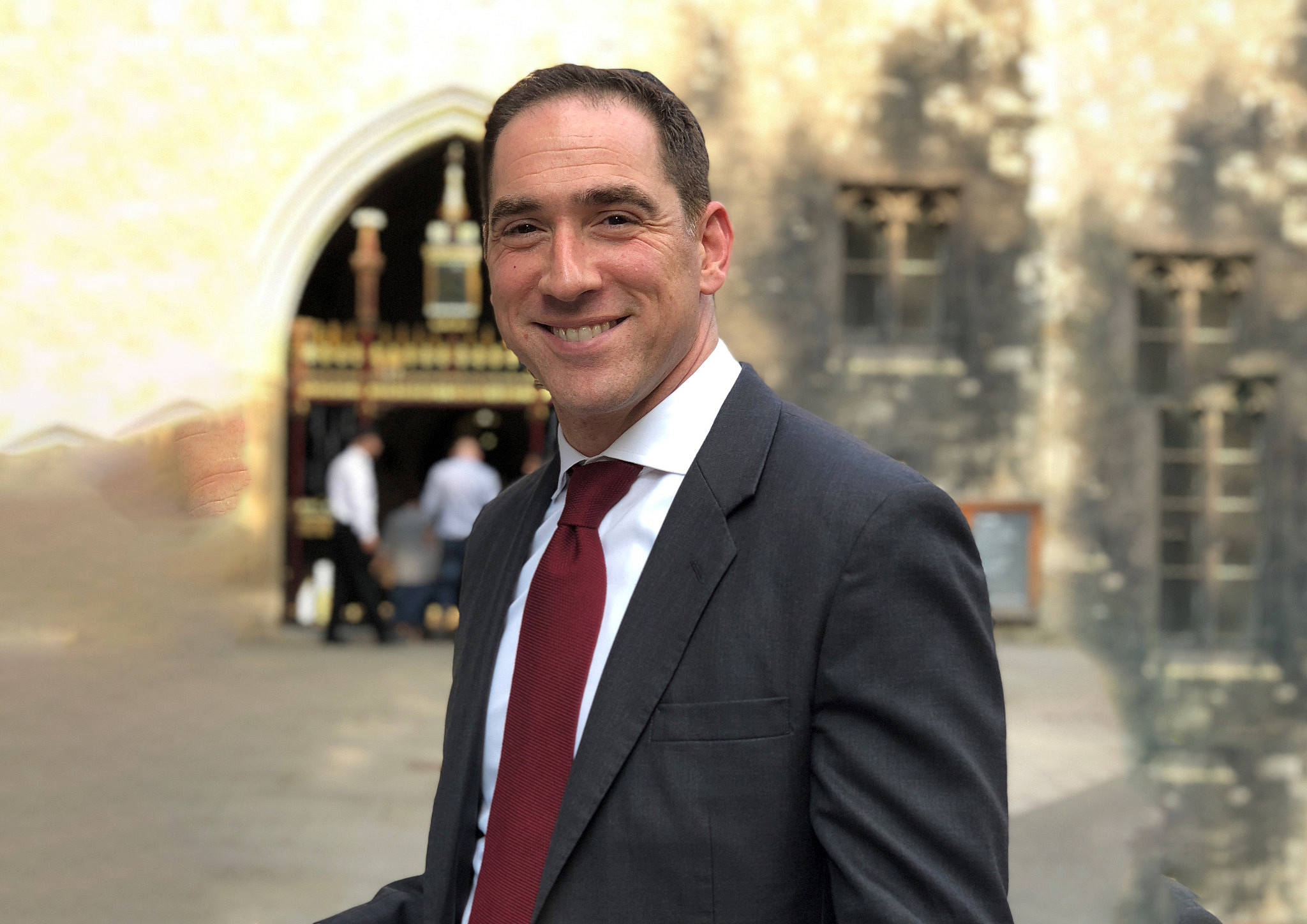
LONDON, UNITED KINGDOM – With a steadfast vision of mastering and imparting the wisdom of Torah, Jewish law, and Jewish philosophy, Rabbi Joseph Dweck embarked on his path toward rabbinical ordination. Over the past twenty-five years, he has become a prominent leader. He has been the Senior Rabbi of the S&P Sephardi Community for 12 years, before that he was a rabbi in Brooklyn, NY. I had the privilege of meeting Rabbi Dweck at his warm and welcoming home. We explored his career and the profound role of community in safeguarding and sharing a heritage that not only shapes world history but also enriches the social sciences, serving as a crucial element of public health.
In our conversation, Rabbi Dweck’s insights echoed the transformative spirit of the Abraham Accords. These initiatives serve as pivotal landmarks in contemporary diplomacy, demonstrating the power of bold steps in fostering peace and cooperation. Rabbi Dweck’s contributions to his community resonate with the essence of such historic agreements, as both endeavors strive to create a harmonious and collaborative future.
When and how did you decide to become a rabbi? What message did you wish to convey to Jews around the world and the international community?
To be fair, I must say that I never initially set out to become a community rabbi or to lead a community. I embarked on this path because I was genuinely interested in studying Torah, Jewish law, and Jewish thought. I didn’t want to rely on someone else to tell me what it was; I wanted to study it myself from an early age. This journey led to my Semikha, a rabbinic ordination, which brought me to Brooklyn, New York. While there, I was asked to fill in as a ḥazzān, or cantor, for a new Syrian Sephardi synagogue in Brooklyn. Shortly afterward, by a twist of fate, the rabbi of that community left, and they asked me to replace him until they found a new one. Thus, I ended up serving that synagogue for fifteen years. I certainly had a message but it is true that my primary goal was to teach. Every endeavor I undertake centers around teaching in some way.
Over the last twenty-five years, I have met thousands of Jews of all ages who have received formal or informal education. For me, it’s all about education. I believe that for the Jewish people, one of the most important things is education and the transmission of deep and rich wisdom from one generation to the next. This is a legacy – a genuine inheritance for all Jewish people.
You hold a Master of Arts Degree in Jewish Education. What seeds should be planted in early childhood education to raise educated, respectful, and intelligent Jewish generations in England?
I believe that traditional methods often hold great value, especially in education. In terms of Jewish education, one of the first steps should be teaching Hebrew to Jewish children. It is the inherent right of a Jewish child to know Hebrew and to understand the Torah, as neglecting these could lead to a significant loss. This emphasis is not solely for religious reasons but also for national reasons; we are a nation before we are a religion. The Bible, or Torah, is the birthright of every Jewish person. It is one of the most, if not the most, influential book in the world. It has deeply influenced Western thought and morality, as well as the world’s most prominent religions Christianity and Islam – making it the “mother religion.” All this influence stems from a small book that belonged to a small tribe in the middle of the desert that the world was never expected to hear about, yet it did.
For me, it is the birthright of every Jewish child to learn the Torah, and we are the custodians of that right. We must provide them with this knowledge, regardless of how they choose to use it, as it inherently belongs to them. Therefore, the two fundamental things we need to offer our children are Hebrew education and Torah teachings.
Opened in 1701, the S&P Sephardi Community Synagogue of Bevis Marks serves as a beacon for the Jewish community in England. In your opinion, what was the driving force that allowed this synagogue to thrive for over three centuries?
The S&P Sephardic community, originally founded as the Congregation of Spanish and Portuguese Jews of London, was established in 1657 following the famous petition to Cromwell in 1656. In 1701, the initial synagogue was replaced by the nearby Bevis Marks Synagogue. This community is truly remarkable, as it has remained uninterrupted for almost four hundred years, which is extremely rare in the Jewish world. Despite the historical events of the Holocaust, this community persisted continuously; it was not as deeply affected as the Ashkenazi community. Of course, throughout history, there were some waves or shocks, but not earth-shaking events, allowing the community to maintain its consistent existence. My community continued to develop alongside the development of the West, moving increasingly towards individuality and individualized lifestyles.
There is strong diversity in the S&P Sephardi community. For example, when I give a Shabbat sermon, I have to consider that there will be a various professionals, intellectuals, and people from all sectors of society for whom I must make the sermon meaningful. Here, I want to acknowledge that this is a wonderful challenge, and I enjoy it. I am grateful to be the senior rabbi of this community, which is quite diverse and has a tradition of strong individuality. To keep this community together, I think it’s important to focus on programming, respecting individuals, and developing personal relationships. Personal relationships are vitally important in any community, but especially in a Jewish community. When people feel like they belong, are seen, feel welcome, and know there is a place for them, it goes a long way in keeping the community alive.
Let’s discuss the Sephardic communities in London and New York. What are the differences and similarities?
The two communities are strikingly different, although the prayers, wording, and pronunciation are essentially the same. That’s where the similarities end. There is a significant difference between the Western Sephardic community in London and the Eastern (Syrian) Sephardic community in New York because they belong to two different cultures. Fortunately, due to my ancestral heritage and education, I embody both.
The Syrian Sephardic community in New York is quite traditional, including customs, mentality, and prayer tunes. They are heavily influenced by Middle Eastern culture, a characteristic not shared with the Western Sephardic community in London. In London, the customs and traditions are deeply rooted in old Western and English traditions that have persisted for over 400 years, even with the arrival of immigrants from the Middle East. We have a choir, and the tunes are very Western, making it challenging to detect any Eastern motifs. Even when a melody was originally Eastern, it has become Westernized over time. However, it is wonderful to observe these differences within what appears to be the same community by name.
What is your perception of interfaith dialogue and the extent of your participation in it?
I am the President of the Council of Christians and Jews, working alongside the Archbishop of Canterbury, the Chief Rabbi, the Cardinal of the Catholic Church, and other representatives of the Jewish and Christian denominations, with the aforementioned four being the founding clergy. Together, we engage in interfaith dialogue. I have also been involved in conversations between Muslims and Jews. One of the most recent and significant contributions we achieved was with Imam Sayed Ali Abbas Razawi, the Chief Imam in Scotland. We organized and signed the Drumlanrig Accords, a structured framework for sustainable Muslim-Jewish cooperation, fostering deeper understanding and shared responsibility. It was signed by imams and rabbis from – a groundbreaking step in interfaith dialogue aimed at strengthening relationships, promoting mutual understanding, and working together for the common good. The accords were presented to His Majesty King Charles III, who was very excited and receptive to this step. I can say that a continuous dialogue takes place, despite the challenges of our time.
When reflecting on the historic accords, what are your thoughts on the Abraham Accords?
I have always been a little cautious about this accord, but I still find it very interesting. In this regard, I give great credit to Jared Kushner, who contributed greatly to the Abraham Accords. His interviews and thoughts on the importance of these agreements have earned him a lot of respect from my side for this endeavor. I also have respect for President Trump, who has allowed the world to think outside the box in diplomacy, including his administration’s decision to move the US Embassy to Jerusalem. I think these are bold steps – risky, there is no doubt about that. However, sometimes we need such risky steps to ensure progress and development. Although the process to bring the initiative to its culmination was suspended by the tragedy of October 7th, I believe that at some point all the countries involved will return to the Abraham Accords negotiating table.
What is your message or concluding remark, based on our conversation today, as a Senior Rabbi – a voice of an entire community?
It has been a real privilege to serve this community. I think it is unique in all the world. Currently, it faces several challenges, as does the rest of the Jewish world. One of the biggest challenges is to manage and balance the polarities of culture and history while moving forward with innovative, evolutionary change while within a world that is in a state of great unrest. I am honored to be part of this community and to face these challenges for the greater good.