
Time for Positive Change...
Has Hamas Really Agreed to Disarm?
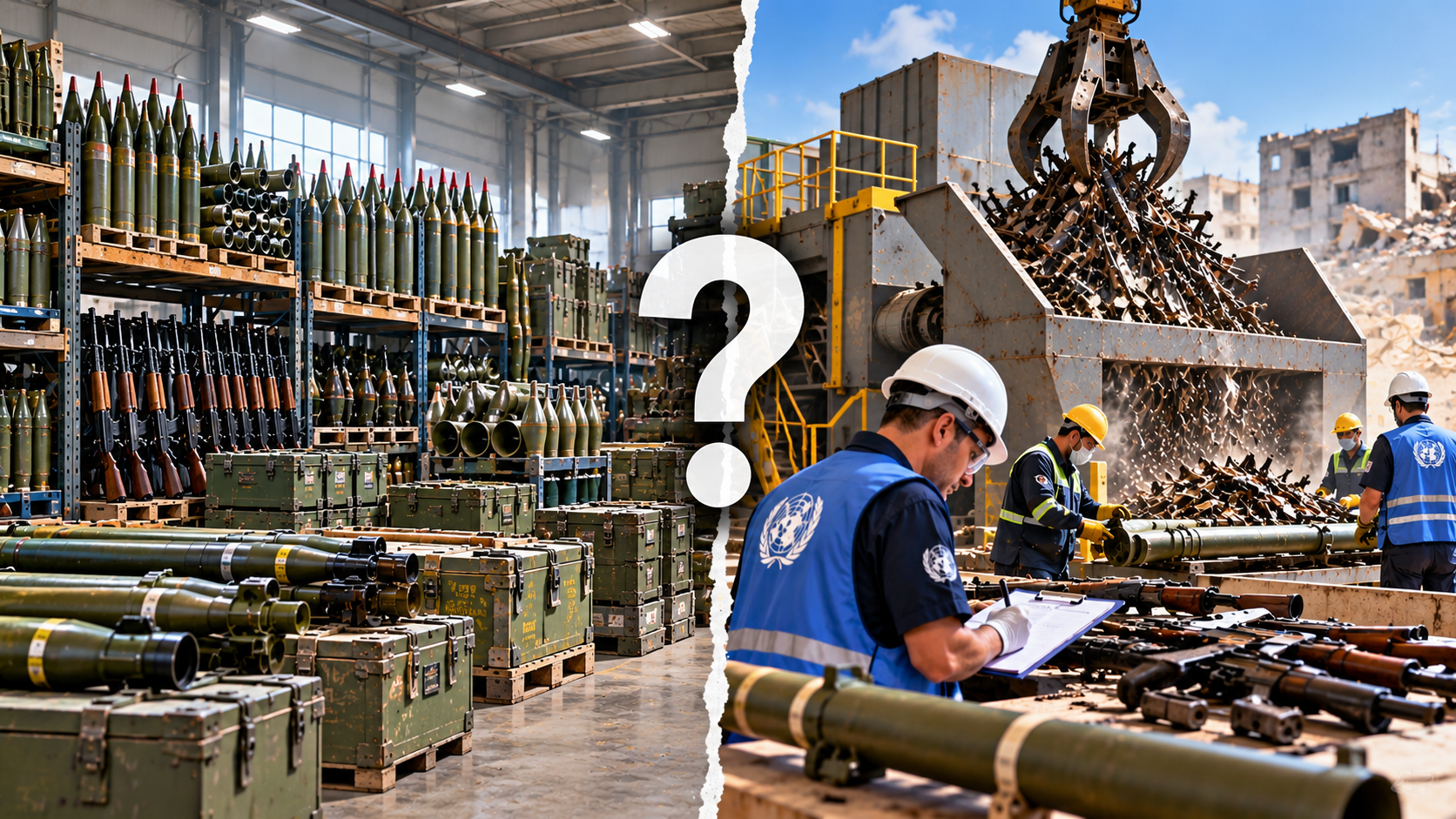
Store them or Destroy them?
One simple amendment to the Gaza peace plan could reveal whether Hamas is serious about permanently surrendering its weapons or merely buying time.
President Trump announced a historic breakthrough in July when Hamas conditionally accepted a 15-point roadmap toward disarmament, Israeli withdrawal and Gaza’s reconstruction.
But has Hamas really agreed to disarm?
There is a fundamental difference between storing weapons and permanently destroying them.
Under the July 30 Gaza Roadmap, Hamas’s heavy weapons would be decommissioned and stored under the Palestinian National Committee for the Administration of Gaza (NCAG). No weapons would be surrendered to Israel or another non-Palestinian authority.
Hamas has emphasized this provision while avoiding the language of disarmament or surrender.
Israel’s objection is understandable. Weapons placed in storage could eventually be recovered by Hamas or another armed organization, particularly if the transitional administration loses control or storage facilities are attacked.
The Institute for National Security Studies (INSS) has identified this as a serious weakness in the agreement. Removing weapons from Hamas’s immediate control is not the same as permanently eliminating its military capabilities.
On October 12, The Times of Israel reported that Israel had approved a US company’s entry into southern Gaza to identify possible sites for Hamas to hand over weapons. The Board of Peace said it was working with Israeli authorities on the mechanics of demilitarization.
Are these sites being prepared for temporary storage or independently verified permanent destruction?
A simple amendment: Destroy, don’t store
There is a practical way to address both objections.
Amend the roadmap to establish a secure weapons-destruction program within Gaza, administered under Palestinian authority, with independent international supervision and verification.
Weapons would not be surrendered to Israel.
The International Stabilization Force (ISF) would be given an expanded role in locating weapons, facilitating their surrender, securing the process and supporting permanent destruction.
Weapons received would be independently registered, accounted for and destroyed wherever safely feasible, with continuous monitoring and publicly reported, independently verified weekly results.
Any temporary storage would be strictly limited to what is necessary for safe destruction.
Verified progress would be linked to reciprocal Israeli withdrawal and the establishment of effective replacement security arrangements.
What would Hamas’s response reveal?
There are already reasons to question Hamas’s intentions.
In August, Chatham House reported that Hamas had rejected Israeli demands for weapons destruction rather than storage.
Meanwhile, Hamas continues exercising substantial coercive influence in Gaza, raising concerns about whether it genuinely intends to relinquish military and governing power permanently.
The proposed amendment would provide a revealing test.
If Hamas agrees, this would represent meaningful progress toward genuine disarmament. Israel and the international mediators would have one fewer obstacle to resolving their differences and progressing the peace plan.
If Hamas refuses, despite guarantees that its weapons would never be transferred to Israel, serious questions arise about whether it ever intended permanent disarmament.
Such a refusal would not conclusively establish Hamas’s ultimate intentions. But it would expose a fundamental disagreement about the meaning of disarmament.
That would require reconsideration of the roadmap’s assumptions, the ISF’s enforcement responsibilities and the feasibility of proceeding without a genuine commitment to permanent demilitarization.
The test should happen now
The Board of Peace and its mediators should put this amendment formally to Hamas, while seeking Israel’s agreement to the corresponding verification and withdrawal arrangements.
Gaza’s civilians urgently need stability, humanitarian assistance and reconstruction. They cannot afford another prolonged process built on ambiguous commitments.
If Hamas is genuinely prepared to disarm, permanently destroying its weapons under Palestinian authority should be acceptable.
If not, the international community needs to know now, rather than discovering years later that Hamas has simply preserved the means to fight another war.
Related Topics
Related Posts