Hasan Piker, Donald Trump, and the death of the political moderate
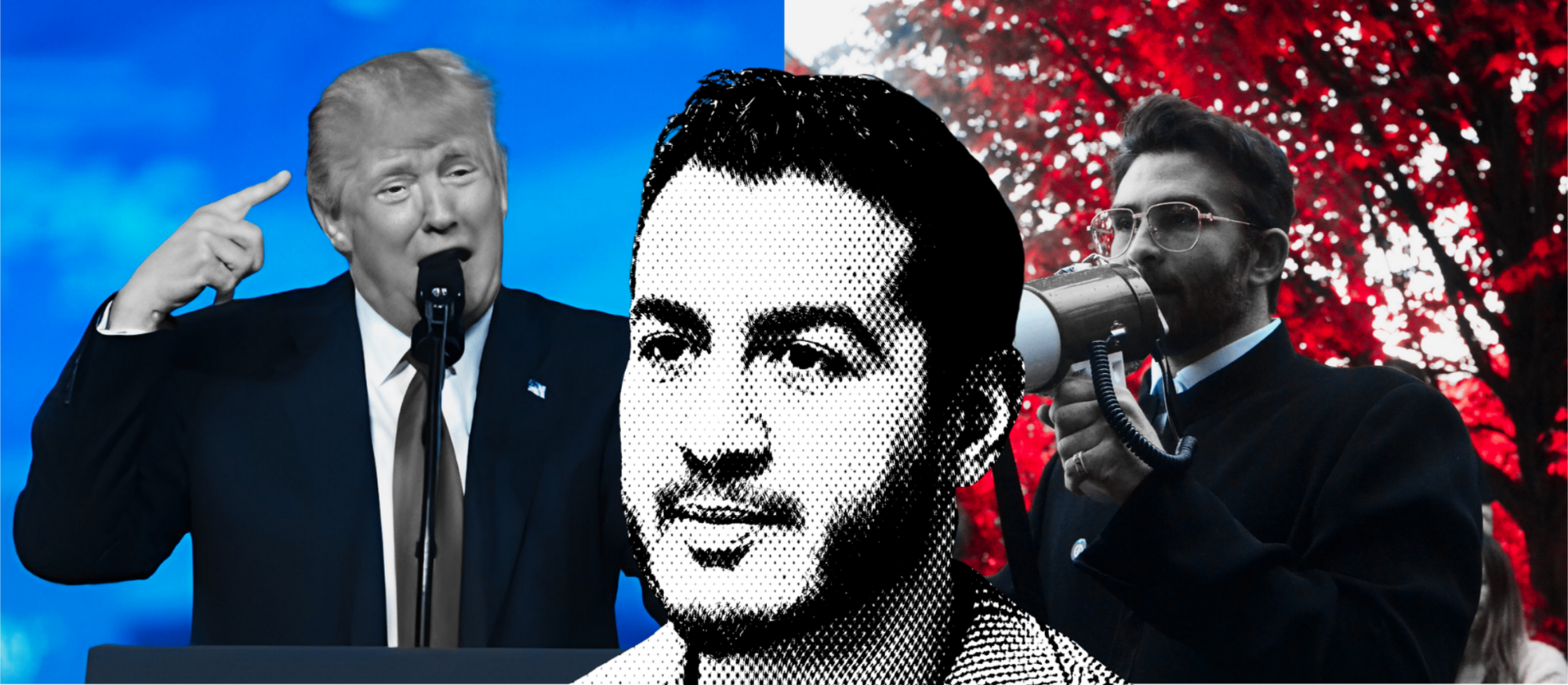
When Michigan Senate hopeful Abdul El-Sayed won a neck-and-neck primary, the popular Twitch streamer and liberal “kingmaker” Hasan Piker had a message for El-Sayed’s detractors: “Everyone being like, Abdul has a f*ck-ton of work to do mending bridges, here’s the f*cking take-nuke for you, okay? You are all unbelievably Islamophobic pieces of sh*t.”
Meanwhile, President Donald Trump had a different take. “He doesn’t love Israel. He doesn’t love Jewish people. He hates them. He hates them with a passion that burns in his heart, and there’s not a fricking thing he can do about it,” he declared in a televised speech.
There’s a mental exercise I employ all the time. I call it Good for the Jews? — and as I read increasingly-apocalyptic headlines, I evaluate them according to the game’s titular question. Is this good for the Jews? Piker’s statement: No. The president’s words: Also no.
Part of the reason I am wary of both left- and right-wing populism is that it rarely goes in a good direction for the Jewish people. Populists appeal to their bases by demonizing a corrupt elite; the one thing everyone seems to agree on is that the corrupt elite is Jewish (or, more vaguely, “Israel”).
But I’m worried about something else, too: somebody’s dying, and it’s the political moderate.
When I was a child, I sat around the Shabbat table with many political moderates. I came of age listening to the blue-collar employees of Michigan’s car industry; from poorer heimish families who depended on more liberal policies toward welfare; from yeshiva-aligned people whose support of Israel was tepid at best. I grew up around dissenting opinions, and around people who disagreed.
But these people also knew how to listen. To express their beliefs and viewpoints articulately and courageously, while respecting the humanity of the other. They were moderates. “The best moderate is skeptical of zealotry because he is skeptical of himself,” David Brooks wrote in his bestseller The Road to Character. “He distrusts passionate intensity and bold simplicity.”
These are the people I grew up around. And it’s not that they are dead, God forbid — but they are no longer political moderates.
I’m not a scientist, but I would bet that if there was an index measuring global anxiety, it’s surged dramatically in the last ten years. COVID-19; Ukraine; Israel-Palestine; Biden and Trump; Iran; reports of climate change and disease outbreaks and inflation and gun violence and terrorism and so many other crises. For Jews I would guess it’s an even more significant surge.
Worry and fear activate the nervous system, leaving people hypervigilant. And suddenly, there are threats everywhere, and of course it’s better to be too careful, to assume that smoke is fire and El-Sayed hates Jews and that all of his opponents are Islamophobic.
This movement toward extremes and away from moderation: Good for the Jews? No, unequivocally.
We must work toward a future of revitalized moderation.
In Mussar, there is a concept of middot (traits) as measures. The thinkers who define the modern Mussar movement view the practice to be one of calibration and intention, rebalancing one’s personal scales toward equilibrium. There is Jewish precedent for moderation.
But it’s a practice. It’s work. It is the deliberate restructuring of neural pathways, of impulses toward fear and anger, of reactions to certain words and faces.
“Rejoice before God with your son and daughter, your male and female slave, the Levite in your communities, and the stranger, the fatherless, and the widow in your midst,” the Jewish people are exhorted in this week’s parasha (Deuteronomy 16:11).
Perhaps we can read it another way.
When we are able to stand before God with our sons and daughters, our employees and coworkers, our holy figures, those we view as strange and those we view with pity —
Then, we can rejoice.