Hasbara? Go explain Israel
While not everything that happened around Israel in the early 1980s could be justified, there was usually an explanation. Not today
More than 40 years ago, as a young, adventurous journalist at Kol Yisrael, I was sent to the United States to explain Israel.
What to explain? Basically, the first Lebanon war and its immediate aftermath.
The June 1982 conflict was said to be an attempt to bring peace to the Galilee, which was regularly shelled by the Palestine Liberation Organization from Lebanon. The PLO had moved its center of operations there after being kicked out of Jordan more than a decade before.
The trigger for what came to be known, at least at first, as Operation Peace for Galilee was the attempted assassination in London of Israeli ambassador Shlomo Argov on June 3. His attackers came from a Palestinian splinter group that didn’t much like the PLO, but it was still an excuse for Israel to hurl itself into Lebanon, ostensibly to push back the general Palestinian terror apparatus to a point where its Katyusha rockets would be out of range.
Unbeknownst to the Israeli public – and apparently even to prime minister Menachem Begin – defense minister Ariel Sharon had more grandiose plans, including the full collapse of the PLO, at least in Lebanon; an end to what remained of the country’s Syrian occupation; and a peace agreement with the Maronite president, Bachir Gemayel.
I WAS A RESERVIST whose unit had been called up at the beginning of the war to fight against the Syrians along what came to be known as the eastern front. The Syrians showed little appetite for battle and fled.
The fighting elsewhere, however, primarily in the main cities along the coast, was a lot more arduous and led to much death and destruction. This was especially so in Beirut, which became PLO leader Yaser Arafat’s last redoubt. The city was encircled and placed under siege, leading to the expulsion of Arafat and most of his forces to other countries.
In late July, after a month and a half in uniform, my unit was released, only to be remobilized at the beginning of September to man what had become the static front line in the east, close to the Syrian border. Things were not at all static elsewhere, with the absence of PLO fighters and the withdrawal of a multinational force having led to rising intercommunal tensions, especially in Palestinian refugee camps.
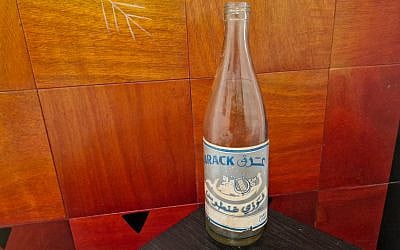
On the afternoon of September 14, my unit was rotated back from the front line for a few days of rest. We gratefully anted up for an endless barbecue and lots of alcohol, and that night, while I was holding a bottle of arak that had been procured from Zahle, the Bekaa Valley town said to be the arak capital of the world, news came that Bachir Gemayel had been assassinated.
I somehow felt right away that the news portended horrible things. Sure enough, two days later, the Sabra and Shatila Massacre took place when Christian fighters, out for revenge, slaughtered as many as 3,500 residents of the unprotected Beirut camps, doing so virtually under the noses of nearby Israeli troops.
Sabra and Shatila brought angry citizens of Israel into the streets in record numbers to show their disgust with the conduct of the war. Public sentiment led to an official commission of inquiry, which the following February found that Sharon could have done more to prevent the massacre and ordered that he no longer be allowed to hold high office.
Begin refused to fire Sharon, further inflaming public ire, but the defense minister ultimately resigned after a left-wing protester was killed by a hand grenade hurled by a member of the far-right. It was also the beginning of the end for Begin himself, who, despondent over his wife’s death and sickened by the way the war was going, quit that October. “I cannot go on any longer,” he told members of his cabinet.
SINCE THE BEGINNING of the war, the international press had been free to roam Lebanon. It reported and broadcast scenes of widespread destruction, not all of it fresh, the country long having endured a deeply destructive and deadly civil war. Many of the correspondents, having been “parachuted” in, were not entirely up on their Lebanese history, so they made it all about Israel.
But Sabra and Shatila opened the true floodgates of anti-Israel sentiment around the world, and Israel felt the need to send out emissaries such as myself on missions of hasbara. Rudimentarily, the word means the act of explaining. Later it came to be the standard Hebrew phrase for public diplomacy.
I tell this story because, while not everything that happened in and around Israel in the early 1980s could be justified, there generally was an explanation. Today, though, much of what is transpiring can be neither justified nor explained.
October 7: How did we get caught with our pants down? Who was responsible? How can we make sure it never happens again? Someone prefers we never truly find out.
The day after: Who will be in charge? What is the end game? Apparently, these things are not that important, as someone wants the war to go on and on because a true investigation of its causes must come only “afterward”. See above.
The hostages: While lip service to their plight is indeed paid, right now the goal in Gaza is “complete victory over Hamas.” But at what cost? How many dead hostages?
A deep social schism: It started over the government’s efforts to neuter Israel’s judicial branch to lessen the chances that someone in particular might go to jail. Also, to the current government, judges generally are a bunch of lefty traitors. The schism continued and even deepened over the conduct of the war, encouraged by someone who long has benefited from a divided society.
An exhausted military: A decade or so ago, talk of “smaller but smarter and more technologically oriented” was all the rage. But we now understand that boots on the ground – and lots of them – are no less critical. So how do we replace the more than 10,000 soldiers who have been killed or wounded over the past 21 months? Someone needs to maintain a coalition with the ultra-Orthodox, so let’s not go there.
Brain drain: Smart, educated people are leaving in droves because they see a bleak future here, and money that could be spent on better education and further development of the hi-tech sector is being diverted for political reasons. Again, see above.
It all comes down to a man who absolutely must hold on to power, all else be damned. How can one possibly explain this? Is it all about that possible jail sentence?
I KEPT THAT empty bottle of arak. It’s not just a soldier’s souvenir from war. It became a personal memento that symbolized how complicated things can get, how nothing is really certain, how good intentions can go very wrong, and how my life in Israel would turn into more of an adventure than I had bargained for.
It sits today on a shelf above my desk. Not long ago, every time I glanced over, it represented to me how logic could still emerge from the illogical, and how both egregious mistakes and horridly stupid policies could eventually be overcome and even reversed. And, oh yes, it reminded me how interesting a really wild adventure could be.
Not anymore. Today, that bottle is just a bottle that held some of the best arak I’ve ever tasted, refined not that far away – yet worlds away – in “Zahle, Liban”, as it still says on the lower right side of the fading label.
Yup. Just a bottle. There’s no lesson in it anymore. It’s merely a reminder of how terrible things can turn out when one man will seemingly do anything to stay in power.