
Two Zionists Meet At A Bar
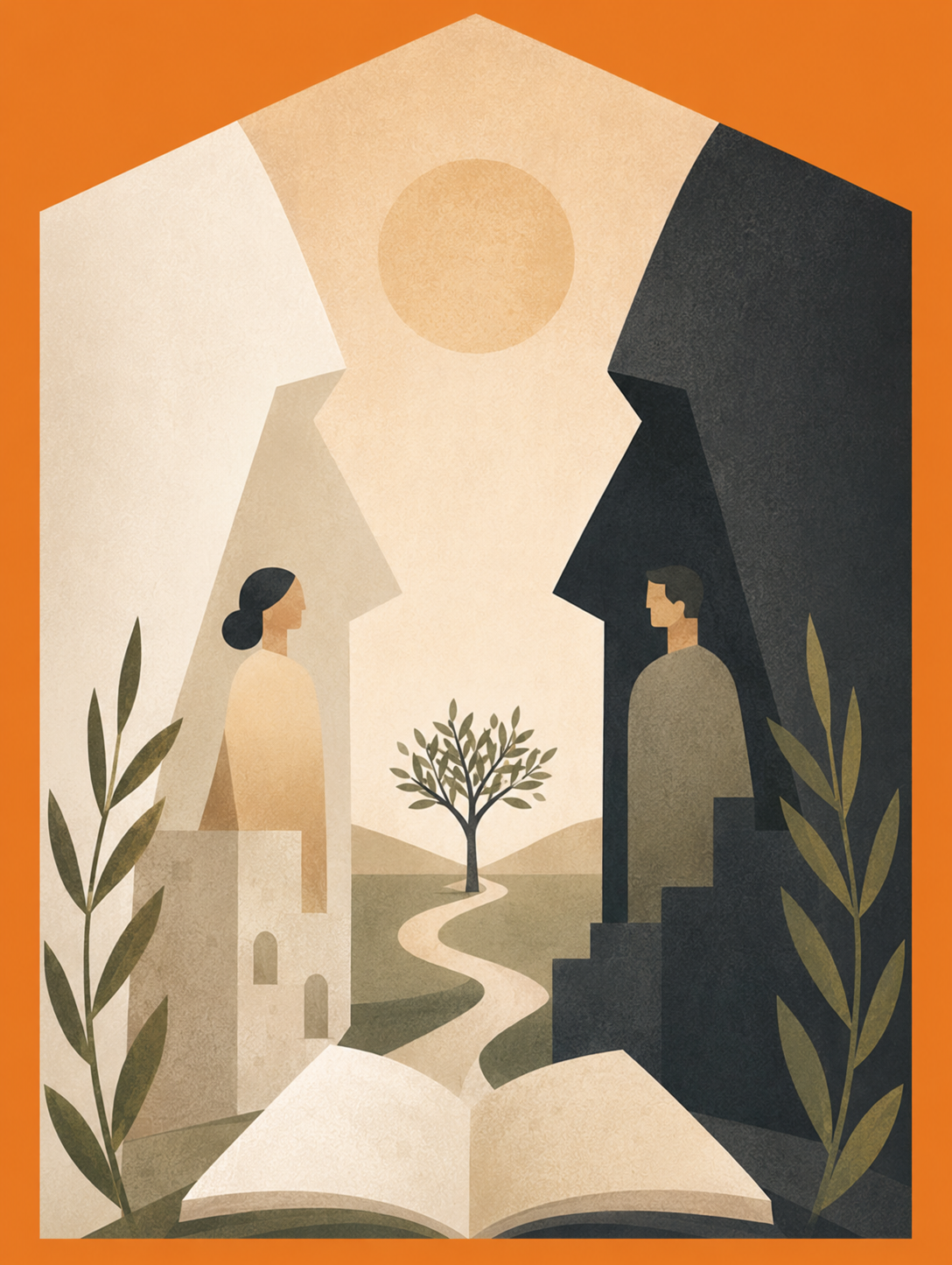
One says to the other: “What kind of Zionist are you?”
George Orwell, in his Notes on Nationalism, makes a distinction that has stayed with me while reading him. He differentiates between patriotism and nationalism.
Patriotism, he writes, is devotion to a particular place and way of life, without the obsession with domination or superiority over others. Nationalism, by contrast, becomes something more dangerous: an inability to believe one could be wrong, a fixation on power and identity, and a tendency to dismiss criticism while viewing outsiders as threats.
Reading this as an Israeli, I could not help but think about Zionism and the enormous gap between what Zionism originally was for many Jews, and what parts of it have become today.
So much of the world now hears the word “Zionism” and immediately associates it with extremism: threatening settlers, racist rhetoric, calls for expulsion, or the belief that Arabs should disappear from the land altogether. And the painful truth is that some people who call themselves Zionists do, in fact, believe those things.
But that is not the only Zionism that exists. And pretending otherwise has become intellectually dishonest and morally dangerous.
The original vision of Zionism, the one many Israelis across the left, center, and even parts of the right still believe in, was never simply about domination over others. At its core, it was about the belief that Jews, after centuries of persecution, exile, expulsions, pogroms, and ultimately the Holocaust, deserved one place in the world where they could live safely as a people. Not a random colony disconnected from history, but a land deeply tied to Jewish memory, language, religion, and ancestry.
The connection between Jews and the land of Israel did not begin in 1948. It is documented through Jewish texts, archaeology, continuous Jewish communities living in the region for centuries, and the cultural memory of exile itself. Even when the land passed through countless empires and names, Jews remained connected to it spiritually and physically.
The term “Zionism” itself emerged in the late 19th century, most commonly associated with Theodor Herzl and other Jewish thinkers responding to rising antisemitism across Europe. At its most basic definition, Zionism was the movement for Jewish self-determination in the ancestral homeland of the Jewish people. That does not make it unique in history. Many modern states contain a national, ethnic, cultural, or religious identity at their core while still aspiring, at least in principle, to provide equal rights and protection to minorities within them.
But the question is not whether Jewish self-determination is inherently illegitimate. The question is what moral vision accompanies it.
Israeli writer and historian Gadi Taub has written about this distinction powerfully, describing what he sees as two competing forms of Zionism: one rooted in democratic Jewish self-determination, and another rooted in messianic nationalism tied to land and supremacy. Whether one agrees with all of his politics or not, I believe this distinction matters deeply.
My own grandparents came to Israel from Poland in the 1930s because of Zionism. My grandmother, Sara, was a teacher for many years at what is today the Bialik-Rogozin School. My grandfather, Nachman Karni, served as the IDF spokesperson in the 1950s and later travelled internationally alongside Israeli leaders and military representatives, helping build relationships, exchange knowledge, and represent the young state of Israel abroad. They also believed in co-existence and that Israel can be and should be a home for a home for Jews, while still protecting the rights, safety, and humanity of others living beside them.
That is also part of my Zionism. Not a Zionism of domination, but a Zionism of refuge, survival, responsibility, and hope. A belief that Jews should have one place in the world where they could live safely and freely after centuries of persecution, while still living alongside others with mutual respect.
Acknowledging Jewish roots in this region and historical connection does not require erasing Palestinian existence, dignity, or suffering. Many of us who still believe in the original vision of Zionism do not believe anyone should be displaced.
That is where a line must be drawn.
There are those today who have transformed Zionism from a movement of Jewish self-determination into something ultra-nationalistic: a justification for supremacy, permanent occupation, humiliation, or the removal of others. Orwell would likely recognize this transformation instantly. When nationalism overtakes patriotism, the moral center collapses. The movement becomes incapable of self-critique. Anyone outside the ideology becomes an enemy. Human beings become demographic threats rather than neighbors.
And yet much of the world now places all Zionists into this category.
That is a profound mistake.
Because many Zionists, perhaps quieter than the extremists but no less real, still believe in a Jewish homeland that exists alongside Palestinians, Christians, Muslims, Druze, and others. They believe the purpose of Israel is not ethnic domination, but safety, continuity, culture, and the possibility of building a flourishing society together with others who share the land.
These Zionists do not deserve to be dismissed with chants of “abolish Zionism,” or “are you a Zionist? If yes, you’re not welcome here,” which we have seen in so many videos from across the world recently.
If you want to ask the right question, you should ask this:
What kind of Zionist are you?
The Zionism of coexistence? Or the Zionism of supremacy?
The Zionism that sees Palestinians as human beings with national aspirations of their own? Or the Zionism that sees them only as obstacles?
Because if one refuses to make that distinction, and if every Jew who believes Israel should exist is then automatically branded a racist or colonizer regardless of what they actually believe, then the conversation has already stopped being political criticism and has crossed into something else.
Into prejudice against Jews as a collective.
Criticizing Israeli governments is legitimate. Opposing occupation is legitimate. Fighting extremism is legitimate. Israelis themselves do these things every single day. But denying the legitimacy of any Jewish collective self-determination, while accepting it for nearly every other people on earth, is where many Jews understandably experience the line between anti-Zionism and antisemitism collapsing.
The tragedy is that more and more people are no longer able to recognize when that line is being crossed.
And they too, in their inability to see nuance, complexity, or individuality within an entire group of people, begin falling into the very kind of nationalism Orwell warned about.
And perhaps Orwell’s warning matters now more than ever: once any political identity, whether it is the extreme Zionists or the anti-Zionists in this case, loses the ability to self-criticize, to see complexity, or to recognize the humanity of the other side, it stops being patriotism and becomes something far darker.
So whether you are a Zionist, anti-Zionist, or neither, do not fall into the trap of placing entire groups of people into one moral category. The moment we stop asking each other what we actually believe, and begin reducing millions of human beings into caricatures, we fuel the very darkness Orwell warned about.