Have We Gone Too Far with the ‘Empowerment’ Strategy?

Like many of us, I used to think that the “answer” for connecting young Jewish adults to Jewish life was empowerment and innovation. I assumed that every fellowship should have the goal of building up changemakers and empowering leaders. But now, I suspect we are over-emphasizing leadership, and in that way failing a key demographic: those who do not wish to lead.
The life of a Jewish leader is not for everyone. Being a rabbi and entrepreneur is a source of deep fulfillment for me, but it can also be very lonely. There are not always many colleagues to talk to; you’re constantly having to seek out new funding in a competitive landscape; it falls on you to manage people who are often over-worked and over-extended by the demands of nonprofit life.
The recent years have only exacerbated these factors, with everything from COVID to the Gaza War to political polarization. I’ve seen countless rabbinic colleagues and innovators leave the Jewish communal profession; perhaps they were initially drawn to the promise of a spiritually-fulfilling career, but were ultimately overwhelmed by burnout and lack of appreciation, especially given the strong Jewish tradition of critiquing leadership. Not only that, but I continue to read reports of rabbinic schools struggling to recruit. Despite this, most of us still prioritize the empowerment of leaders in our fellowships. But what about those who do not wish to lead as spiritual leaders, activists, or changemakers of any sort?
So often, I meet smart, kind, talented young Jews who want to be deeply engaged and connected to Jewish life, but in no way want to be visionaries. These are people who have no interest in being “empowered” in Jewish leadership (or no time or energy for it). What they want is to be plugged in, easily and comfortably, into existing programs, not to be self-starters. This is especially true of millennials who don’t always want to offer a “big new idea” in order to be involved. Sometimes, longstanding initiatives can be very adequate when they’re offered gently, inclusively, and with depth. I believe we need to think more about how we can connect folks to already-existing programs, rather than only showing an interest in creating shiny, news ones.
It is imperative to shift our strategy now, while we are still in “The Surge.” Just a few weeks ago, in late April, there was a study released that showed American Jews are still exhibiting a renewed interested in Jewish life, with 31% of the community reporting that they are seeking or engaging more in Jewish life. This was a little surprising because it’s now 18 months after October 7. For now, the numbers are holding strong. A study last year, much closer to October 7, found that 43% of the Jewish community across all levels of previous involvement were interested in engaging more in Jewish life. This means that 72% of Jews who were interested in reconnecting last year are still interested this year. Notably, these studies included those who had been completely unengaged in Jewish life, as well as those deeply immersed and looking to deepen their connection even more.
We know that not all 31% of those who expressed an interest in more connection wish to be leaders in Jewish community. Some are reacting to increased antisemitism, looking for security and belonging. Others hear a wakeup call to a deeper purpose and identity. What they’re seeking by and large is not some creative new expression of their identity—not that there is anything wrong with that—but rather a place to feel rooted and to belong, a place to feel understood and safe.

Of all the 2-3 million Jews who left Egypt (many chose not to leave!), how many can we consider leaders? Moshe, Aaron, Miriam, Nahshon and the other heads of the tribes, perhaps Betzalel. That is a tiny fraction of a percent. The vast majority of Bnei Yisrael were not looking to be leaders. Rather, they were moved to leave the narrow places for an expansive possibility. This is the position that so many young Jews currently find themselves in.
For years, I thought we were to blame. Having led many incubators for social entrepreneurs and countless fellowships for innovators, I assumed it was our own failure that so many of the fellows were not successful in launching long-term sustainable initiatives. Now, I realize just how unrealistic that is. Not only is it strategically unfeasible, it fails to address what the people need. People may have interpreted that they are valued only if they are leaders. But we should make it clear we value people just for showing up kindly—no grand vision required.
I would never downplay the importance of Jewish leadership. I believe in leadership programs; I believe in innovation; I believe in empowerment. I will continue to lead those programs. However, the funding and nonprofit communities are often shortsighted in their exclusive focus on cultivating Jewish leadership, and in that way, leaving so many people behind who just want to flourish in life (feeling good and doing good) but not innovate.
To an extent, we can trust that people will emerge in leadership organically. It is not always incumbent upon us be selecting, creating, and determining leaders. There’s a place for that, absolutely. But I encourage us all to remember that simply by creating deeper places of belonging, people will emerge to make a difference in their own ways. Let’s find ways to show that remaining 31% that they do not need to be the next great Jewish leader in order to matter—they only need the desire to connect. And let’s be sure what we’re offering has low barriers of entry and deeply rich content.
—
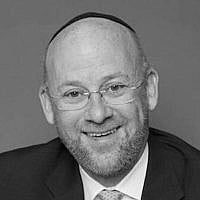
Rabbi Dr. Shmuly Yanklowitz is the author of 28 books on Jewish ethics. Newsweek named Rav Shmuly one of the top 50 rabbis in America and the Forward named him one of the 50 most influential Jews.