Healing a fractured world
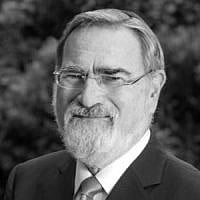
The many tributes to Rabbi Jonathan Sacks this past week to mark his fifth yartzheit focus primarily on his gifts as a writer and orator, as a person with a prophetic moral voice and an abundance of spiritual ambition that he used to improve the Jewish community and the world at large. Many speculate on how Rabbi Sacks, were he alive today, would address the global scourge of antisemitism and rising levels of hate and intolerance. Given his investment in students as emerging leaders, Rabbi Sacks would, no doubt, have been troubled by the current climate in higher education that has distanced students from learning in the name of identity politics.
The past years of rhetoric have not adequately furnished college students with our promise that we will help them think critically within a safe community of peers and mentors with which to engage and explore the great questions of the hour. The erosion of shared moral and civic values on today’s campuses contributes to a tense, fractured, and divisive environment, one that sacrifices learning on the altar of ideology.
Almost 40 years ago, in The Closing of the American Mind, Allan Bloom seemed to predict this fate for higher education. He contended then that we replaced the pursuit of truth with the comfort of “lifestyles”; while students have a keen sense, Bloom contends, of the perfect body and work incessantly to obtain it or fret over not having one, “they no longer have any image of a perfect soul and hence do not long to have one. They do not even imagine that there is such a thing.” And if they did, they would not likely seek it out in college halls or dormitories.
In The Abolition of Man, C.S. Lewis cautioned his readers that without a common understanding of right and wrong, society was at risk of collapse. It’s not hard to feel a pervasive sense of moral ennui given global authoritarian leadership, prolonged wars across the world, the absolutism of politics, and the cold face of technology’s myriad challenges. Add to this moral ambiguity, shifting cultural norms and social fragmentation, and the values we once treasured as Americans seem quaint at best and relativistic and weakened at worst.
“A culture that allows the concept of ‘safety’ to creep so far that it equates emotional discomfort with physical danger,” wrote Jonathan Haidt and Greg Lukianoff in The Coddling of the American Mind, “is a culture that encourages people to systematically protect one another from the very experiences embedded in daily life that they need in order to become strong and healthy.” Do we want students to be safe emotionally or ideologically or do we want them to be strong? The road to moral conviction is paved with discomfort for the sake of growth and offers intellectual richness and nuance.
We believe that character education has become increasingly necessary to shape responsible, empathetic, and ethical students in formal educational institutions. And we believe that this is one way Rabbi Sacks often addressed polarization: by bringing people together in a spirit of discourse to learn and to grow into more morally mature human beings. As a complement to academic achievement and skills acquisition, character education aims to cultivate virtues in students, including integrity, respect and compassion that bolster a strong moral compass and prepare them to pursue meaningful goals, overcome adversity, and positively impact society. Character education can provide the moral foundation necessary to navigate today’s complicated social, ethical and political issues and promote resilience and self-discipline, the key predictors of long-term success. Angela Duckworth’s well-known research on “grit” emphasizes that perseverance and passion for the achievement of long-term goals are more predictive than IQ or talent alone.
Character is not formed instantaneously, but rather develops gradually through sustained teaching, learning, and practice according to Thomas Lickona in Educating for Character: How Our Schools Can Teach Respect and Responsibility. It is insufficient for students to form their convictions through sitting in traditional classrooms. They need their ideas to be tried and tested through action and evaluation. To that end, more universities across the United States are promoting and supporting character-based initiatives of various kinds that include formal learning, cohort-based programs, and travel experiences to help implement values.
At Yeshiva University, we are on the fourth cycle of a unique interdisciplinary fellowship that generates moral reasoning through a process of learning and living. A cohort of graduate students are carefully selected across 10 disciplines from nine graduate schools that include students from different faiths, ethnicities, and countries around a shared sense of mission and common desire to create positive social impact. Tikkun — as in tikkun olam — can be translated as fix, repair, heal, or perfect the world. The simple translation yields very different approaches and attitudes to the world itself. We fix or repair that which is broken. We heal that which is hurt. We perfect that which we already deem as worthy that, with minor tweaks and support, can be even better.
On a monthly basis, this cohort convenes virtually to learn character and values-based leadership as they make progress on individual social impact projects. Together we study and discuss “why statements,” personal mission, core values, decision-making skills, and deepen their understanding of themselves to make their educational journey more expansive and purposeful. Students also study and practice project management, strategic planning, and conflict resolution as they execute their projects.
Every project is designed to foster character development through a student’s individual field with the help of faculty mentors and the peer mentors within the cohort. Housed in the Rabbi Lord Sacks-Herenstein Center for Values and Leadership, these Sacks Scholars perpetuate the legacy of their namesake, Rabbi Lord Jonathan Sacks, the former chief rabbi of the United Hebrew Congregations in the United Kingdom and a bridge builder across faiths. He charged all of humanity with the ethic of responsibility: “We are here to make a difference, to mend the fractures of the world.”
Through their projects, Sacks Impact Scholars learn how to navigate challenges, build relationships and solve problems through empathy and understanding. Law students from our Cardozo School of Law, for example, have worked to reverse wrongful convictions and to advocate for educational services denied to developmentally disabled children. They study with psychology students from our Ferkauf School of Psychology who have designed a sustained service providing mental health and legal resources to asylum-seekers and their families. Through the Care Café at our Wurzweiler School of Social Work, a student worked with Latina pregnant women to ensure proper pre-natal care, especially for those who chose not to seek medical assistance for fear of deportation.
Last year, one social work doctoral student created a resource fair attended by 250 immigrants from the Bronx to help African immigrants acclimatize, build community, and learn their rights. When she came to this country from Nigeria well over a decade ago, she had few resources to help her navigate employment, health, and insurance.
Graduate students in our Sy Syms School of Business created training opportunities for undergraduates to assist families living beneath the poverty line to fill out tax forms and, thereby, maximize their deductions. AI students in our Katz School of Science and Health have designed apps and medical imaging to increase early detection rates and enhance the efficacy of cancer treatments. One student, Nikhil Deekonda, who came to the United States from India to attend graduate school, reflected upon his project, “The app helps bridge the gap in early lung cancer detection especially for underserved communities with limited access to radiologists or diagnostic tools.” He was inspired by Rabbi Sacks’ observation that, “Where there is inequality, there is fracture. When we restore access, we restore dignity.’” Students get together in person at the close of the year to share their project summaries and what they learned from them and from their colleagues.
We see first-hand the benefit of breaking down invisible lines of narrow thinking and the limited mindset of educational specialization. Values-based projects within this cohort model have helped our students understand the moral dimensions of their chosen educational paths and the importance of applying what they learn to improve the lives of others. Studying character and nurturing soft skills like collaboration, compassion and diligence contributes to the development of their own paths towards change, as they navigate the challenges of our day inspired by new friends. We believe such a model can be replicated on campuses across the globe to shape character, to build community, to expand impact, to build strength through challenge and, ultimately, to repair the world.
It is not enough to remember Rabbi Sacks’ legacy. We must continue his work through education. “The leader-as-teacher, using influence not power, spiritual and intellectual authority rather coercive force,” wrote Rabbi Sacks, “was one the greatest contributions Judaism ever made to the moral horizons of humankind.” Long may it continue.
—
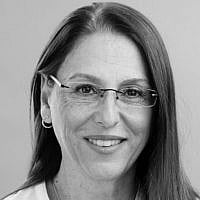
This piece was co-authored by Dr. Shira Weiss, the assistant director of the Sacks-Herenstein Center of Yeshiva University; she also teaches at its Bernard Revel Graduate School. She is the author of Ethical Ambiguity in the Hebrew Bible (Cambridge University).