Health Is the First Wealth; the Second Is a Happy Marriage

You may want to share this with your spouse.
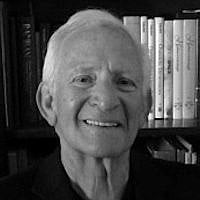
As a rabbi, I have the distinct privilege of being trusted by my congregants with some of their most difficult challenges. Two of the most common themes I find people struggling with today are wholesome and fulfilling relationships, and marital intimacy. Though a couple has been married for many years, their relationship can often turn stale or apathetic, far from the youthful dreams of undying love and devotion, that the frustrated couple may have witnessed in the fantasy world of the big screen.
But the Torah portion In Parshas Tetzaveh infuses us with a jolting piece of marital advice that can easily transform your marriage, if only you have the courage to apply its wisdom, saving you countless hours of frustration on the therapist’s couch.
Things are not as they seem. Though the Torah speaks of the construction of the Portable Shul that G-d commanded Moses to build for the Jews in the desert on their way to the Promised Land, there is so much more than meets the eye. One of the central parts of this Temple was the Altar, upon which daily offerings were made for G-d. Though the sacrificial Altar seems wasteful to us modern American Jews, it actually holds the key to creating rich and wholesome relationships.
The Talmud (end of Tractate Gittin) tells us that “Whoever divorces his first wife, the altar sheds tears over him.” Chief Rabbi of the United Hebrew Congregations of the Commonwealth, Rabbi Lord Jonathan Sacks, in the name of his predecessor, Rabbi Lord Immanuel Jakobovits, explained that it’s specifically the altar—the place of sacrifice—that weeps over the breakdown of human relationships, because divorce represents the failure of the spouses to grasp the profound benefits of sacrifice and the catastrophic failure of those who fail to capture its profound purpose.
In our modern American culture, we have been brainwashed to perceive marriage as an act of receiving—what the other can do for me; when in fact marriage is an act of giving—what I can do for you. The former can endure only in the fantasy of Hollywood Motion Pictures or fictitious romance novels, but in real life, marriage has nothing to do with receiving from your spouse and everything to do with nurturing them.
Little wonder then, that the word “sacrifice” in Hebrew is a bastardized translation of the original Hebrew term “Korban—” the word the Torah uses to describe offerings upon the Altar. The root of the Hebrew word “Korban,” is “karov” which means “close” or “near,” whereas “sacrifice” implies senseless waste and spending for no apparent reason.
In his wisdom, perpetuated in the Biblical book of Proverbs (20:27), King Solomon defines the human soul as a candle. Far from a poetic metaphor, this is a brilliant and precise instruction from the wisest of all men for us to achieve marital bliss. Whilst everything else in this world divides through sharing, the flame of the candle multiplies through division—the more you share the light with others, the more warmth and light you have. As counterintuitive as it seems, the more love we shower upon our spouse, the more love we will have. The more love we demand from them, the less we will have.

And when your attitude in marriage is to give rather than to get, you’ll end up getting far more than you ever dreamed possible. I was amazed to discover that the Hebrew word for intimacy is “Onah,” which actually translates as “answering.” The Torah’s “Onah” obligation of a man to his wife is to answer her call—to provide her not with sexual intimacy, but rather with emotional intimacy. What the Torah is telling us here is that physical intimacy cannot ever be achieved as an end in and of itself. It’s only when we have the presence of mind to shower our loved one with emotional intimacy—validating their verbal cues and being fully present to their emotional needs—that we will have unlocked the key to physical and sexual intimacy too.
Dr. John (Mordechai) Gottman is a Jewish American psychologist, professor, and author, considered one of the world’s leading researchers in marital relationships. He has written over sixty popular books on marriage, divorce, and enduring relationships. The question that has occupied him for forty years of his career is, what is the most important factor for the survival of a relationship? With his vast experience, he is able to sit with a couple for a short while and observe their behavior towards one another and, based on that, assess their chances of being married three years from now. His associates say his success rate is over ninety percent.
In a 1990 study, Dr. Gottman gathered 130 newlywed couples to a place designed like a vacation spot and observed them doing what couples do on vacation: cooking, listening to music, eating, and talking. Gottman made a pivotal discovery into why some relationships flourish and others fail. Throughout the day, he observed, the couples were sending “connection requests” to each other. For example, if the husband was a bird enthusiast and suddenly noticed a finch flying around, he would tell his wife, “Look at that beautiful bird.” He was looking for a sign of interest or support from her.
Gottman found that the woman’s response to a simple request like this told the whole story. In the wife’s response, he could see whether she felt her husband’s interests were worthy enough of a response and conversation. Six years later it emerged that the couples who were still married had engaged in their partner’s “connection requests” 87 percent of the time and supported their partner’s emotional needs 9 out of 10 times. But in those couples who were divorced within six years, the spouses had accepted the request only 33 percent of the time.
Because the real story of marriage, like the Torah word for intimacy—onah, is the expectation that a spouse will be there to answer the call.
The Talmud (Brachos 8a) tells us of a curious custom that the men of Jerusalem would ask a groom on the day after his wedding. King Solomon writes two seemingly conflicting verses about marriage. In one verse (18:22) he states “Matza isha matza tov,” meaning “He who finds a woman has found goodness.” In another verse (Ecclesiastes 7:26) he states “motze ani es Haisha mar mimaves,” meaning “I find the woman to be more bitter than death.” Drawing on these two verses and the slight variation of their opening word, they would ask him “matza or motze?”, as if to ask him if he ascribes his brief marital experience thus far to the former verse of marital bliss or to the latter verse or marital tyranny.
Though the question seemed so rude, a deeper understanding of the dynamic of human relationships allows us to realize that this is actually far more marital advice than a crude intrusion of the privacy of the newly married couple. Note how the first verse, which describes the woman as “good,” emphasizes the object—her. Whereas the second verse, which describes the woman as “more bitter than death,” emphasizes the subject—him. What the men of Jerusalem were trying to do was to infuse an awareness in the young groom at the onset of his marriage—urging him not to fall prey to the popular misconception of marriage as a kid in a candy store—but rather as a mature platform to share selflessly with another in the most sacred space known to mankind.
I was relieved to see that not all of modern culture is about the false perception of love as a magic wand to fix all your problems. A popular Jewish singer passionately declares “Even if we can’t find heaven, I’ll walk through hell with you…..Love—you’re not alone, ’cause I’m gonna stand by you!”
_______________________
Rabbi Dovid Vigler
Chabad of Palm Beach Gardens
6100 PGA Blvd, Palm Beach Gardens, FL 33418
JewishGardens.com | 561.624.2223
Instagram @JewishGardens
Facebook.com/JewishGardens
YouTube.com/JewishGardens