Healthcare the Way It Should Be Practiced
I have been a nurse practitioner for decades, working in cardiovascular health, lipid management, and critical care. Much of my career has been spent in hospitals and emergency rooms across the United States. Through personal experience and those of family and friends, I am aware of both good care and what it looks like when healthcare falls short. When I finally walked through the doors of Yad Sarah House in Jerusalem during a recent trip to Israel, I was experiencing the organization as both a donor and a medical professional. And I was in awe.
From the outside, Yad Sarah House looks like many other buildings in Jerusalem — it is made of limestone, unassuming, right near the train station. You step inside and notice that everyone is warm and friendly. Not in a rehearsed, front-desk kind of way. It is genuine. “Hello, can I help you? Do you speak English? Let me find someone who does.”
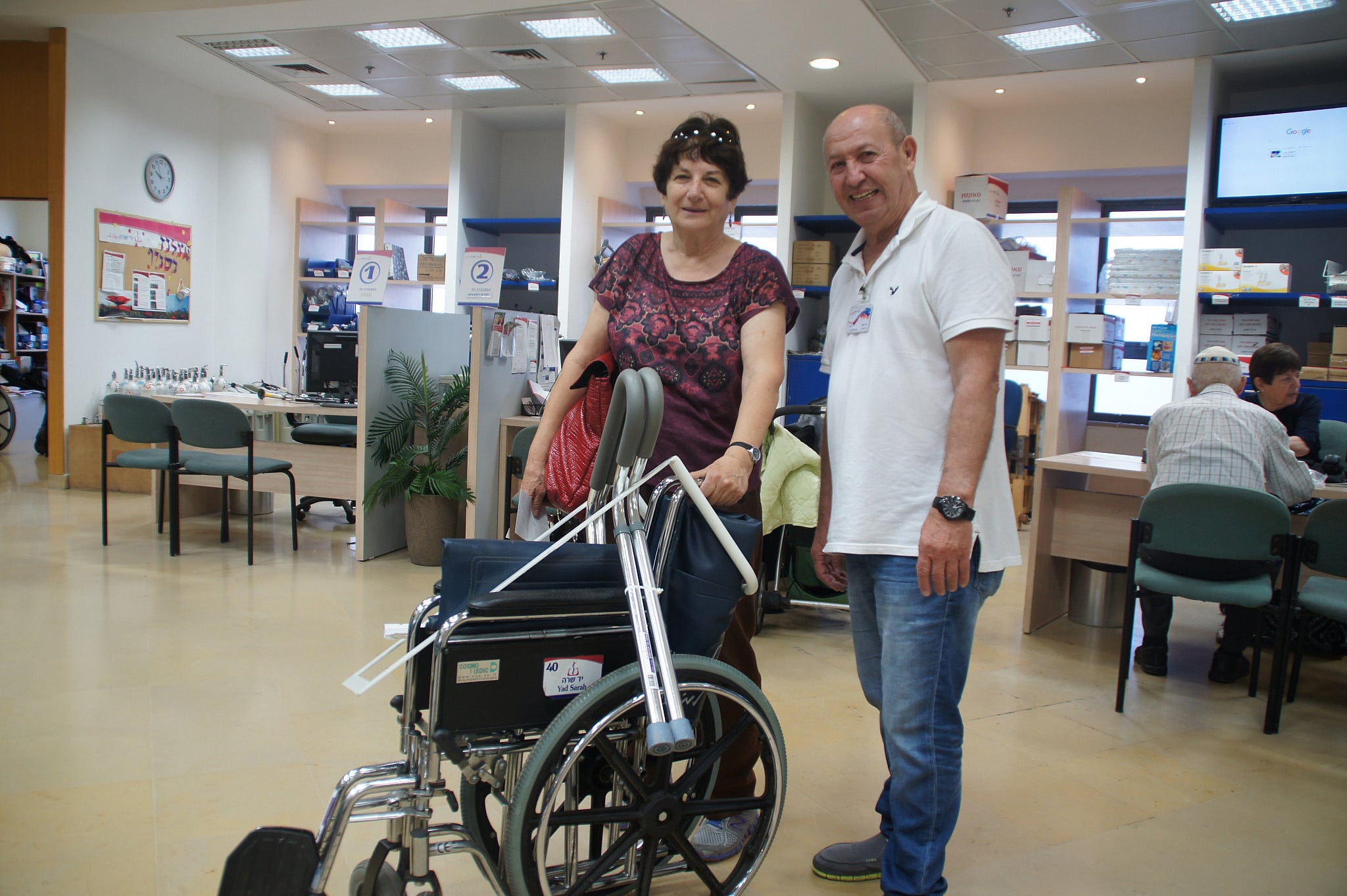
And then you start to understand the scale of it. The main floor is a hub of organized activity — wheelchairs, walkers, crutches, people being helped efficiently without long waits. They were incredibly busy, and yet the whole operation felt calm.
Then you keep walking. There is a call center, a children’s center, physical therapy sections, and an emergency room. As a nurse practitioner, I have spent a lot of time in ERs and know what they look like. When I walked into Yad Sarah’s ER, I was blown away. The department is split into pediatric and adult care and they have everything: X-rays, a visible lab so patients can see when doctors are running their tests, play areas for children, comfortable chairs, and rooms that are open enough to feel accessible but private enough for a family to have a hard conversation without the other clients listening.
That last part resonates with me, especially hard as a clinician. There have been times where I needed to deliver difficult news to a family but didn’t have a location with real privacy to have that conversation. At Yad Sarah, that space is built in.
The design starts with the patient, not the institution. That is what I kept thinking about after I left. That is what sets Yad Sarah apart—it is organized around the people who need it. Every floor, every program, every detail flows from one question: what does this person need right now?
The organization operates rooms where patients’ families can stay over Shabbat or a holiday when their loved one is in the hospital. Yad Sarah runs a medication program where unused prescriptions are safely checked by pharmacists and redistributed to people who cannot afford their own. There are IDF veteran volunteers who repair and custom-build equipment on-site — because if a pair of crutches does not fit, they will make one that does.
Last year, my family experienced Yad Sarah’s personalized care firsthand. My 11-year-old granddaughter was hit by a car and fractured her leg. She needed a wheelchair, so my daughter went straight to Yad Sarah. The local branch took care of my granddaughter immediately. They provided her with crutches and a wheelchair, and when the staff noticed that a standard wheelchair was too large for a child, they simply switched her to a pediatric model. No paperwork battle. No waiting. They just fixed the issue.
And the entire operation runs almost entirely on volunteers — thousands of them, across every profession, showing up every single day to support their neighbors. Even through the last few years of war, collective stress, and personal hardship, they keep showing up. That is not something you can manufacture or mandate. That is what happens when a community genuinely believes in what it is building together.
Yad Sarah changed the way I think about healthcare. The organization practices healthcare the way it should be practiced.