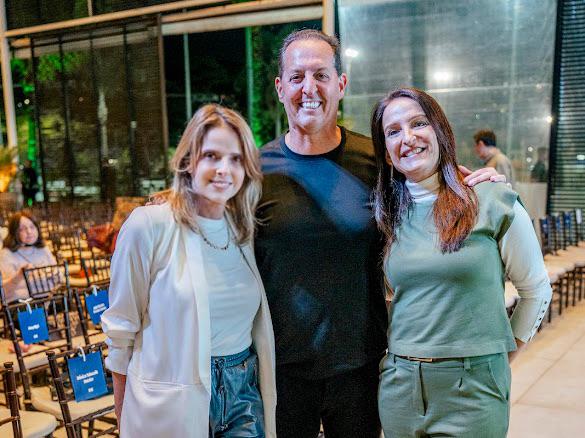
Hebraica, Memories and Generations: The Journey of Mônica Baran
The club that turns individual paths into a shared story.
As a columnist, I have the privilege of narrating stories that reveal not only personal journeys but also the power of a community to shape lives. The story of Mônica Drabik Baran is a living example of how Hebraica became more than just a club: it became a thread that runs through generations.
The Story of Mônica Baran
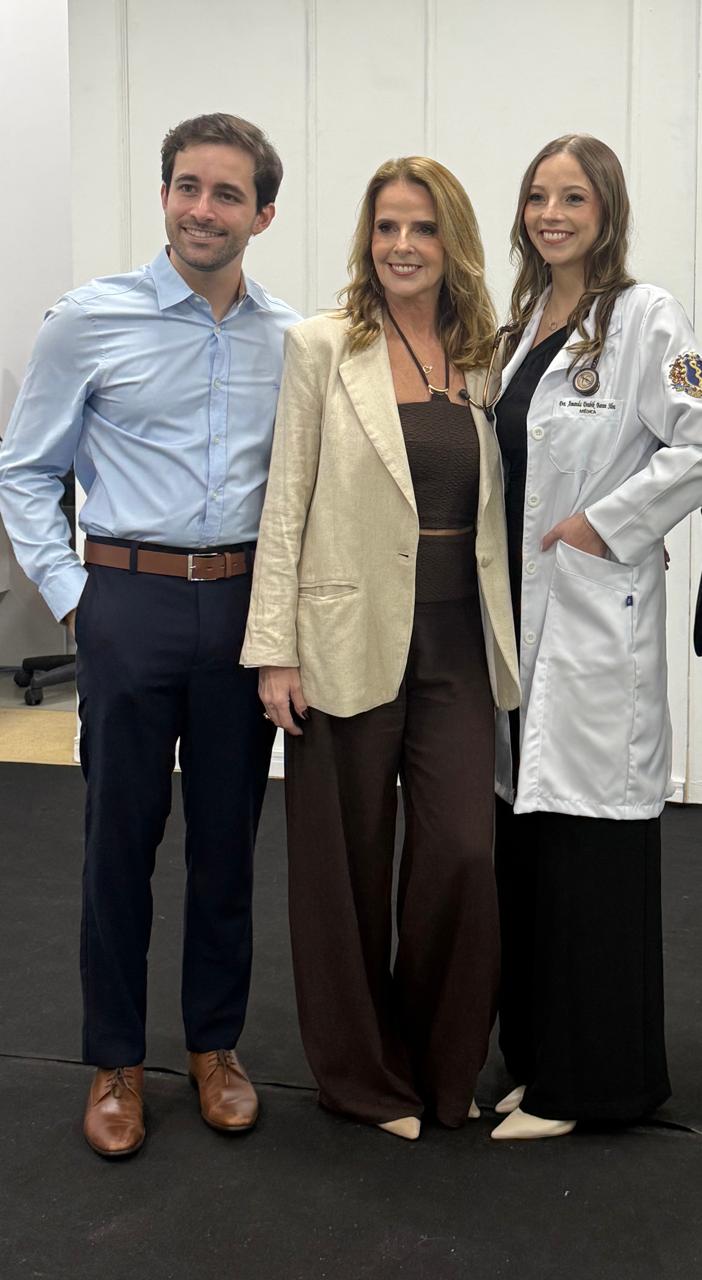
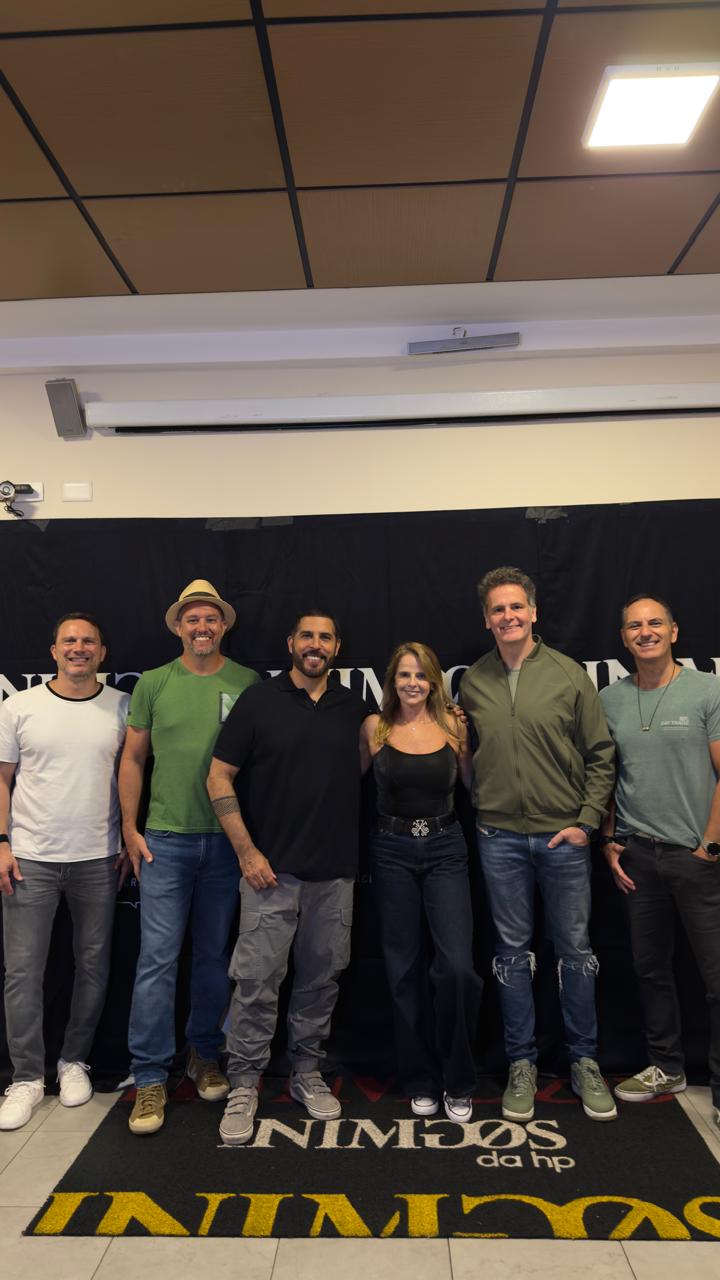
Today, Mônica Baran is Hebraica’s Social and Cultural Manager and mother of Leonardo Drabik Baran M. Silva and Amanda Drabik Baran M. Silva. Throughout her career, she has led the production of major events such as the Alok concert, Inimigos da HP, Confraria Hebraica, and the Women Against Antisemitism gathering, among many others.
The only daughter of Joel Baran and Josepha Drabik Baran, Mônica grew up surrounded by strong influences. Her father was her hero, best friend, and partner. Her mother, a constant presence, remained by her side until her final breath.
Family Roots
Joel Baran was born in Germany and, at the age of 13, was placed alone on a train by Mônica’s grandparents to escape the war. Her grandparents stayed behind and were tragically murdered by the Nazis. Amid persecution, Joel had to learn to survive on his own.
He spent part of his youth in Paris, lived in Paraguay, and eventually found a new home in Brazil. Here, he built an admirable career: a respected physician who treated prominent figures of the time, while also dedicating himself to the arts as a painter and gallery director.
Joel became the first director of Hebraica’s Galeria Atualidades, a role he held for ten years. He was the one who named the space, leaving a legacy that endures to this day. At that time, Mônica was only 12 and active in the Lapid Hanoar youth movement. Ironically, she disliked accompanying her father to the club, finding it exhausting to see him constantly busy with projects. Little did she know that years later, she would follow a very similar path.
Hebraica in Her Life
Gradually, Hebraica became part of her own story. Dance, rehearsals, and the Carmel Festival marked her youth. At 14, she was already working as a metapelet at the festival and later took on coordination roles.
In 1986, she began her career at Hebraica’s Nursery School and soon after at the Brazilian Maccabi Confederation (CBM). These were intense years, balancing two jobs and gaining experiences that eventually led her to coordinate the Department of Jewish Culture and later the Social and Cultural area. Altogether, she dedicated 26 years of professional work to the club.
Volunteering and Leadership
At another stage of her journey, Mônica returned to the club as a volunteer. Having previously worked with the Youth Department, she was later invited by then-president Daniel Bialski to serve as Vice President of Youth. For three years, she participated in management, now seeing the club from a different perspective than she had as a professional.
Pain and Resilience
Her story, however, is not only about achievements. In 2022, Mônica faced one of the most painful moments of her life: the loss of her mother. The absence struck deeply, as if the ground had suddenly disappeared beneath her feet.
During this time, she had to pause, breathe, and allow herself a sabbatical. It was a period of mourning and silence, but also of rebuilding. She learned that strength lies not in avoiding pain but in moving through it. Her children were her greatest motivation, sustaining her through this process of renewal.
A Return to Hebraica
Out of this passage came a new chapter. Amid her reconstruction, Hebraica reappeared in her life. A meeting with Fernando Rosenthal opened the door for her return to the club, now as manager. It was not just a new position: it was a reconnection with her roots, with the community that had always been present, even during times of distance.
Ledor Vador — From Generation to Generation
The most beautiful part is realizing that this bond did not begin with Mônica — it began with her father — and it did not end with her. Her children also grew up within the club, participated in Hebraikeinu, completed the Meidá leadership course, became madrichim, and remained connected to the community.
This is the true meaning of Ledor Vador — from generation to generation. Each one finds their own way to contribute, but the thread that unites them remains.
Today, the girl who once wanted to escape Hebraica smiles as she recognizes that the club has become part of her life, her family, and her history. A story marked by dedication, belonging, and the strength to overcome even the most difficult moments.
To our beloved mother at heart, Mônica Baran — a true example of life, strength, and professionalism. We deeply admire your determination, intelligence, and the integrity with which you carry every step, every project, and every person fortunate enough to cross your path. It is an honor and privilege to be your children at heart, witnessing up close the passion and dedication you put into everything you do. Your presence inspires us and fills us with pride every single day. We love you! Lilian and Ariel
My mother is my greatest role model as a person, for her dedication to family and work, as well as the care she has always shown to friends and the community. She is always by my side in every moment of my life, encouraging, supporting, and comforting me. I cannot fully describe everything I feel for her, only thank her for never sparing any effort for our family and for all the love she gives me. I love you so much, Mom! Leonardo Drabik Baran M. Silva
It is hard to put into words the depth of my love for my mother. She is my safe harbor, my strength, my comfort, and my greatest example. Beyond being a mother, she is also my best friend and, when needed, even takes on the role of father. I carry eternal pride and gratitude for being her daughter. My greatest dream is that one day I may become a woman as incredible and unique as she is. Amanda Drabik Baran M. Silva