There But . . .
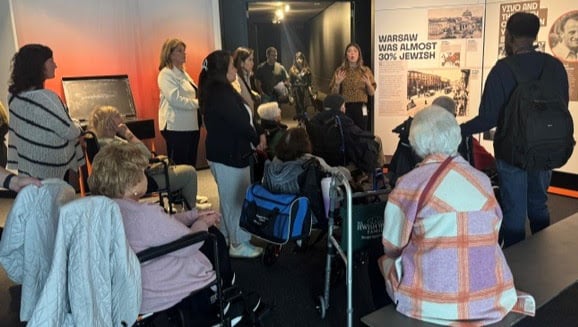
A new exhibit is in place at the Museum of Jewish Heritage in New York. Entitled “Will These Words Reach You?” it is a unique look at the history of the Warsaw Ghetto. Through the incredible foresight and concerted effort of archivist Emanuel Ringeblum, a group of 60 individuals in the Ghetto were recruited to record the events taking place around them. Not only did some write these materials, others diligently copied them by hand or on typewriters, to ensure that there was more than one set of records.
The documents, an incredible treasure trove of life in the Ghetto, were placed in metal containers and hidden, just before the Ghetto was liquidated. And, remarkably, several of those involved in creating these documents survived the war and were instrumental in retrieving these remarkable materials.
As I walked through the exhibit, I was struck by not just by the depth and detail of this testimony, not just by the overwhelming evidence of man’s inhumanity to man, but by the fact that they exist at all. There were so many moments when the words, “There but for the grace of God” seemed to apply. None of the individuals creating the documents were caught, the materials themselves were preserved and found, the history, in all its tragedy, is here for us to see, read and absorb.
One of the efforts of this group of courageous people was an effort to spread the word as to what was happening in Poland as well as in the Ghetto. They wanted to alert the world about death camps, about whole communities being destroyed, about conditions that were, at the very least, deplorable. They wanted, and thought they would receive, help in the face of these documented atrocities. Of course, as we know, help did not arrive.
As I followed the well-designed exhibit, I came across the first letter that managed to get out of the Ghetto. It was written by Rabbi Jacob Szulman of Grabow and says, in part, “Nearly four weeks ago everyone without exception was taken out—Jews from Kolo, men, women and children—and driven in cars to an unknown place. But this week a few survivors who escaped said they were all, spare us, killed. They were gassed and buried, 50-60 people at a time in a pit. Fresh victims are constantly being brought in, and the danger continues.”
I stood there for a long moment, reading and re-reading those words. I only knew the name Kolo because I knew that it was the place my father was born. His family escaped before the war because of his mother’s fierce determination. His father was in the United States, saving to bring his family, his wife and five children, to join him. My dad’s oldest brother received a draft notice for the Polish Army, and my grandmother went into action, finding a way to board a ship and bring her children to their new home.
It was a “there but for the grace of God” moment for me, knowing that things could have been very different had she not taken action, knowing that they would not have survived and that our family would never have existed.
Those who documented the atrocities of the Warsaw Ghetto, those who stood up to the fear by providing evidence of the truth, those who were brave enough to hide those documents before their lives were extinguished, so many “There but” moments. The history and the truth could have been, indeed might have been, lost to all future generations.
Our lives are neither a smooth path nor an uncomplicated journey. And when we have those moments, and we all do, when we realize how different things could have been and how fortunate we are, we need to pause, to appreciate and give thanks.