‘Help Is on the Way’: Trump and the Decisive Phase of the Iranian Revolution
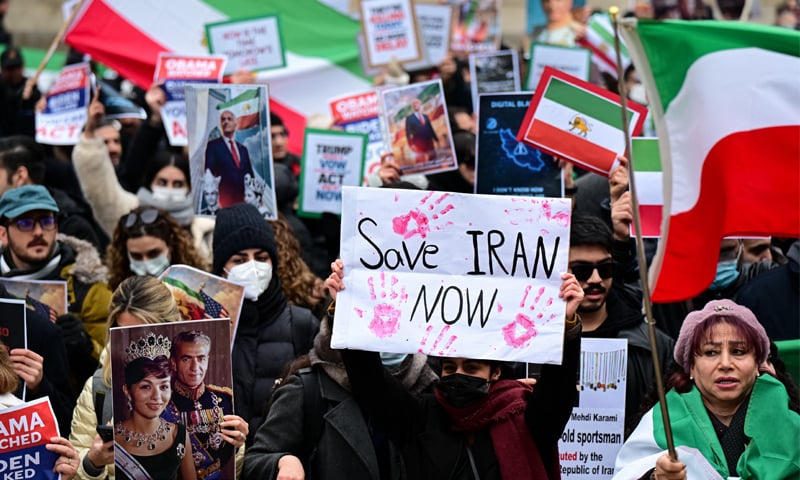
Iran is at a pivotal moment in its history. What kicked off in early 2026 as a surge of economic protests—sparked by a plummeting currency, skyrocketing prices, and rampant unemployment—has evolved into something much deeper. The crowds filling the streets of Iran are no longer just clamoring for basic necessities like bread or fuel. They are demanding freedom, dignity, and a rejection of a clerical regime that has maintained control through fear for over forty years.
This uprising hit a crucial turning point when US President Donald Trump decided to step away from diplomatic niceties and addressed the Iranian people directly. His message was clear and direct: keep fighting, expose the abusers, and know that “help is on the way.” At the same time, he put a freeze on diplomatic talks with Tehran until the violence against protesters ceased. In doing so, Trump shattered the regime’s carefully crafted illusion—that the world would simply turn a blind eye while it silenced dissent behind closed doors.
Extraordinary U.S. backing for Iranian people: “If Iran shots and violently kills peaceful protesters, which is their custom, the United States of America will come to their rescue. We are locked and loaded and ready to go.”
Posted 40 mins ago by President Trump on Truth Social pic.twitter.com/Huq5lC8ev5
— Hillel Neuer (@HillelNeuer) January 2, 2026
Trump’s stance reflects a clarity that many Iranians have long hoped to hear from the international community. He has never seen the Islamic Republic as a misunderstood government that could be reformed through polite dialogue. Instead, he has consistently recognized it for what it truly is: a system that survives by silencing its own citizens. By encouraging protesters to hold their ground and warning officials that their actions will be remembered, Trump has openly sided with those risking everything in the streets, rather than with the men giving orders from behind fortified walls.
.@POTUS: "We don't want to see what's happening in Iran happen. You know, if they want to have protests that's one thing. When they start killing thousands of people, and now you're telling me about hanging, well we'll see how that works out for them." pic.twitter.com/q86alesLVb
— Department of State (@StateDept) January 14, 2026
For protesters facing bullets, batons, and imprisonment, this recognition is significant. It matters to know that the most powerful office in the world is no longer pretending there’s a moral equivalence between a brutal state and an unarmed population. Trump’s words hold weight not because they promise easy solutions, but because they strip away the regime’s claims to legitimacy.
The pressing nature of this issue is made clear by the intense repression taking place in Iran. It’s nearly impossible to get accurate casualty numbers due to internet shutdowns and widespread arrests, but reports consistently reveal that live ammunition is being used against protesters, thousands are being detained, and trials are being rushed to instill fear in the populace. The regime’s familiar claim that protesters are foreign agents or “terrorists” is just a thinly veiled excuse for their brutality. It’s the language of a regime that has exhausted its arguments and now relies solely on force.
In this context, Trump’s warnings about executions and mass killings aren’t just reckless; they’re crucial. He’s trying to draw a moral and political line before the regime escalates its violence further, before silence becomes complicity. Unlike past moments when Western leaders chose to speak softly to maintain diplomatic ties, Trump has opted for a more direct approach, placing the responsibility for the bloodshed squarely on the clerical leadership and the Islamic Revolutionary Guard Corps.
Backing up that rhetoric is a lot of pressure. The administration’s threat to slap tariffs on countries that keep trading with Iran is a strategic move aimed at cutting off the regime’s economic lifeline, which it uses to fund its oppressive actions. By making it clear that access to the American market won’t be compatible with business as usual in Tehran, Trump has put governments in a position they’ve long tried to avoid.
Staying neutral in the face of widespread brutality is simply not an option anymore. Critics say that this kind of pressure could end up empowering hardliners. But let’s be real—those hardliners are already in power, and they’re already shooting at civilians. The notion that holding back or staying silent would somehow temper a regime that’s attacking its own people has been proven wrong time and again. What truly poses a threat to the clerical establishment isn’t a showdown with Washington, but rather the sight of millions of Iranians standing up and refusing to live in fear.
Iran’s exiled Crown Prince has sent a powerful message to President Trump, praising his strong stance for inspiring Iranians to stand up against a harsh clerical regime. While Supreme Leader Ali Khamenei continues to shout “Death to America,” the Crown Prince points out that the Iranian people are sending a completely different message—naming streets after Trump and openly demonstrating who they believe truly supports them. He argues that this stark contrast highlights the growing divide between a despised ruling elite and a populace yearning for freedom, insisting that when the regime eventually falls, a free Iran will remember who was on the right side of history. As events unfold in real time, this message raises an important question: should the United States openly support the Iranian people in their fight for a better future?
BREAKING: Iran’s exiled Crown Prince just sent a powerful message to President Trump.
He says Trump’s stance has given Iranians the courage to stand up to a brutal regime – while Khamenei screams “Death to America,” the people of Iran are doing the opposite.
They’re naming… pic.twitter.com/s6pY3sxzdy
— Tony Lane ???????? (@TonyLaneNV) January 11, 2026
Tehran’s contradictory behavior reveals its weakness. While publicly denouncing US.“interference,” elements within the regime quietly explore negotiations, signaling fear rather than confidence. Trump’s strategy exploits that fracture. By combining moral clarity with economic pressure and strategic ambiguity, he has intensified the internal struggle within Iran’s ruling elite without offering them the comfort of predictable concessions.
Globally, the crisis has exposed a dangerous tendency to blur moral lines. Some commentators have attempted to equate Iran’s uprising with protest movements in democratic countries. The comparison collapses under scrutiny. In democracies, protesters face governments that can be voted out, challenged in court, and scrutinized by free media. In Iran, protesters face a theocracy that recognizes none of those constraints and answers dissent with prison or death. Pretending these situations are comparable diminishes the courage of Iranians who know the cost of resistance all too well.
Whether Trump keeps his promise or not, I can guarantee you the regime in Iran will do everything in their power to prevent Iranians from seeing this post.
They will kill everyone and everything.
Time is running short, President. pic.twitter.com/QChImXWgRx
— ???????????????? ???????????????? ✡︎ ???????? (@NiohBerg) January 13, 2026
Trump’s position on Iran also fits within a broader regional vision that confronts violent political Islam head-on. Efforts to designate extremist networks and disrupt their funding reflect a consistent approach: regimes and movements that rely on intimidation and ideology rather than consent should not be rewarded with legitimacy. Supporters see this as overdue honesty. Detractors see risk. But for Iranians living under clerical rule, it signals that their struggle is finally being named for what it is—a fight against tyranny.
One significant aspect of this moment is the increasing mobilization of civil society beyond Iran, especially in the United States. In New York, the American Muslim & Multifaith Women’s Empowerment Council (AMMWEC) has organized a public rally outside the Iranian Consulate, framing the Iranian uprising as a universal human rights issue rather than a partisan or sectarian one. This rally is set for Thursday, January 15, at 6:00 PM, taking place at the Iranian Consulate located at 622 Third Avenue (between East 40th and 41st Streets), New York City, under the themes “Standing up for the people of Iran” and “Raising voices for freedom, dignity, and human rights.”
Dr. Anila Ali, the President and CEO of AMMWEC, who will be speaking at the event, highlighted the importance of multifaith solidarity during a time when the Iranian regime tries to label dissent as foreign interference or religious betrayal. “I’m honored to speak in New York, standing with the people of Iran and amplifying voices that deserve freedom, justice, and dignity,” she stated in a message accompanying the rally announcement. This event will bring together Jewish, Muslim, Christian, and Hindu communities, all united against oppression and rejecting the Islamic Revolutionary Guard Corps (IRGC) as a tool of terror rather than governance.
Join Jewish, Muslim, Christian, and Hindu communities united against terror and oppression. Say NO to the IRGC and YES to freedom and human rights. @anilaali #iraninanpeople #standwithiran #newyorkevents #freeiran pic.twitter.com/cR90gc5jT1
— AMMWEC (@ammwecofficial) January 14, 2026
These actions might seem symbolic, but symbols hold significant weight. They send a message to Iranians that the world is paying attention and that their fight has meaning that stretches beyond their own borders. When paired with Trump’s vocal support, they weave together a network of political, economic, and moral pressure that complicates the regime’s ability to act without consequence.
Iran is currently at a critical juncture. The protests have exposed the vulnerability of a system that rules through fear instead of consent. Trump has made a clear choice to align himself with the people rather than their oppressors. While this decision comes with its own set of risks, remaining silent would pose even greater dangers.
History will evaluate this moment not by the usual diplomatic formalities, but by whether those in power chose to confront brutality or simply justified it. “Help is on the way” isn’t just a promise of an easy win; it’s a statement that the Iranian people are no longer isolated—and that the time for turning a blind eye to clerical violence may finally be drawing to a close.