Henrietta Szold: A Success Story for Jewish American Heritage Month
Every May brings about the arrival of Jewish American Heritage Month (JAHM). Unfortunately, with so much happening in our world and an exponential rise in antisemitism, JAHM is often overlooked if not vilified, as in the recent Sesame Street incident. As American Jews, however, we need to share our own history in America so others will come to know how we have helped shape our country.
I often look back on the Jewish women who have been foundational in the development of American society and Jewish/Zionist activism. The one woman who always springs to mind is Henrietta Szold. Those of us involved in Hadassah, The Women’s Zionist Organization of America, know her name as the founder of our organization. However, there are many who do not and JAHM is the perfect time to extoll her virtues.
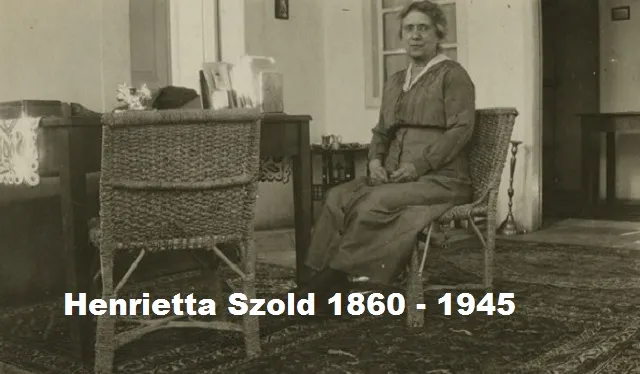
Henrietta Szold was born in 1860, in Baltimore, Md. Her father, a Hungarian Jew, Rabbi Benjamin Szold, was hired to be the leader of Temple Oheb Shalom.
Henrietta was the oldest daughter in a family of all girls. Her father, ahead of his time, believed in educating his daughters, and Henrietta excelled in every educational pursuit she followed.
Henrietta had a strong American upbringing. It has been told that Henrietta’s first memory was of President Abraham Lincoln’s funeral procession through Baltimore in 1865 when she was just a little girl. Thus, her American heritage began forming from a very early age. She knew she was an American and she knew she was fortunate to live in America, where she did not face the same levels of antisemitism her co-religionists faced in Eastern Europe.
While Henrietta graduated as valedictorian from Western High School (her academic record there has never been equaled), she did not go on to college because her only option, as a woman, was Vassar in Poughkeepsie, NY, and due to financial issues and distance, she could not attend. While another university, Johns Hopkins was in Baltimore, women were not allowed to enroll. As a result, she continued her education on her own and focused on Judaic studies with her father.
Henrietta’s first job was that of a teacher at the Misses Adams School for Girls in Baltimore. In addition, she assisted her father by teaching in their synagogue’s religious school and translated his sermons from German into English.
Henrietta’s father felt very connected to Baltimore’s broad Jewish community and would go to the docks to welcome Jewish immigrants arriving from Eastern Europe. These immigrants were fleeing pogroms in Russia and Eastern Europe, they were educated Jewishly and many of them were in the Zionist movement in their home countries.
Henrietta felt connected to these Jews and was impressed with their level of Jewish knowledge and their Zionist ideas. She realized, however, that they couldn’t succeed in America without learning English or understanding American society.
To address this challenge, Henrietta started a class for the Russian Jewish immigrants to teach them English and American Civics. While she was not financially able to fund the project herself, she fundraised to support the venture.
Henrietta located a space, purchased learning materials, hired teachers and opened her night school in 1889. She expected to have about 30 students but, by the second night, she had 80 and had to open a second class. While the school was created to help the Russian Jewish immigrants, Henrietta did not turn away other immigrants from different countries. This was a philosophy she held throughout her life: She would never discriminate, regardless of religion or ethnicity. Every individual who chose to attend her school was welcomed.
Henrietta understood the new immigrants’ needs and passionately sought to fill them. She ran her school for 10 years, helping thousands of immigrants to learn English. Eventually, the City of Baltimore took on the responsibility of running the school.
Throughout her life, Henrietta tirelessly and doggedly supported those in need. Had she been born in the 20th century, instead of the 19th, many more doors would have been open to her. As a woman born in the Victorian age, she did what she could to fulfill her mission, dedicating her life to educating and helping others. She supported social welfare projects within the Jewish community and prided herself on maintaining a traditional Jewish life, albeit one in which she strove to be equal to men.
Henrietta was the first editor of the Jewish Publication Society, although she was named as the secretary. She also edited the American Jewish Yearbook, and was called the secretary. In 1898, she was elected to the executive board of the Federation of American Zionists, as their secretary. As a woman, she was never given the credit she deserved for the work that she did. These are just a few examples of how Henrietta was involved in the development of American Jewish life.
Henrietta was a brilliant woman and always regretted not going to college. After her father died, she befriended Solomon Schechter, then chancellor of the Jewish Theological Seminary (JTS), a rabbinical college that was bridging the distance between Orthodox and Reform Judaism, birthing the traditional Conservative movement. She asked if she could study there and was accepted – but only with the caveat that she must sign a document promising not to become a rabbi, which she did. She maintained her friendship with Solomon Schechter and his wife, Matilda, for the rest of her life.
Henrietta Szold took advantage of whatever educational opportunities she could to continue her Jewish journey. She worked with many of the rabbinical students at JTS, editing and translating their lectures and studies. This was how Henrietta strengthened her personal Jewish American heritage, fulfilling part of her American dream.
But as Henrietta continued to face sexist hurdles in every aspect of her life and to witness over and over how women were consistently relegated to more minor positions and lower pay, she realized that American Jewish women needed to run their own organization where they could make their own decisions.
Her Zionist vision was the motivator to founding Hadassah. Her goal was to bring modern American health care to the people of Ottoman Empire-ruled Palestine, true to her core value of providing for everyone, regardless of religion or ethnicity.
Although American women did not have the right to vote in 1912, or any individual financial power, Henrietta and the first women of Hadassah were able to raise enough funds to send two nurses in 1912 to Palestine to set up a visiting nurse service. She followed the model of the visiting nurse service established in New York by Lillian Wald. This was a Jewish American success story.
The two nurses, Rose Kaplan and Rae Landy, began providing maternity and well-baby care as well as treating trachoma, the debilitating eye disease, which was rampant at the time in Palestine. In 1918, Hadassah sent the American Zionist Medical Unit to Palestine to set up medical clinics and hospitals throughout the Land. They also established the first nursing school in Palestine that year. Hadassah was well on its way to creating the health infrastructure for the future land of Israel.
Henrietta also played a pivotal role in establishing Youth Aliyah, a movement that rescued Jewish orphans from war-torn Europe and provided them with a home in Palestine.
To this day, Hadassah continues to support the Hadassah Medical Organization, with its two renowned hospitals in Jerusalem, and its two Youth Aliyah villages for children at risk in Israel.
Henrietta Szold was an American Jewish icon. She led the way for hundreds of thousands of Jewish American Zionist women to become leaders and advocates for Israel and women’s rights in their communities. Her strength and determination in achieving her goals demonstrated her strength of character and made her a role model for Jewish American women for over a century. She was a powerhouse in developing the Jewish identity of American Jews in the 19th and 20th centuries and an exemplary testament to Jewish American heritage.