Author of 'Juggernaut: a Paradigm Shift on Antisemitism'
The 40th year – The future of the State of Israel
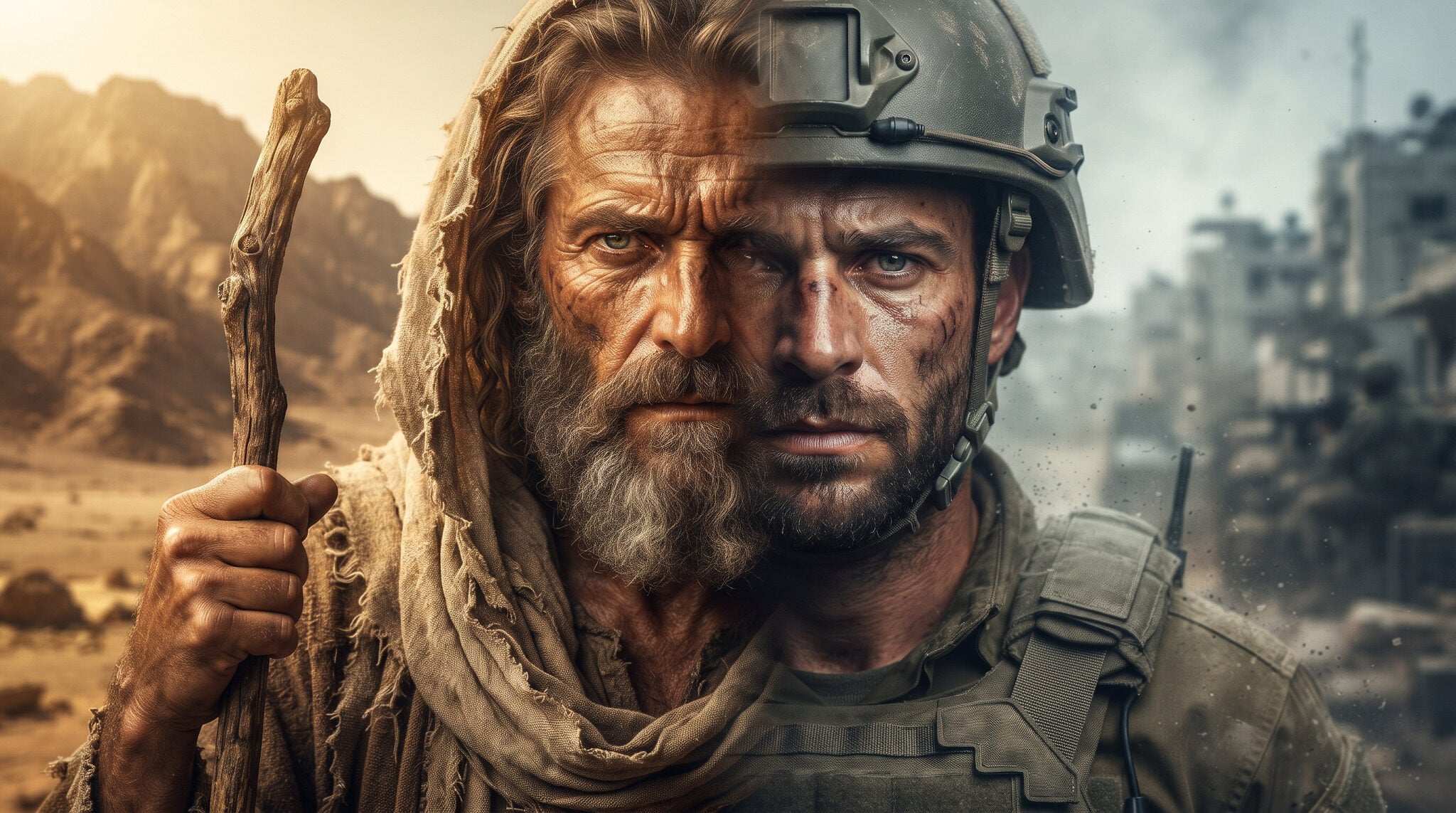
The 40th Year - The Future of the Jewish Nation
It is the year 2026. Israel is 78 years old, and people on both sides talk about it as if the story is finished. Its enemies say the experiment is failing. Its friends say it has already arrived. Both are wrong, because both forget the oldest lesson our people were ever given about leaving slavery and taking the land: the exit happens in one night, but the entry takes a generation.
When the Hebrews left Egypt, they walked out in a single night. The sea opened, Pharaoh’s army drowned, and a nation of slaves stood free on the other side. The road from Sinai to the border of Canaan was an eleven-day walk. It took them forty years. The road wasn’t long. The people walking it were simply still slaves. They had a diaspora mentality that needed to end in order to be sovereign. Because sovereignty means ultimate strength with no fear and nothing but conviction. When the spies came back and said the land was strong and its people were giants, the generation that left Egypt cried and wanted to go back. In the middle of the desert, free, fed from heaven, they remembered the fish, the cucumbers, the leeks and the onions of Egypt, and they missed their chains. They missed the comfortableness of being numb and not carrying any responsibility. There is something comfortable about being a slave sometimes – and that is the trap that needs to be opened. So the sentence was given: this generation will wander until it is gone, and its children, the ones who never knew the whip, will enter the land. Of everyone who left Egypt as an adult, only Joshua and Caleb crossed the Jordan. Everyone else was born free.
That is the key to understanding where Israel stands today and where it is going.
In my book, Juggernaut: A Paradigm Shift on Antisemitism, I wrote that our war of independence did not start in 1948. It started in 1881, when the Biluim got up from the pogroms of Russia and came home. That was the night of the exodus. The door was open. If the Jews of Europe, Russia and America had walked through it then, the mess we live in today would not exist. There would have been no Mandate betrayal by the British custodians, no Arab majority to bargain with, no Holocaust to leave a mark on the nation that would come after it. But most of them did not walk out. They stayed in Egypt. They called it emancipation, they called it Reform, they called it the Bund, they called it America. And the ones who did come home came carrying Egypt on their backs.
David Ben-Gurion understood this better than anyone. His dream was the new Hebrew, the Sabra: tanned, driving a tractor, carrying a rifle, speaking Hebrew, born in the land and owing nothing to anyone. Not the Jew of the shtetl who asks permission, but the Hebrew who takes responsibility. He knew the generation that founded the state was not that Hebrew. It was the generation of the desert. It knew pogroms, ghettos, camps and fear. So he made his calculation. When he exempted 400 yeshiva students from the army, he believed that within one generation the old world would fade and the Sabra would replace it.
Ben-Gurion was right about the destination and wrong about the time. He bet on one generation. He did not have forty years in a quiet desert to let the slave generation pass. He had to fight wars with that generation in the same moment he was building a state with it. The desert and the conquest happened at the same time, with the same people, and that is why it is taking longer.
Seventy-eight years later, we still have the generation that knows Egypt. We have the survivors’ children and grandchildren, raised inside the memory of the Holocaust. We have the reflexes of exile: looking over the shoulder to see what the nations will say, asking the world’s permission to defend ourselves, measuring our worth by the approval of foreign capitals. Israel was not born from the Holocaust, but it carries the Holocaust inside it, the way the generation of the desert carried Egypt inside them even after the sea closed behind them. That memory is not a crime. It is a weight. As long as the people leading the nation carry it, the nation walks the desert.
And the desert keeps filling up. In the Torah, the generation of Egypt left once and was counted once. Nobody new walked out of Egypt in the twentieth year to join the camp. With us, the exodus never stopped. Aliyah continues every year, and every oleh brings the Diaspora with him. The Russian Jew, the Canadian Jew, the British Jew, the American Jew, the French Jew, the Polish Jew, the Ethiopian Jew, even the Bnei Menashe: they come home, they get their teudat zehut, they serve, they pay taxes, and they still live, breathe and feel as if they are in the Diaspora. Not because they are bad Jews. They came home, and that is more than most did. But they don’t know what sovereignty really means, because nobody can learn it in one lifetime. You can take a Jew out of the Galut in one flight. You cannot take the Galut out of the Jew in one generation. So every new oleh starts his own forty years from the day he lands. His children will be born in the land but raised by a parent from Egypt. His grandchildren will hear the Diaspora at the dinner table. Only his great-grandchildren, who never knew him, maybe only his great-great-grandchildren, will be the generation that knows no exile. Every wave of Aliyah resets the clock for its own family line.
But there is another reason the desert is longer this time, and it is the reason most people miss. In the Torah, once the Hebrews crossed the sea, Egypt stayed behind. Pharaoh did not send letters. Egypt did not fund factions inside the camp or threaten to cut the manna if Moses made the wrong decision. Today, Egypt calls every day. The Diaspora still exists, and it still has money and political leverage over the people of Israel. It lobbies foreign governments about how Israel should fight. It writes cheques with conditions. It tells the Sabra how to behave from a suburb in New Jersey or a gala in London. It confuses the Investor with the Builder. And when the Diaspora Jew makes bad choices, his host country holds him as a hostage and uses him against Israel. So the generation of the desert inside Israel is refreshed twice: by the olim who bring Egypt with them, and by an Egypt outside that refuses to die.
Except it is dying.
The numbers are not opinion. Intermarriage among the non-Orthodox Diaspora runs between 60% and 70%. Fertility sits at about 1.4 children per woman, while replacement is 2.1. Put that into the math and the result is terminal dilution of the Diaspora around 2070. Not through destruction. Through dissolution, generation by generation, into the host nations, until nothing is left of the “United Jewish People” but a fiction. In fifty years, all of Jewish life will have moved to Israel. Whoever is Jewish in the Diaspora by then will either have come home or will be a memory in someone’s family tree.
When the Diaspora disappears, both sources of Egypt dry up together. There will be no new olim arriving with exile in their bones, because there will be no exile left to arrive from. There will be no rich uncle to tell Israel how to fight, no lobby to bargain with the Sabra’s security, no community abroad for a host country to take hostage against Israel. The exile mindset inside Israel loses its source as well. The Safe Mode theology that says the Jew must wait in exile was never built in Jerusalem; it was imported from the Galut and kept alive by it. Without a Galut to point back to, everyone who lives in the land has to answer to the land, the language and the army, like everyone else.
That is when Ben-Gurion’s dream stops being a dream. It becomes reality, because the death of the Diaspora turns it into arithmetic.
It will take at least another hundred years. Not forty, because our desert was crossed under fire, because Egypt kept calling, and because new people kept walking out of Egypt into the camp. The last olim will come home when the Diaspora runs out, and the clock has to run out for them too. A hundred years until the great-grandchildren of the last generation that knew exile are the ones running the country. A generation that knows nothing of exile except what it reads in history books. A generation that never heard a parent or a grandparent describe a camp or a pogrom or life as a minority, never felt a need to apologize to the nations, never had a second home to escape to and speaks only Hebrew – a tanned Sabra child of the land. That generation will be tied to the land completely, because there will be nowhere else. No passport in a drawer. No relatives in the Diaspora with a spare room. No option to leave. No legal right for a foreign passport based on grandparents, no holocaust reparations from Germany, no diaspora to claim they know better. Only the land.
That is Joshua’s generation. The generation that does not ask whether the giants are too big. The generation that crosses the Jordan because it never learned to be afraid of Pharaoh. In 1948 we left Egypt. Today we are still walking the desert. The Sabra is not a type of Israeli among others. The Sabra is the destination: the Hebrew whose Hardware and Operating System are one and the same, sovereign in his body and sovereign in his mind.
So what does the generation of the desert do while it waits? It does not sit in the sand and count the years. The forty years were not empty. In the desert our fathers received the Torah, built the Mishkan with their own hands, organized the tribes, counted the fighters and learned to march as one camp. Every morning they went out and gathered the manna, enough for that day only, and the next morning they did it again. Joshua spent those forty years serving Moses, standing at the entrance of the tent, learning, so that when the time came the one who led the conquest would be ready. The generation that would never enter the land prepared the generation that would. That is our job now. We will not see the Sabra nation in full. Most of us will not see the end of the desert. But we raise the children in Hebrew, we send them to the army, we build the house, we plant the field, and we do not leave. Honi HaMe’agel once saw an old man planting a carob tree, a tree that takes seventy years to give fruit, and asked him why he bothered when he would never eat from it. The old man answered that he found carob trees in the world planted by his fathers, and he was planting for his children. That is what patience means for a nation. Not waiting for something to happen, but working every day for something you will not be there to see. No shortcuts, no miracles on demand, no running back to Egypt when it gets hard. Only work, dedication and the conviction that the Constant always returns to its coordinate.
Moses knew this to be our future, Ben-Gurion saw that Hebrew in his dream. Our great-grandchildren’s children will be him. We must simply remember that all we have is conviction. Those who lose their conviction will disappear. The Sabra will rise again like in days of old – we simply need to have the faith and conviction in our people, in our right, and in our strength that no matter what – the third kingdom of Israel has begun, and we are part of its beginning. Not it’s middle, and definitely – not its end. The road is long and the night is not over. There will be dark hours on it, wars we did not choose, and days when the giants look too big. But in the days of old, when the new moon was sanctified in Jerusalem, our fathers lit a torch on the Mount of Olives, and from mountaintop to mountaintop the fire was passed until the whole land was burning with light. We are one of those mountaintops. We will not see the last fire lit. Our task is to take the flame from the hill behind us and hold it high for the hill ahead, until the day the last torch burns, the desert is behind us, and the Hebrew stands on his land as he did in the beginning – free, sovereign, and home.
Related Topics
Related Posts