A Mermaid in Jerusalem
Featured Post
Here’s who I’m inviting to my sukkah
After so much debate over who is and isn't Jewish enough to speak to, I want to see 10 dramatically different Jews at one table, hashing it out
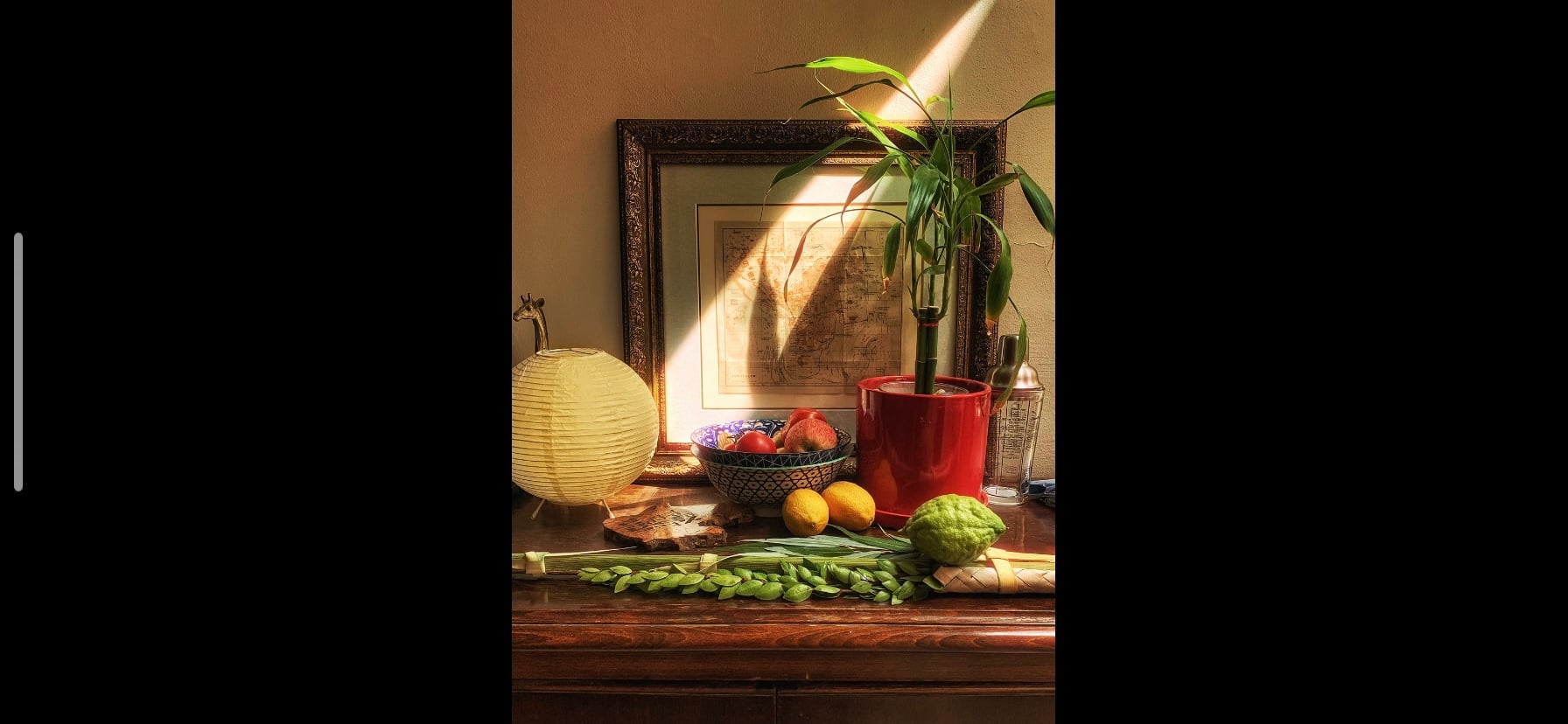
(Sarah Tuttle-Singer)
I have been thinking about who I would invite into my sukkah this year.
First, a caveat: I did not actually build a sukkah so this is super easy for me to say.
I have no folding tables to drag outside, no schach to wrestle into place, no decorations blowing down in the Jerusalem wind.
So perhaps I am being extremely generous with imaginary square footage.
But if I had one, I know exactly who I would want inside.
I want 10 Jews.
Ten very different Jews.
Ten Jews who might never willingly choose to sit at the same table.
And I want all of them there.
My peoples of Israel.
1. I want a Haredi Jew.
Black hat, white shirt, tzitzit out. Someone who learns Torah every day and organizes his life around halacha.
I want to hear what he loves about being Jewish.
I want to hear what frightens him about the direction the Jewish people are going.
I want to know what he thinks people like me misunderstand about people like him.
And I want him to hear what the rest of us misunderstand about ourselves, too.
He gets a chair.
2. I want a completely secular Israeli.
Someone who hasn’t been inside a synagogue in years and isn’t planning to start now.
Maybe she grew up on a kibbutz. Maybe she eats shrimp. Maybe Yom Kippur means bicycles and an empty highway.
And yet she speaks Hebrew. Her calendar moves according to Jewish time. She knows when the holidays are coming because the supermarket changes what is stacked near the entrance.
She may tell you she isn’t religious at all.
She is still part of this extraordinary, maddening Jewish story.
She gets a chair.
3. I want a Reform Jew from America.
Someone who grew up with summer camp and guitar music and a female rabbi and tikkun olam as part of the vocabulary of Jewish life.
Maybe they come to Israel and discover that half the country doesn’t quite understand what Reform Judaism actually is.
Maybe they have spent years being told that the way they practice Judaism isn’t really Judaism.
Come in. Bring your guitar.
You get a chair.
4. I want a Sephardi or Mizrahi Jew whose Judaism doesn’t fit neatly into any of these boxes.
Someone who drives to synagogue on Shabbat and then kisses the mezuzah on the way in.
Someone whose grandmother never needed to decide whether she was Orthodox, Conservative or Reform because Judaism was simply Judaism.
Bring the recipes.
Bring the piyutim.
Bring the stories of Baghdad or Aleppo or Casablanca or Tunis or Sana’a.
And please, for the love of God, bring whatever your grandmother made for Sukkot.
You definitely get a chair.
5. I want the Jew who lives over the Green Line.
I want to know why you live where you live.
Not the slogan. Not the version people shout about on television.
Yours.
Tell me what you believe. Tell me what you fear. Tell me what you hope this land will look like in 50 years.
I may argue with you.
You may argue with me.
Stay anyway.
You get a chair.
6. And I want the Jewish peace activist sitting right next to them.
Yes, right next to them.
The one who protests.
The one who worries about occupation and Palestinian rights and what power is doing to us.
I want to hear why you keep showing up.
I want to hear what you love enough to fight for.
And I want you to stay at the table even when the person beside you says something that makes your blood pressure rise.
You get a chair too.
Try not to throw the etrog.
7. I want the Jew who is furious with Israel right now.
Maybe furious with the government.
Maybe furious with the war.
Maybe furious with Israeli society.
Maybe wondering how to hold onto a relationship with this place at all.
I don’t need you to leave your anger outside.
Bring it.
But bring your love too, if you can find it.
And if you can’t find it right now, come anyway.
There’s a chair.
8. I want the Jew who is furious at the rest of the world.
The one who has spent the last few years watching antisemitism rise and feels abandoned.
The one who sees a Star of David ripped down or a synagogue vandalized or another Jewish student frightened on campus and thinks: Again? Really?
The one who is exhausted from explaining that Jewish fear is real.
Come in.
You don’t have to explain it tonight.
Sit down.
Eat something.
You get a chair.
9. I want the Jew who believes in God completely.
Not theoretically.
Really believes.
The Jew who says a blessing and means every word.
The Jew who sees God’s hand in history, who talks to God when nobody else is listening, who can look at this battered world and somehow maintain faith.
I have questions for you.
So many questions.
You get a chair.
10. And I want the Jew who isn’t sure there is a God at all.
Maybe you haven’t prayed in decades.
Maybe you tried and heard silence.
Maybe you desperately want to believe and can’t.
Maybe you think the whole thing is beautiful mythology held together by history, memory, stubbornness and really good food.
Come.
You don’t have to believe in God to sit beneath the schach.
You don’t even have to know the blessing.
Someone will whisper it to you.
You get a chair.
Because this year, more than almost anything, I find myself craving Jewish unity.
And I don’t mean uniformity.
I don’t want 10 Jews sitting politely around a table agreeing about everything.
First of all, that sounds incredibly boring.
Second, have you met us?
I want the arguments.
I want someone saying, “But that’s not what Rambam meant.”
I want someone else saying, “I don’t care what Rambam meant.”
I want somebody’s grandmother interrupting both of them to insist that everyone eat.
I want politics and Torah and history and all the gossip.
I want someone singing the wrong tune.
I want someone correcting them.
I want somebody asking whether this is really the correct blessing.
I want laughter.
I want disagreement.
I want 10 different ways of being Jewish under one fragile roof.
Because we have spent so much time deciding who is Jewish enough.
Religious enough.
Secular enough.
Zionist enough.
Critical enough.
Loyal enough.
Progressive enough.
Traditional enough.
Right enough.
And the Jewish people cannot afford to keep making ourselves smaller.
Especially now.
Antisemitism does not stop at the boundaries we draw between ourselves.
The person who hates Jews isn’t going to ask which synagogue you attend before deciding whether you count.
And I refuse to allow people who hate us to be better at recognizing our shared peoplehood than we are.
That doesn’t mean our differences don’t matter.
They matter enormously.
Some of our disagreements are about questions of life and death, justice and power, war and peace, religion and democracy, the very character of the Jewish state and the Jewish future.
Unity doesn’t mean shutting up.
It doesn’t mean abandoning our principles.
It doesn’t mean pretending everything is fine.
It means remembering, somewhere underneath all of it:
You are still my people.
You can make me furious and still be my people.
I can think you are profoundly wrong and still pass you the challah.
We can fight about the future and still recognize that, somehow, we are responsible for one another.
Maybe that is what I love about the sukkah.
It isn’t a fortress.
Its walls aren’t particularly impressive.
Its roof has holes.
You can feel the wind.
You can see the stars.
And nevertheless, we enter it together and call it zman simchateinu, the time of our rejoicing.
The season of our joy.
So yes, I want all 10 of you in my imaginary sukkah.
Actually, bring 11.
Bring 20.
Bring the Jew I forgot.
Bring the Jew who thinks this entire list is ridiculous.
There’s room for them too.
And again, full disclosure: I did not actually build a sukkah this year.
So all this magnanimous talk about how everyone is welcome beneath my schach is costing me absolutely nothing.
But I do have a lulav and an etrog.
I have some very good whisky.
I have opinions.
And I have chairs.
So come over.
All of you.
You’re welcome here.
Bring Sunkist candies.
Related Topics
Related Posts