

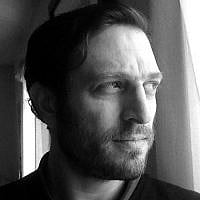
Herman (Hersz) Strasfogel, Birkenau’s Lost Witness
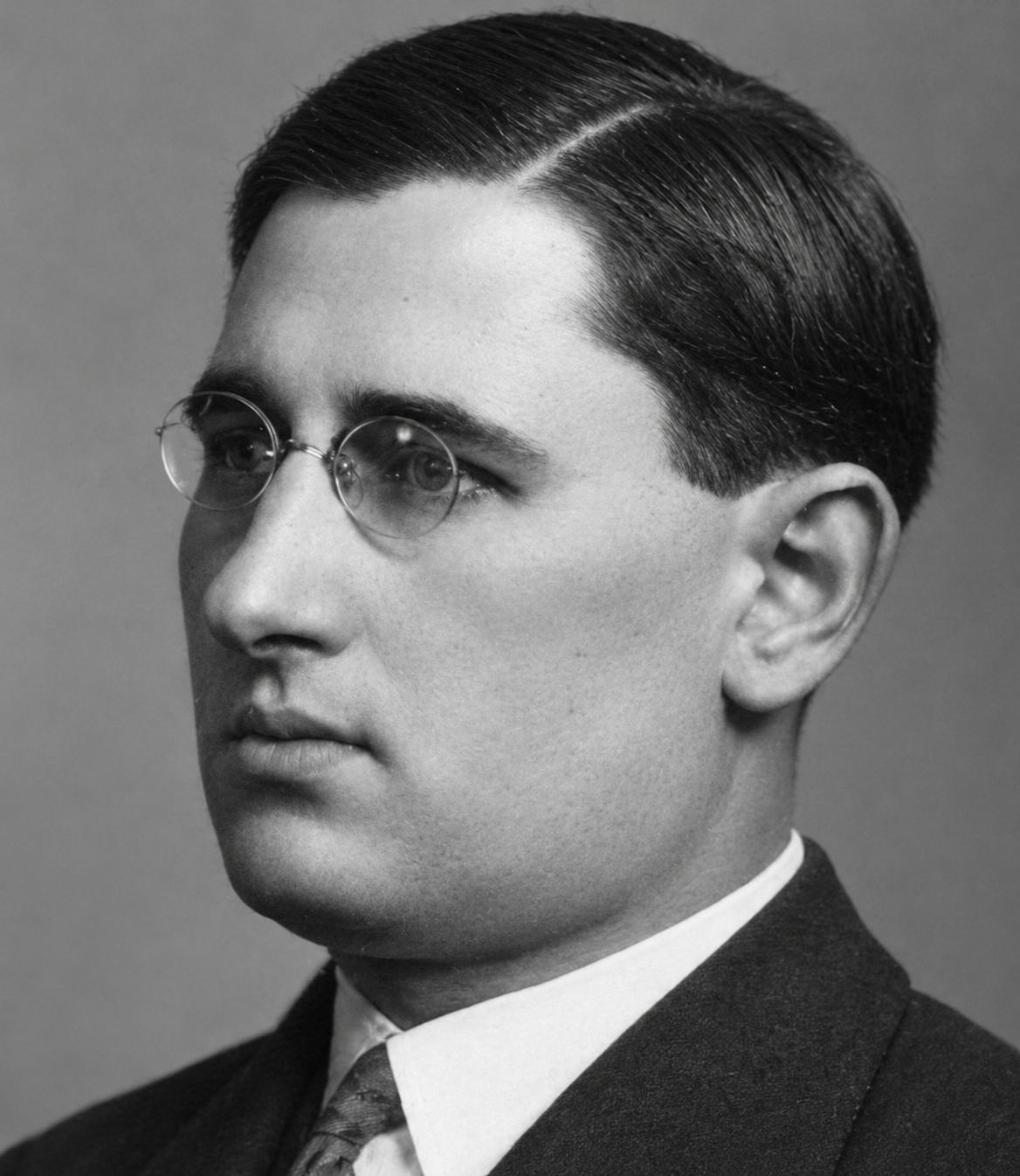
In 2018 the archivist Karen Taïeb restored a Sonderkommando letter to its author. With Géraldine Muhlmann, she published L’histoire de la lettre de Hersz-Herman Strasfogel, in 2026.
The letter
On 6 November 1944, Hersz Strasfogel, a Polish Jew deported from France and forced to serve in the Sonderkommando at Crematorium III in Auschwitz-Birkenau, wrote to his wife and daughter. He concealed the letter in a bottle near the crematoria. It was found in February 1945, signed only “Herman,” and for decades, circulated under the name of Chaïm Hermann, a Polish Jew born in Warsaw. Both had lived and worked in Paris’s XIth arrondissement and had been deported on convoy 49. In 1978, Serge Klarsfeld published the letter as Hermann’s in The Holocaust and the Neo-Nazi Mythomania, and the error entered the documentary record, following Ber Mark and Rutwoksi.
The correction came from a form. In 2002 Strasfogel’s daughter Simone asked that her father’s name be inscribed on the Mémorial de la Shoah’s Wall of Names. From that document Taïeb established that “Herman” was his usual name in France and that the daughter registered as Sima had become Simone. The original manuscript had remained with the family. No revelation was involved. Independent evidence was set against the surviving text until it fitted a single life.
A philosophical question
Paul Ricœur placed testimony at the intersection of memory, historical knowledge and trust. The witness asks to be believed, and that claim stays open to comparison with other evidence. Derrida adds that credibility cannot be wholly separated from the possibility of error or deception. Strasfogel’s letter acquired its historical force through exactly this exposure. Its discovery, transcription, publication, misattribution and eventual identification form a chain of transmission in which its meaning was repeatedly reconstructed, and the correction was part of that chain.
Primo Levi used the expression “gray zone” for the morally compromised positions the camp system created. The Sonderkommando, prisoners made to handle the bodies in the gas chambers, were among its most disturbing cases. Those who wrote from inside that zone had every reason to expect that they would not be believed.
In The Differend, Jean-François Lyotard analyses how Robert Faurisson exploited this situation. He demanded a witness who had seen the gas chambers operating, while disqualifying everyone who could have been one, because they had been murdered. A standard of proof that cannot be met makes the crime unprovable by construction. Adorno’s analysis of genocide as the extreme expression of a social logic that renders individuals interchangeable specimens supplies the background. The denier’s procedure repeats that logic at the level of evidence: no particular victim is ever allowed to count as a witness.
Muhlmann’s L’imposture du théologico-politique (Les Belles Lettres, 2022) criticises the idea that beneath political events lies a hidden religious substance that only the philosopher can read. One section of the book examines how Agamben’s treatment of Auschwitz forces reality to fit such a thesis.
In his 1949 Bremen lectures, Heidegger asked whether those murdered in the camps could properly be said to die. He described them as perishing and associated the production of corpses in gas chambers with modern technological processes. The comparison is deeply troubling. In Being and Time, death is the possibility that individualises: no one can take another’s place in undergoing their own death. In Bremen, industrial murder is absorbed into a general account of technology, and the singularity of the dead risks disappearing into the vocabulary of production and disposal.
Heidegger reduces to a single essence of the age made to explain the extermination, and the victims drop out of the explanation.
The French reception shows the same pattern at the level of fact. According to reporting in Le Monde, Jean Beaufret, Heidegger’s principal French interpreter, wrote to Faurisson in November 1978 and January 1979, expressing sympathy with his doubts about the gas chambers. François Fédier, a defender of Heidegger, argued that the correspondence must be understood against an assault on Faurisson. Faurisson had, however, already published denialist claims for years, including in October 1978, so the correspondence cannot accurately be described as predating his public denial.
Georges Didi-Huberman’s Images in Spite of All defends four photographs taken by Sonderkommando members in August 1944. Claude Lanzmann distrusted such images, and Gérard Wajcman warned against fetishising them. Didi-Huberman answers that they are fragments, to be neither dismissed nor mistaken for the whole. “In order to know, we must imagine” does not license invention; it asks that the limits of the evidence stay visible. Gerhard Richter’s Birkenau paintings mark the opposite limit: he painted over reproductions of the photographs until only abstract surfaces remained.
Roland Barthes proclaimed “the death of the author.” Michel Foucault replied in 1969 that the author is a function, a device for attributing responsibility. Muhlmann’s account of journalism rests on the same function: a claim of truth is worth what its author can be held to. Strasfogel’s letter shows that function by its absence. Under the wrong name, it produced a false biography, not a freer reading. A name that records could confirm corrected it. Generative AI also generates the uncorrected grammar. Lyotard showed how deniers exploit it.
Two bottles
Strasfogel did not write alone in that place and that season. A few days before his letter, another prisoner of the Sonderkommando buried a text near the same crematorium. Marcel Nadjari, a Jew from Thessaloniki, wrote his notes on 3 November 1944, three days before Strasfogel’s letter. His manuscript, hidden in a glass thermos inside a leather briefcase, was found by a forestry student in 1980 near the ruins of Crematorium III, and it is the last text by a Sonderkommando prisoner to have been discovered. It is a twelve-page letter in Greek, and Nadjari was deported from Athens in April 1944.
The parallels with Strasfogel are close. Both men wrote in the weeks after the Sonderkommando revolt, near the same building, with the same hope that a container buried in the ground would carry their words to people they loved or trusted. Nadjari hoped the finder would pass his letter to a Greek diplomat, who would deliver it to his family in Greece. Both texts depend on the survival of a physical object and on strangers who dug it up. Both also meet the problem of the name. Nadjari’s own surname appears in the literature as Nadjari, Nadjary, Nadjar and Nadzari, a spelling instability that records how easily a witness can be blurred by the records that preserve him.
The two cases differ in ways that matter. Strasfogel’s words survived while he did not, and his letter was legible but wrongly signed. Nadjari survived the war, published a memoir in 1947, and his buried manuscript was nearly illegible when it came out of the ground. Historians eventually recovered most of the text with multispectral imaging, and the museum issued a bilingual edition. One text needed an identity restored, the other a voice. In each case the recovery was slow, collective and checkable. This is Muhlmann’s model of truth applied to the archive.
Conclusion
Adorno saw in nazism a system that makes individuals interchangeable. Lyotard saw rules of proof that silence those who suffered. Heidegger’s Bremen lectures dissolved singular deaths into an essence of the age. Against this, Géraldine Muhlmann’s work offers one principle: truth is built from the particular, the verifiable and the named. Karen Taïeb gave the letter back its author. Hans-Joachim Lang did the same for victims of Natzweiler-Struthof.