
Hezbollah’s Drug Empire in South America
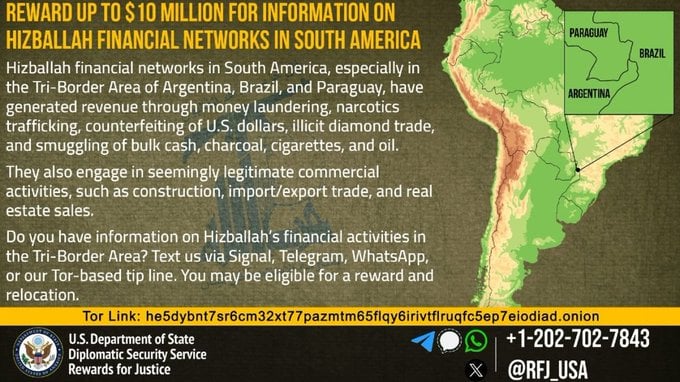
In the predawn haze of November 8, 2023, São Paulo’s Vila Mariana district—a vibrant tapestry of Lebanese bakeries and bustling markets—shuddered awake. Brazilian Federal Police, faces hidden behind balaclavas, stormed a rundown apartment block, guided by a tip from the DEA and Israel’s Mossad. As residents peered from windows, gripped by fear of the terror cell in their midst, the raid unveiled a chilling reality. Inside, two Lebanese nationals, masquerading as textile traders, froze amid stacks of cash, encrypted Signal phones, and a deadly arsenal: C-4 explosives, AK-47s, and blueprints targeting Jewish synagogues.
Operation Trident had exposed a Hezbollah terror cell, rooted in the chaotic Tri-Border Zone where Brazil, Argentina, and Paraguay collide. The safe house, wired with secure comms, concealed a darker truth: operatives, some coerced by threats to families in Lebanon, had laundered $2 million in cocaine profits, funneling funds to Hezbollah’s war machine in Lebanon. One, a weathered Lebanese diaspora member with a faded Hezbollah tattoo, had boasted about “striking fear into Israel.” This bust unveiled Hezbollah’s dual grip on South America: a terrorist group driven by anti-Israel zeal, thriving as a sophisticated crime syndicate resembling a cartel, tearing at the region’s communities.
A Devastating Toll on Communities
Hezbollah’s empire, yielding $400 million to $1 billion annually, leaves South American communities reeling. In the Tri-Border Zone, cocaine trafficking ignites gang wars, doubling Ciudad del Sur’s murder rate since 2016 (2023 data), trapping residents in fear and extortion, with São Paulo’s Lebanese shopkeepers facing similar threats, per 2024 X posts.
In Venezuela’s Petare slum, cocaine profits enrich corrupt elites, deepening poverty, while Colombia’s rural villages suffer cartel violence tied to Hezbollah’s FARC allies, per a 2022 UN report. Bolivia’s cocaine farms, linked to Hezbollah, poison jungles with chemical runoff, devastating Indigenous livelihoods (2020 DEA data), while Tri-Border money laundering inflates real estate, pricing out locals.
A Multinational Web of Crime and Terror
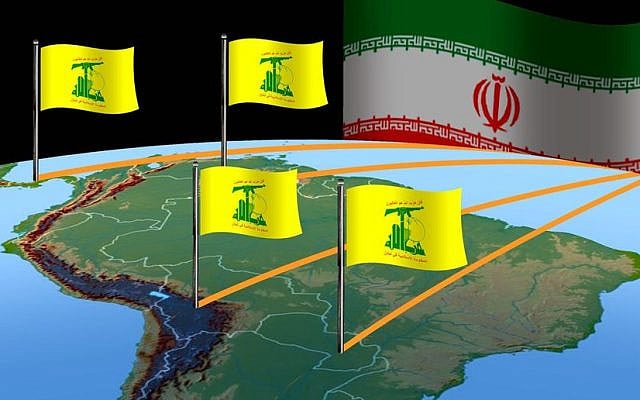
Hezbollah exploits porous borders and a 5 million-strong Lebanese diaspora, generating nearly half its $1–2 billion global illicit revenue. A regional command, likely based in the Tri-Border Zone, coordinates operations under Lebanon’s External Security Organization (ESO), per a 2024 FDD report, with operatives like Argentina’s 2024-identified chief overseeing activities via encrypted networks and IRGC advisors (145 Bolivian diplomats). Where are their main activities in South American, an overview:
- Tri-Border Zone (TBZ): The nerve hub, where operatives like Nasir Abbas Bahmad smuggle multi-ton cocaine shipments disguised as charcoal, per a 2021 report. Money laundering distorts economies.
- Venezuela: Under Nicolás Maduro’s safe haven, Hezbollah partners with the Cartel of the Suns to traffic $300–$500 million in cocaine yearly. Former Vice President Tareck El Aissami provided passports, per a 2020 DEA indictment. Unverified 2024 X posts claim training camps on Margarita Island.
- Colombia: Allied with FARC dissidents, Hezbollah smuggles cocaine, with 80% of profits sent to Lebanon, per a 2018 DEA-Interpol operation. A 2021 foiled assassination plot targeted an Israeli.
- Bolivia and Peru: Bolivia’s cocaine routes and a 2017 explosives cache signal terror planning. Peru’s 2014 arrest of Muhammad Ghaleb Hamdar in Lima, with TNT traces, hinted at an attack.
- Chile, Ecuador, Mexico: Chile’s Iquique port aids laundering. Ecuador is emerging, with a 2025 Al-Hadath report (unverified) claiming 400 operatives relocated. Mexico’s Los Zetas ties support cocaine smuggling.
Beyond Drugs: Arms, Cybercrime, and Propaganda
Hezbollah’s empire extends beyond cocaine, heroin, and cannabis (75% of global hashish from Lebanon’s Bekaa Valley)
Arms Dealing: Smuggling AK-47s, pistols, C-4, and RPGs in the TBZ and Venezuela, sourced from black markets or Venezuelan stockpiles, per a 2012 CSIS report. Partners like the PCC and Bolivian traffickers move $20–$50 million yearly, arming terror and Lebanon’s forces.
Targeted Terror: In 2021 in Colombia and in 2014 Peru plots carried out hits, but they were Hezbollah-directed, tied to Iran’s anti-Israel goals, not cartel hits.
Cyber Warfare: Hezbollah uses Bitcoin laundering via dark-web wallets and encrypted apps like Signal to secure drug profits, per a 2023 CSIS report. Emerging hacks target local rivals, with a 2018 Czech server seizure linked to TBZ extortion. Globally, Hezbollah’s cyber units, backed by Iran, spread misinformation, like fake videos framing Israeli strikes as indiscriminate (2024 Nowlebanon), akin to Hamas’s debunked 2023 Gaza hospital claims (Reuters). In South America, diaspora-run social media amplifies Arabic propaganda, boosting Arab street morale, while English posts target Western audiences, per a 2017 RAND report.
Other Illicits: Coltan mining in Venezuela harms ecosystems (2020 Atlantic Council). Cigarette/counterfeit smuggling and potential human trafficking (2024 Diálogo Américas) add revenue.
Hezbollah’s Operations: Diaspora Under Pressure
Hezbollah’s 200–500 operatives (2024 Paradigm Shift estimate) are Lebanese diaspora, relying on TBZ safe houses and encrypted apps. Brazil and Argentina’s 5 million Lebanese descendants provide cover, but recruitment often hinges on coercion.
In 2022, TBZ shopkeeper Ali Hassan was forced to launder $50,000 in drug money after Hezbollah threatened his elderly parents in Lebanon’s Bekaa Valley, per a 2023 Infobae report. Such pressure traps diaspora members, torn between fear for loved ones and community ties, into drug smuggling or front operations. Some support Hezbollah out of loyalty, while others resist; 2023 X posts from São Paulo’s Lebanese leaders decry the criminal stigma, with resisting families shunned.
Women occasionally manage front businesses, per a 2021 BESA Center report. Growing cartel ties—with PCC, FARC, Cartel of the Suns, and Los Zetas—amplify smuggling, with a 2022 Paraguay Hezbollah-PCC bust showing profit-driven alliances, tempered by IRGC oversight and 80% profit remittances.
Ideology Meets Profit: Echoes of FARC and ELN
This coerced diaspora fuels an empire blending ideology with profit, like Colombia’s FARC and ELN. FARC, a 1960s Marxist insurgency, became a cocaine syndicate, with post-2016 dissidents as criminal enterprises. ELN prioritizes drug trafficking over revolution. Both drifted as secular ideology faded, chasing wealth. Hezbollah’s $400M–$1B tempts operatives with Venezuela’s cocaine riches, but its Shia religious mission, unlike FARC’s Marxism, binds operatives to Lebanon’s anti-Israel cause. IRGC oversight and hawala remittances prevent a syndicate drift, with the 2025 Al-Hadath report of 400 operatives signaling tighter control.
Political Influence and Legal Fronts
Hezbollah’s political influence is limited; Venezuela’s ties to Maduro (e.g., El Aissami) grant leverage within Iran’s geopolitical orbit (2024 FDD). Legal fronts—import-export firms, restaurants, textile businesses in the TBZ, Venezuela, and Colombia—launder money, per a 2023 Wilson Center report.
Law Enforcement’s Battle: Gains and Gridlock
Law enforcement fights a fierce battle, with mixed results. The DEA’s Project Cassandra disrupted $100M+ in revenue (2016 Venezuela, 2018 Colombia), arresting ~50 operatives. Brazil’s 2023 Trident bust, seizing $2M, stopped terror attacks. Interpol targets Mohsen Rabbani (1994 AMIA bombing), and U.S. Treasury sanctions Ayman Joumaa ($200M/month).
A May 19, 2025, U.S. $10M reward hits TBZ networks. Argentina’s 2024 identification of Hezbollah’s regional chief shows progress. Yet, disruptions haven’t halted Hezbollah’s $400M–$1B revenue or 200–500 operatives, with new hubs like Ecuador emerging. Venezuela’s complicity, Bolivia’s laxity post-DEA expulsion (2015 Small Wars Journal), and TBZ corruption—Paraguayan customs officials taking $10,000 monthly bribes (2023 Wilson Center)—shield Hezbollah. Only Argentina, Colombia, and Paraguay designate it a terrorist group, limiting coordination.
A Persistent Menace
Hezbollah’s South American empire—fueled by drugs, arms, and cyber warfare—ravages communities, from TBZ’s fear-ridden markets to Bolivia’s poisoned jungles. Its cocaine floods European markets through ports like Rotterdam, while West African ports smuggle South American drugs to Europe, and Asian methamphetamine labs in Thailand link to South American logistics, per a 2023 Europol report.
These global ties, amplified by misinformation campaigns painting Israel as the aggressor, fuel Hezbollah’s menace, with Lebanese operatives, coerced diaspora, and cartel alliances generating billions under Iran’s shadow. Law enforcement fights on, but the empire’s adaptability is relentless. But with possible US strikes on Venezuela looming any day now, Hezbollah could be faced with losing it’s most important area of operations in South America,.It would significantly reduce the money flowing from its south American operations making it even harder to recover from Israeli strikes on Hezbollah in Lebanon. and by extension it would also be a blow to Iran’s power projection in the Middle East as it would further weaken their prime proxy.
Stay tuned for Part 2, exploring Hezbollah’s European drug markets and propaganda, and Part 3, detailing African smuggling and Asian operations.