Higher Education in a Time of Service
It’s a perennial rite around graduation season for my friends in Israel as well as my former classmates from Ida Crown Jewish Academy in Chicago: We flood our WhatsApp groups with photos of our children in caps and gowns.
This year, seeing those students who have worked hard to earn their degrees has made me focus on the reality facing so many Israeli students, both in my own family and here at Jerusalem Multidisciplinary College (JMC). I serve as president at the workforce-focused school and, day in and day out, have seen remarkable stories of perseverance since October 7, 2023; stories that don’t always come through in the photos.
Let me start as a proud mother: My two eldest sons, Amir and Nitai, illustrate this challenge.
Amir has already served 300 days in reserve duty, yet remains determined to complete his business-economics degree this semester at The Open University of Israel. He quit his job, submitted term papers at record speed, and planned to take his final exams—until the army extended his service by another 100 days.
Nitai, newly married on Erev Pesacḥ, has served 250 days and was recently called back under an emergency Tzav 8 order (a rapid mobilization directive), with no end date in sight, even as he continues his studies at Hebrew University. Their resilience—supported by flexible faculty and tailored academic accommodations—keeps their academic goals within reach.
Their experiences reflect what’s happening across the nation. Since the war began, nearly one in three Israeli students has been mobilized.
At JMC, we’re responding with flexible, student-centered solutions—arranging clinical placements near bases, offering nighttime tutoring, deploying mobile peer pods, and providing scholarships recognizing both merit and service. Faculty meet reservists during off-hours or in rehab centers, while peer networks help classmates stay on track. This combination of adaptability and resilience is keeping academic progress within reach, even in extraordinary times.
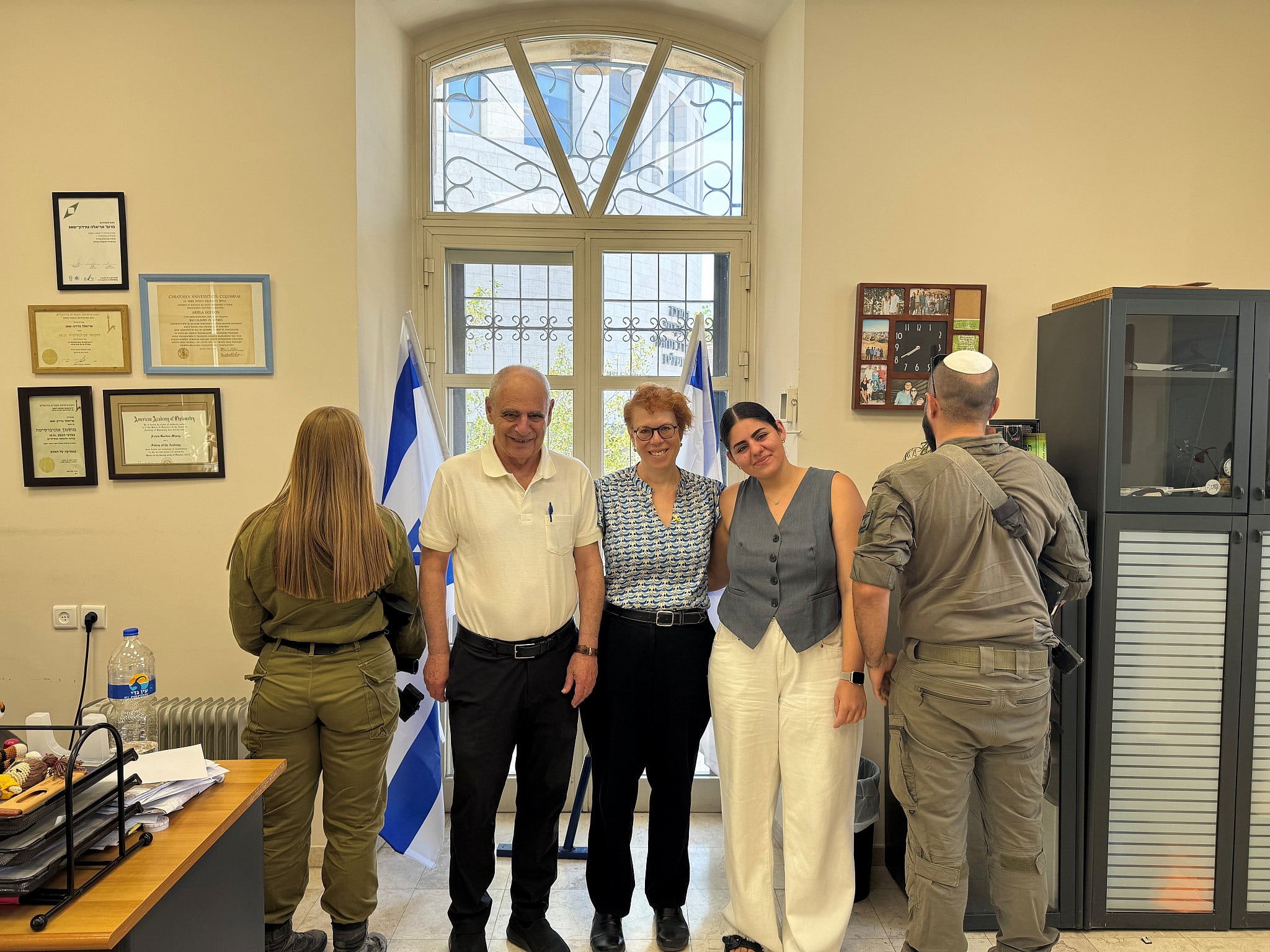
At our recent Dean’s List ceremony, 30% of the awardees were active reservists. Many attended the ceremony straight from the battlefield. The honorees included students like Gal R. who has served over 200 days in the Casualty Command Center in the Fallen Soldiers Division, supporting bereaved families during traumatic times.
In addition, Prof. Yoram Eden, chair of our Department of Economics and Accounting, donated scholarships in memory of his father, one of Jerusalem’s first accountants. While he typically selects recipients based solely on academic excellence, this year he chose students who excel academically and have served extensively in reserve duty.
Two of the three recipients arrived at the recent ceremony directly from their units still in uniform. (In a sign of what Israeli soldiers must deal with beyond the front lines, they turned their backs to the camera to remain anonymous on social media since some foreign nations are denying entry to IDF members.)
As a parent and an educator, I have witnessed the trauma of war both professionally and personally. It has taken its toll on our young people emotionally and physically, but it has also revealed their strength and commitment. Their courage inspires us to meet their efforts with unwavering institutional support.
In recognition of their service, JMC launched the “President’s Program for Reservists,” a dedicated academic and social support track for students who have served over 28 days in reserve duty since October 7, 2023. This program includes personalized academic mentoring, tailored accommodations, mental health support, career workshops, peer integration activities, and a scholarship for those who served 60 days or more.
We have made an institutional pledge to ease their transition back into academic life and affirm their contributions to Israeli society so that very soon, their families and friends can post pictures of them in cap and gown on WhatsApp.