Holocaust Memorial in Brazil
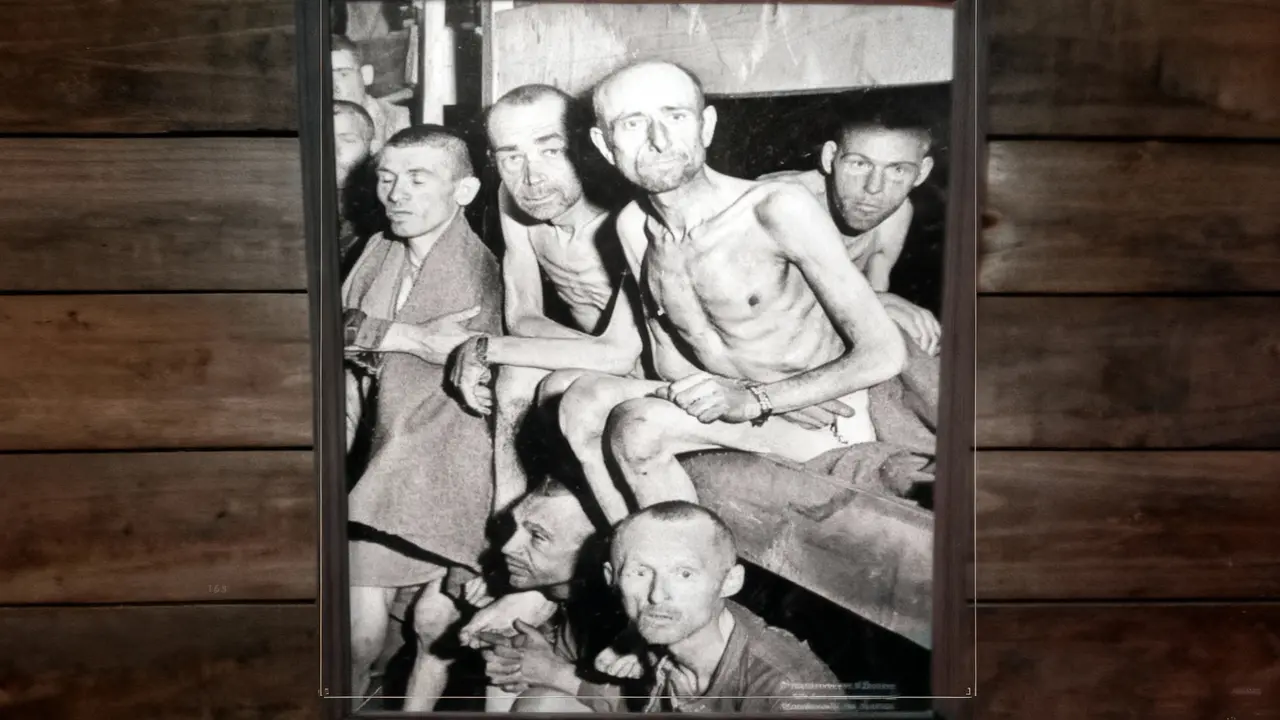
I attended an event with the Jewish community at the Jewish Immigration Memorial in São Paulo, a beautiful space that preserves the memory of horror.
The museum presentation was conducted by Liane Zaidler, press officer of the Jewish Confederation (Conib). Also present with me were Victor Grinbaum (journalist and writer) and Pastor Romualdo dos Santos (President of the Tzadik BaEmunah Institute).
As I walked through the place, one reflection accompanied me: how could humanity reach this point?
Among the event organizers were Sergio Napchan (Executive Director of the Jewish Confederation), Sabrina Abreu (Director of Communication and Culture at StandWithUs), Sarita Sarue (Coordinator of Education and Culture at the Holocaust Memorial), Salus Loch (ISPO), and Carlos Reiss (Coordinator of the Holocaust Museum of Curitiba).
Upon meeting Sarita Sarue, I was greeted by her deeply emotional gesture: her tearful eyes reflected tears of joy and gratitude for the meaning that event held for her and for the entire Jewish people.
At the gathering, the results of the research “Knowledge about the Holocaust in Brazil”. The data was presented by Hana Nusbaum, Education Manager at the institution StandWithUs Brazil.
Two survivors, Hannah Charlier and Gabriel Waldman, shared brief testimonies of their lives — moments of profound emotion.
In another speech, Sergio Napchan deeply moved everyone by recalling the story of his grandfather, Majer Haker — the only survivor of the Hacker family, entirely annihilated by the Nazis.
The numbers revealed are alarming: only 38.5% of respondents correctly identified Auschwitz-Birkenau as an extermination camp, while 51.6% declared they did not know how to answer.
The Jews are a small people, a nation of only 22,000 km², but whose mere existence disturbs. Antisemitism has deep — even spiritual — roots, and it is essential that the reader understands this.
In Brazil, there are about 120,000 Jews, who need the support of Christians in the face of antisemitism that spread throughout the world after the events of October 7. In contrast, today there are 47 million evangelicals in the country alone.
It is important to remember: Jesus was not Palestinian, nor Roman, did not have blue eyes or long hair. He was Jewish. As a Jew, he underwent Brit Milá (circumcision, according to Luke 2:21), was called Rabbi (John 1:38), loved his people (Luke 19:41-42), began his ministry in synagogues (Luke 4:14-21), and made Israel and the Jewish people known throughout the planet.