


Buying, renovating and managing Israeli property from anywhere
Home prices: down 2.7% in the center, 0.2% in Jerusalem
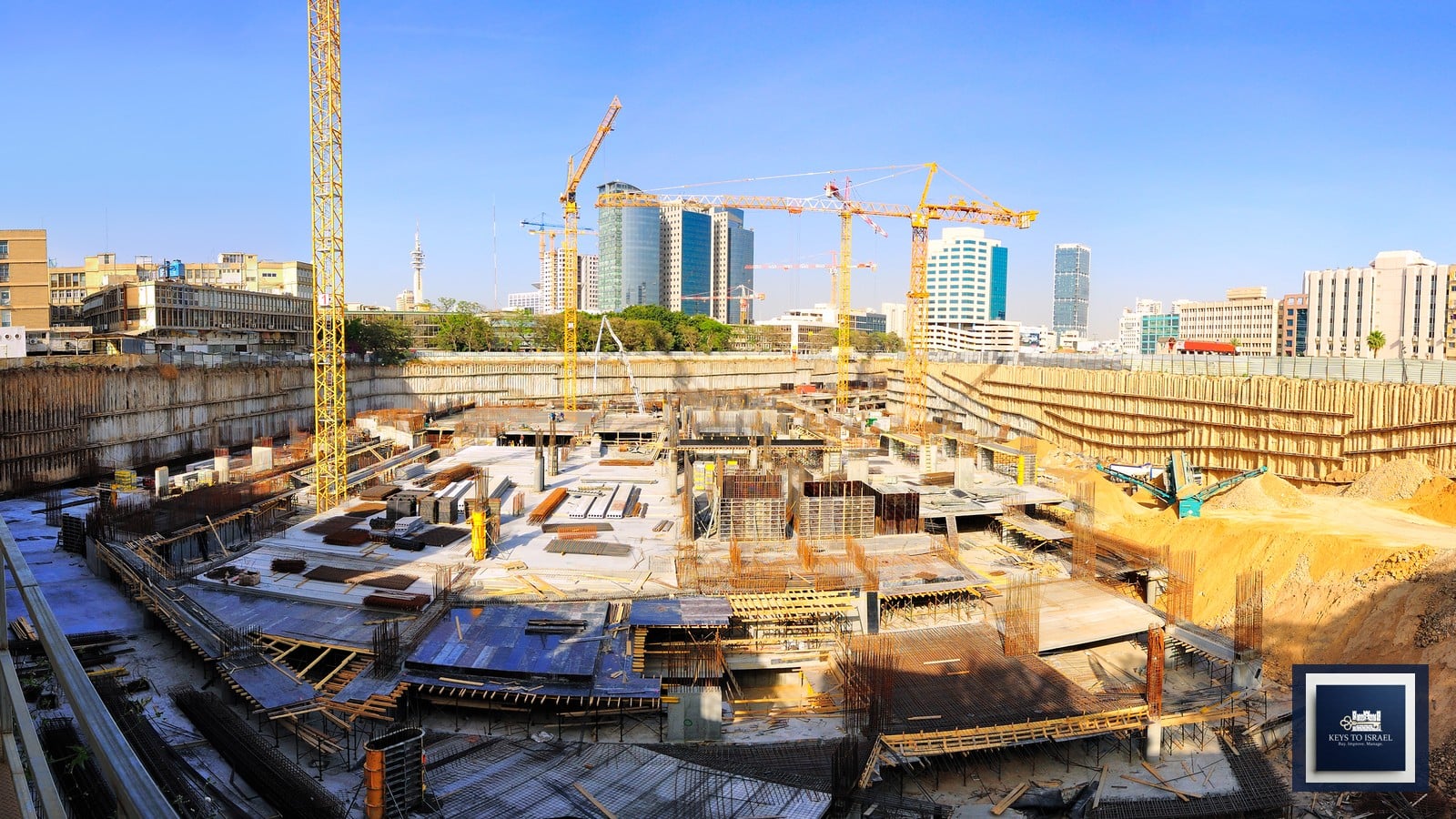
New residential construction in Tel Aviv. Prices in the Tel Aviv district fell 1.9% over the past year, according to the Central Bureau of Statistics.
Israeli home prices are now lower than a year ago in every district in the country. On October 15 the Central Bureau of Statistics reported that prices for July and August were 1.8% below the same months of 2025 (Mako, Ice). Reporters described it as the longest stretch of yearly declines in a decade.
But the national number hides a wide gap. In the Central district, which includes Ra’anana, Netanya and Modiin, prices fell 2.7%. In the Jerusalem district they fell 0.2%. That is the difference between a market where buyers have room to negotiate and one where they mostly do not.
Last week I wrote here about the 85,000 new apartments sitting unsold in Israel, and how uneven that glut is from city to city. The new price data tells the same story from another angle.
The numbers, district by district
These are the yearly changes the CBS reported, July and August 2026 against the same two months a year earlier (Mako):
- Central: -2.7%
- Tel Aviv: -1.9%
- South: -1.5%
- Haifa: -1.4%
- North: -0.8%
- Jerusalem: -0.2%
Over the latest two months alone, the national index slipped 0.6%. The North fell the most in that short window, and Haifa was the only district where prices rose (Ice).
Why Jerusalem barely moved
Here is the part that surprises people. Jerusalem has the largest stock of unsold new apartments in the country, more than 10,000 units, which a Globes analysis put at about five and a half years of supply at today’s pace of sales (I went through those figures in my previous piece). If a big pile of unsold homes automatically pushed prices down, Jerusalem would be leading the decline. It is not.
In my experience, that is because a city is not one market. Unsold stock sits in specific new projects, often on the edges of a city, while buyers compete for existing apartments in the neighborhoods they actually want. The index blends both. A large unsold inventory gives you leverage with a developer whose project is not selling. It does not give you leverage with a family selling a sought-after apartment two streets away.
The new-home number needs a second look
New homes fell just 0.4% over the year, which sounds like developers are holding firm. Look closer. Subsidized deals under government housing programs made up 45.8% of new-home sales in the latest period, up from 40% in the period before. When those are taken out, new-home prices fell 0.8% in two months, about twice the decline in the overall index (Mako).
There is a second layer. Ice reports that deals with financing benefits, such as 80/20 and 10/90 payment plans, made up about 30% of developer sales on the open market in August, the highest share this year. Those plans are a discount in all but name, and they do not show up as a lower price in the index.
So when you read that new-home prices are flat, read it as: the list price is flat. The deal on the table often is not.
What this means if you are buying from abroad
Most of the people who contact me live in North America, the UK or France, and many of them look first at Ra’anana, Netanya, Modiin or Jerusalem. The data says those places are not behaving the same way right now, and a buyer who negotiates in Jerusalem the way they would in the Central district may be disappointed.
None of this tells you where prices go next. Nobody knows that. What the numbers do tell you is that a national headline is an average of six very different markets, and your negotiation happens in only one of them.
Before you make an offer, I would ask four questions:
- What did similar apartments on this street, or in this building, actually sell for in the last six months? Registered deals are public on the government’s nadlan.gov.il site, and they are a better guide than any asking price.
- Is the price you were quoted the price with a financing promotion or without one? Ask the developer for both: the price on a standard payment schedule, and the price on the promotional plan.
- How much unsold stock does this city and this specific project have? A project that is selling slowly is a project with a reason to deal.
- Who will see the property for you, in person, before you commit? Numbers on a screen do not show you damp walls, a noisy road or a building with no parking.
The bottom line
Falling prices do not make every apartment a bargain, and flat prices do not mean there is no room to talk. The gap between minus 2.7% and minus 0.2% is a reminder that in Israeli real estate, the only market that matters is the street you are buying on.
David Bitton is the founder of Keys to Israel, which helps people abroad buy, renovate and manage property in Israel.