CEO of Time to Stand Up for Israel
Honestly, Does Israel Have a Future
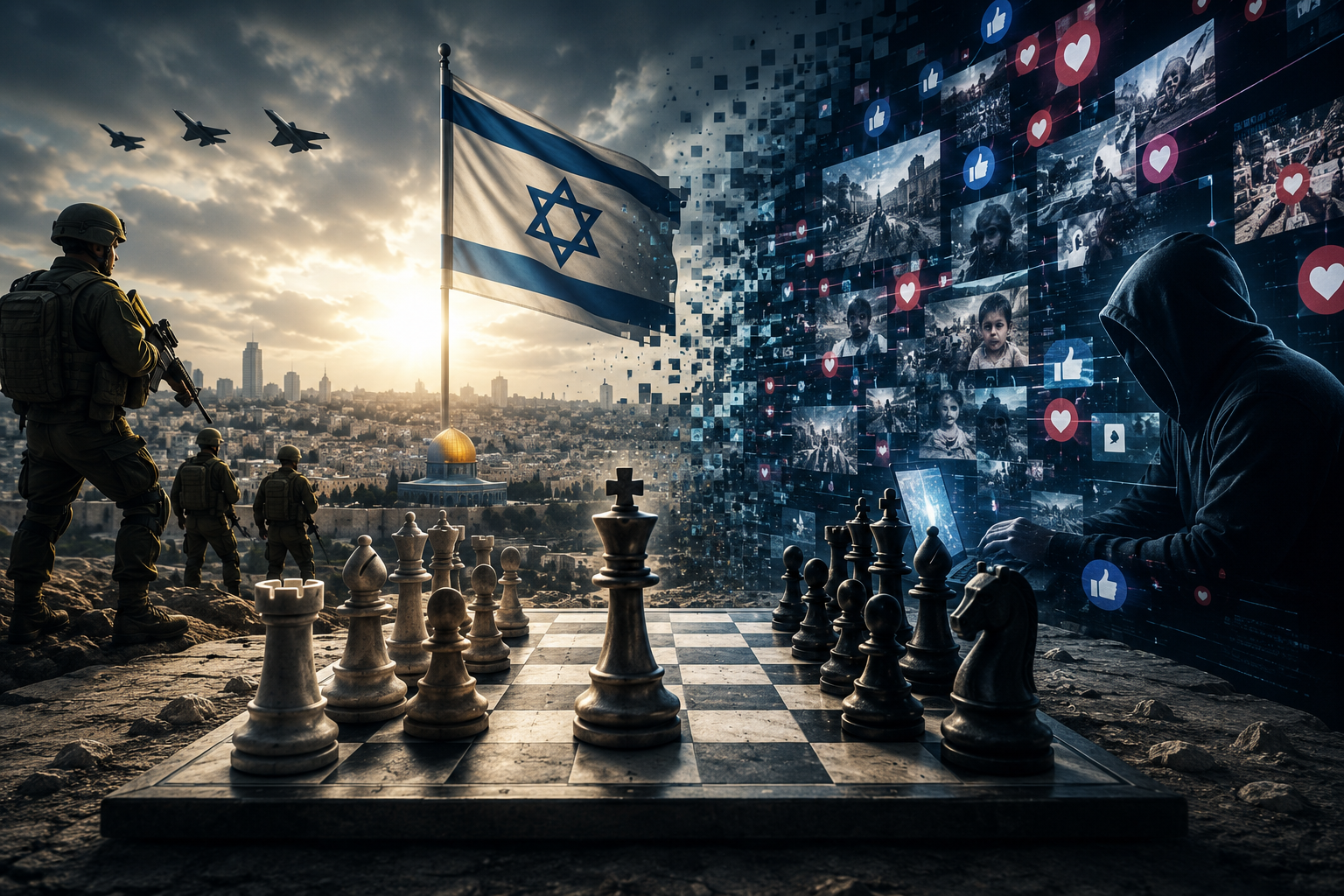
Photo Credits: Sabine Sterk ( AI)
Honestly, Does Israel Have a Future?
Before October 7, 2023, Israel was widely regarded as one of the strongest and most dynamic advanced economies in the world. While its economy was far smaller than that of the United States and the largest European nations in absolute size, it consistently outperformed many advanced economies in areas such as growth, innovation, employment, and fiscal stability.
Israel had earned the nickname “Startup Nation” for good reason. It had one of the highest concentrations of startups and venture capital investment per capita anywhere in the world. Israeli companies led breakthroughs in cybersecurity, artificial intelligence, medical technology, and semiconductor research. Global technology giants including Intel, Microsoft, Google, and Nvidia invested heavily in the country because of its extraordinary talent pool and innovative ecosystem.
Unemployment was near historic lows. Government debt, while not insignificant, was considerably lower than that of many other advanced economies. Domestic natural gas production had reduced dependence on foreign energy supplies, insulating Israel from some of the energy shocks that affected Europe following Russia’s invasion of Ukraine.
Even with its structural problems, including an exceptionally high cost of living, expensive housing, and disparities between the high tech sector and other parts of the economy, Israel entered late 2022 from a position of considerable economic strength.
Diplomatically, there were also reasons for optimism.
The Abraham Accords had already reshaped relations between Israel and several Arab states. There was growing discussion about possible normalization with Saudi Arabia, something that only a few years earlier would have seemed almost unimaginable. Israel’s leadership believed that expanding economic cooperation and a shared concern about Iran could gradually transform the Middle East without first resolving the ‘Palestinian’ conflict.
Whether that strategy would ultimately have succeeded remains unknown. Although governments in the region were becoming more willing to cooperate with Israel, the ‘Palestinian’ issue remained deeply important to Arab populations, many international organizations, much of European public opinion, and significant parts of the American political left.
Israel therefore occupied a paradoxical position. It was becoming more accepted by several regional governments while simultaneously facing growing criticism abroad over the ‘Palestinian’ conflict and its own internal political divisions.
Domestically, Prime Minister Benjamin Netanyahu’s government was pursuing judicial reforms that sparked months of massive demonstrations. Supporters argued that the reforms were a legitimate exercise of democratic authority by an elected government. Opponents believed they threatened the balance between the branches of government and endangered Israeli democracy. Whatever one’s position, there is no doubt that Israeli society was intensely divided before October 7.
Then came the Hamas attack.
Everything changed.
The massacre was not only a devastating human tragedy but also marked a turning point for Israel’s security, diplomacy, economy, and international standing. The assumptions that had guided Israeli policy for years suddenly appeared far less certain.
Yet while Israel fought a military war, another battle emerged almost immediately. It was a battle for public opinion.
Whether one supports or criticizes Israel’s military campaign, it is impossible to deny that social media has become one of the defining battlefields of modern conflict. Images, videos, emotional stories, and viral posts now shape international opinion at extraordinary speed. Information spreads globally within minutes, while corrections often arrive too late or receive only a fraction of the attention.
This is where, in my view, Israel has made its greatest strategic mistake.
Wars are no longer fought only with soldiers, aircraft, and intelligence services. They are also fought with narratives.
For years Israel invested enormous resources into military superiority, intelligence gathering, missile defense, and cybersecurity. Those investments undoubtedly saved lives. But far less attention was devoted to winning the information war.
Today countless images and videos circulate online that portray immense suffering in Gaza. The most are disputed, miscaptioned, recycled from other conflicts, or impossible for ordinary viewers to verify independently. Once such material spreads across social media, however, distinctions often disappear. People form emotional conclusions long before facts can be established.
That reality creates a profound challenge for Israel.
Most people around the world do not spend hours researching military reports or examining evidence. They react emotionally to what they see on their phones. Images of injured or starving children are the most powerful forms of communication imaginable. Regardless of the political or military context, they leave a lasting impression.
From my perspective, Israel underestimated this reality.
Israeli society understandably places enormous emphasis on protecting the dignity of victims and respecting the families of those murdered on October 7. Graphic images of the atrocities were therefore not widely circulated. That reflects important moral considerations and a culture that values life.
Yet in the information age, difficult choices have consequences. If one side dominates the visual narrative while the other exercises restraint, public perception can shift dramatically.
Recently I came across a website containing an enormous collection of images presented as evidence of what it describes as Israeli crimes in Gaza. I cannot independently verify every image or every claim on such sites, and neither can most people who encounter them. That is precisely the problem. Once someone views thousands of emotionally powerful photographs, many will form lasting opinions regardless of the underlying evidence or context.
When I saw this, I immediately thought that Israel should treat such developments as a strategic emergency. Whether through legal action against demonstrably false material, faster factual responses, greater transparency, stronger digital communication, or entirely new institutions dedicated to combating online disinformation, I believe much more needs to be done.
Military victories alone are not enough.
A nation depends on allies.
It depends on international legitimacy.
It depends on public support in democratic countries whose governments respond to voters.
Israel has often demonstrated remarkable resilience against military threats. But history also teaches that no country exists in complete isolation. International partnerships matter. Diplomatic goodwill matters. Public opinion matters.
This is why I find myself asking a question that would have seemed absurd only a few years ago.
Does Israel have a secure long term future?
I sincerely hope the answer is yes.
But hope is not a strategy.
If Israel assumes that military superiority alone will guarantee its future while neglecting the battle over information and public perception, it risks paying an enormous price over time. In an interconnected world, legitimacy can be as important as military strength.
I believe it is still possible to change course. Israel possesses extraordinary technological capabilities, world class intelligence services, and some of the brightest minds anywhere. Those strengths could also be directed toward rapidly identifying coordinated disinformation campaigns, responding more effectively to false narratives, presenting verified evidence, and communicating its case more convincingly to international audiences.
The stakes could hardly be higher.
For those of us who care deeply about Israel, this is not a matter of public relations. It is a matter of national security.
My fear is not that Israel will lose the next military battle. My fear is that it could gradually lose the support of friends and allies whose backing has long been essential to its security.
That outcome is not inevitable.
But preventing it requires recognizing that the battlefield has changed.
The war for international opinion is real.
Ignoring it would be a mistake.
Israel has overcome extraordinary challenges throughout its history. I believe it can overcome this one as well.
But only if it acts before the damage becomes irreversible.
Related Topics
Related Posts