Honoring Rabbi Marshall T. Meyer This Shavuot
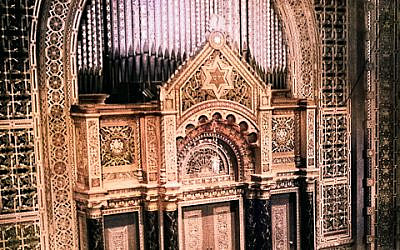
Photo: Nick Levitin
CC-BYNC
(This license enables reusers to distribute, remix, adapt, and build upon the material in any medium or format for noncommercial purposes only, and only so long as attribution is given to the creator.)
On Shavuot we receive the Ten Commandments and honor the teachers who connect us with our tradition. This holiday Rabbi Marshall T. Meyer has been on my mind. I am blessed to have been a member of B’nai Jeshurun in Manhattan when Marshall was its senior Rabbi. We are living in dark times. In the United States democracy is threatened, I now have a much deeper appreciation for the courage Rabbi Meyer displayed while he was a leading human rights activist in the 1970s and 1980s in Argentina during “the Dirty War”.
Many decades ago on a whim, I walked into B’nai Jeshurun. It was Rosh Hashanah, and at the time I sought the spiritual in Eastern religion and New Age exploration, not seeing it anywhere in Judaism. I met Marshall to interview him for a documentary. I liked him and thought, we have nowhere else to go, let’s check out BJ. We were let into the overflow service, where Marshall was officiating. He saw us standing in the back of the room and demanded we come up front, “come, come, sit down” he said in the irritated voice I became familiar with. “There is nothing holy going on here, just a Rabbi talking.”
He was wrong about that.
Rabbi Marshall Meyer stood for holiness and Judaism’s mission to bring sacredness to the world. He found his purpose from his teacher, Rabbi Abraham Joshua Heschel. Marshall took that extraordinary gift and used it to great effect.
His contribution to Jewish communal life both in the United States and Argentina cannot be overstated. He made Judaism accessible to those of us who were disengaged, indifferent and searching elsewhere. He was the force behind building the Conservative Movement in Argentina where there was a large mostly disengaged Jewish community. He led the Comunidad Bet El and and founded Seminario Rabinico Latinoamericano creating a vibrant active Jewish community and dynamic rabbinic leadership for the next generation.
When he came to B’nai Jeshurun it was a sparsely attended synagogue on the Upper West Side of Manhattan. He transformed it into BJ, a model for progressive Jewish renewal with a large membership and immense influence in the Jewish world.
One week after the next he stood at the bimah, speaking to hundreds of people, knowing that many of them were financial supporters, successful and important people in the world. He was not especially impressed with their money, titles and prestige. He was a terrible fundraiser, He said, “If a synagogue has a surplus it’s not doing its job.”
While charismatic, he could be rude. It didn’t matter much. Week after week those prominent, wealthy people came to BJ to hear what Marshall had to say. He led the synagogue during the Reagan years, during the AIDS epidemic, and when homelessness became a part of New York City’s landscape.
The respect he commanded was earned.
While in Argentina, he used his platform as a Rabbi to demand access to people in prisons during the “Dirty War”, a time of political oppression and authoritarianism that lasted from 1974 to 1983.when between 22,000 to 30,000 people were abducted, killed or disappeared including political opponents, college students, journalists and writers.
Rabbi Meyer famously barged into prisons, demanding to see people who were missing. He was largely responsible for freeing journalist Jacobo Timerman, who was imprisoned by the Argentinian government. Timerman dedicated his book, Prisoner Without a Name, Cell Without a Number to Rabbi Meyer. When democracy was restored in Argentina, President Raul Alfonsin appointed Rabbi Meyer to serve on the National Commission on the Disappearance of Persons.
Rabbi Marshall Meyer sets a standard for how to respond to a world in need.
I think of Marshall now when people in the United States are taken off our streets to be dropped in prisons in El Salvador without due process and with court orders ignored. Most people balance courage with self-interest. Today as we fight to protect our democracy, I long to hear his uncompromising voice. The kind of courage Marshall possessed was the fearlessness of a prophet.
While we are in the midst of a dark moment and do not know how this chapter in the American story will end, I find comfort and inspiration from people who are taking great risks. Today in the United States, some of our political leaders are showing immense courage. Senator Van Hollen flew to El Salvador to demand to see his constituent Kilmar Abrago Garcia. It was the first time I feared for the safety of a sitting Senator. In New Jersey, Mayor Ras Baraka and Congresswoman LaMonica McIver were arrested while trying to gain access to people apprehended by our immigration services.
Rabbi Marshall Meyer touched and transformed the lives of untold numbers of people by connecting us with the Torah, his passion for God and his belief in Judaism’s mission to bring holiness to the world by defending the human rights of all people.
Marshall’s memory and courage gives me hope along with the journalists, politicians, musicians, artists, activists, and ordinary people who are acting with courage. They offer faith that this time will pass and through our collective courage and action, we will successfully defend our democracy.