
Hope Walks Again with Israeli Science
From ReWalk to lab-grown spinal cords, Tel Aviv University’s breakthrough brings new hope for millions living with paralysis – another shining testament to Israel’s resilience, renewal, and innovation
For years, I have been fascinated by the intersection of science, medicine, and human possibility – a curiosity that recently led me to convene the 11th Annual E. Paul Torrance International Roundtable on Creative Thinking in Lisbon. I still remember when Israel unveiled ReWalk, the groundbreaking robotic exoskeleton that gave people with lower-limb disabilities the power to stand and walk again. It was extraordinary, deeply inspiring, and at the time, it felt like a once-in-a-generation breakthrough.
But today, Israel has done it again. And this time, the stakes are even higher.
Tel Aviv University has announced that it is preparing to perform the world’s first-ever human spinal cord implant using cells generated from the patient’s own body, a milestone that could allow paralyzed individuals to walk again. It is not just another medical story; it is a redefining moment for regenerative medicine and, once again, a powerful reminder of why Israel remains at the forefront of innovating the future.
Spinal cord injuries are among the most life-altering traumas anyone can face. More than 15 million people worldwide live with the consequences, often the result of car accidents, falls, combat injuries, or acts of violence. For decades, medicine has focused on managing the aftermath: stabilizing injuries, preventing further harm, and helping patients adapt to a new reality. But when it came to repairing the spinal cord itself, science has, until now, drawn a hard line.
The reason is simple: unlike many other tissues, spinal cord neurons cannot naturally regenerate. When the cord is severed, the body does not heal itself. Instead, scar tissue forms, blocking the nervous system’s electrical pathways, leaving patients permanently paralyzed.
But what if we could bridge that gap? What if, instead of repairing around the damage, we could replace it entirely?
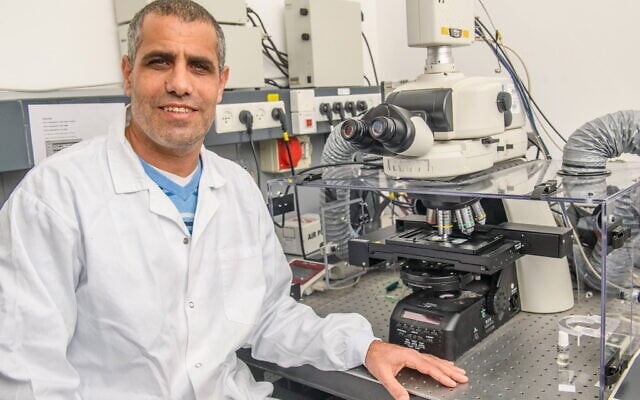
That is exactly what the Tel Aviv University team, led by Professor Tal Dvir at the Sagol Center for Regenerative Biotechnology, is attempting. Their breakthrough involves engineering a personalized, lab-grown spinal cord using the patient’s own cells, and implanting it directly where the damage occurred.
The science behind this sounds like something from a futuristic novel, and yet, it is real, and it is happening in Israel.
The process begins with drawing blood and fat tissue from the patient. Scientists then reprogram those cells into stem-cell-like “master cells,” capable of becoming anything. Using fat-derived materials, they create a custom hydrogel scaffold – a three-dimensional structure that mimics natural spinal cord tissue.
Inside this scaffold, the cells grow into a fully formed spinal cord segment, a living, functional replacement designed specifically for the patient’s body. When implanted, the engineered tissue fuses with healthy spinal cord regions above and below the injury, reconnecting the neural “wiring” and restoring the body’s natural communication pathways.
In animal trials, the results were extraordinary. Paralyzed mice regained the ability to walk. Some even ran.
Israel’s Health Ministry, recognizing the potential, has approved “compassionate use” human trials for eight patients. The very first surgery, the world’s first, will take place in Israel in the coming months.
Regenerative medicine has long been seen as the “holy grail” of modern healthcare, a field promising to restore function, reverse damage, and even replace entire body systems. While international research has explored various experimental techniques – from stem cells to robotic-assisted recovery – no treatment has yet been able to reliably restore spinal cord function.
Until now.
For Israel, this is not just a scientific triumph; it is deeply personal. From car accidents on Tel Aviv’s highways to battlefield injuries, spinal cord paralysis affects every layer of Israeli society. To lead the charge towards a solution reflects something profoundly Israeli: a relentless refusal to accept limits.
Professor Dvir puts it perfectly: “Our goal is to help paralyzed patients rise from their wheelchairs.”
And if they succeed, the implications are staggering. Beyond helping Israeli patients, this technology positions Israel as the epicenter of a multi-billion-dollar revolution in spinal cord repair, one that could change lives for millions around the globe.