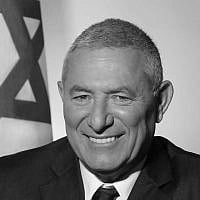
How a Daring Rescue Inspired a ‘Social Entebbe’
On the night of July 3, 1976, I stepped off a Hercules aircraft onto the tarmac of Entebbe Airport. We landed in darkness, four thousand kilometers from home, knowing that the success of the entire operation depended on every minor detail of our mission.
I was the commander of the soldiers from Sayeret Tzanchanim (Paratroopers), whose responsibility it was to secure and mark the runway. This would allow the next three Hercules aircraft to land safely. Without that, one hundred and five hostages would stay where they were.
We had only twenty-four hours to prepare for the mission. We carried out a model exercise at an abandoned airfield on Friday night, after which we met with Chief of Staff Motta Gur and Defense Minister Shimon Peres, who wanted to be certain we were ready, physically and emotionally. A low-altitude flight took us from Ben Gurion Airport to Sharm el-Sheikh, where commander Dan Shomron delivered final words of motivation. Then we flew south towards Uganda. Four thousand kilometers from home.
People ask if I was nervous. The answer is that I was focused. I was not afraid of dying, but I was concerned about what would happen if we got stuck deep in Idi Amin territory. It was my responsibility to ensure that the 19 soldiers under my command believed they were the strongest force in that airport. Because they were. We were well-trained, well-informed and locked in.
Within moments of landing, four of my soldiers marked the runway. I took six men and moved to the high ground overlooking the old terminal. We took the control tower, the nerve center that controlled the entire airport. Seven minutes after we landed, the second Hercules touched down. One minute later, the third. One minute after that, the fourth, carrying the field hospital.
The entire ground operation lasted fifty-two minutes. During the first two minutes, seven terrorists and thirty Ugandan guards were killed. Tragically, Yoni Netanyahu was shot while advancing towards the terminal building where the hostages were held. A single bullet struck his upper body.
One hundred and two of the one hundred and five hostages came home.
I have often been asked what I felt upon landing back in Israel the following morning. Yes, I felt relief and pride, but deep down, there was an additional emotion, a weight I had been carrying for three years.
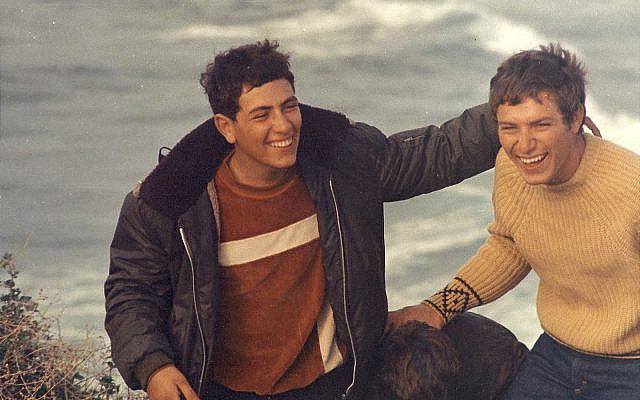
My brother, Eran, was critically wounded during the Yom Kippur War. For seven days, he was left bleeding in the Golan Heights next to his burning tank. He never came home.
Later, when I visited the site of his last battle, I made an oath. Quietly, I swore never to leave the wounded behind, never to walk away from someone who has no power to help themselves.
That oath put me on the plane to Entebbe. One hundred and five fellow Jews held four thousand kilometers from home, entirely dependent on us. The IDF called it mutual responsibility. To me it was more personal. It was the promise I made to my departed brother.
After Entebbe, I thought that I understood the depth of my oath. I thought that I understood what mutual responsibility meant.
Then my son, Eran, was born.
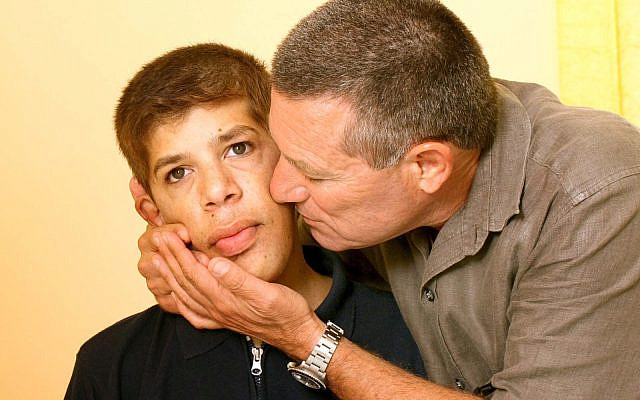
My wife, Didi, and I named our son after my brother. Soon after his birth, we learned that he suffered from severe intellectual and developmental disabilities. Eran never spoke a single word. He never said “Abba.” He never made eye contact. Yet, he became the greatest teacher of my life.
I often imagined Eran speaking up and saying to me in the voice he never had: “My dear father. I am a hostage. I am helpless and completely dependent on others. I have been left behind. Not for fifty-two minutes but for a lifetime. Are you ready to fight for me and those like me? Are you ready for a social Entebbe?”
That question stayed with me and changed everything. It transformed my understanding of mutual responsibility and what it means to ensure that we never leave the wounded and vulnerable behind. Eventually, that question led to the creation of ADI Negev-Nahalat Eran.
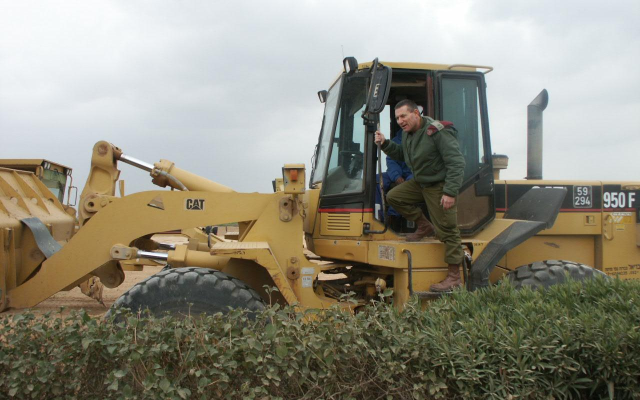
ADI Negev-Nahalat Eran is a cutting-edge rehabilitation village and social community center located between Ofakim and the Gaza Envelope. We provide educational, medical and rehabilitation services to thousands of children, adolescents and adults who are living with and touched by disability – from forever-residents like Eran to war-wounded IDF soldiers in need of intense rehab.
ADI Negev-Nahalat Eran was founded on the same values that guided us at Entebbe: the belief that every human being possesses infinite value and deserves to live a life of dignity, purpose and belonging. Every person is a link in the societal chain, and it is our responsibility to incorporate even the weakest link of that chain into the societal fabric. We dare not leave anyone behind.
Eran enjoyed living in the village for one year before he passed away in February 2007. Following his passing, it was renamed ADI Negev-Nahalat Eran (Eran’s Village) to honor his memory and legacy.
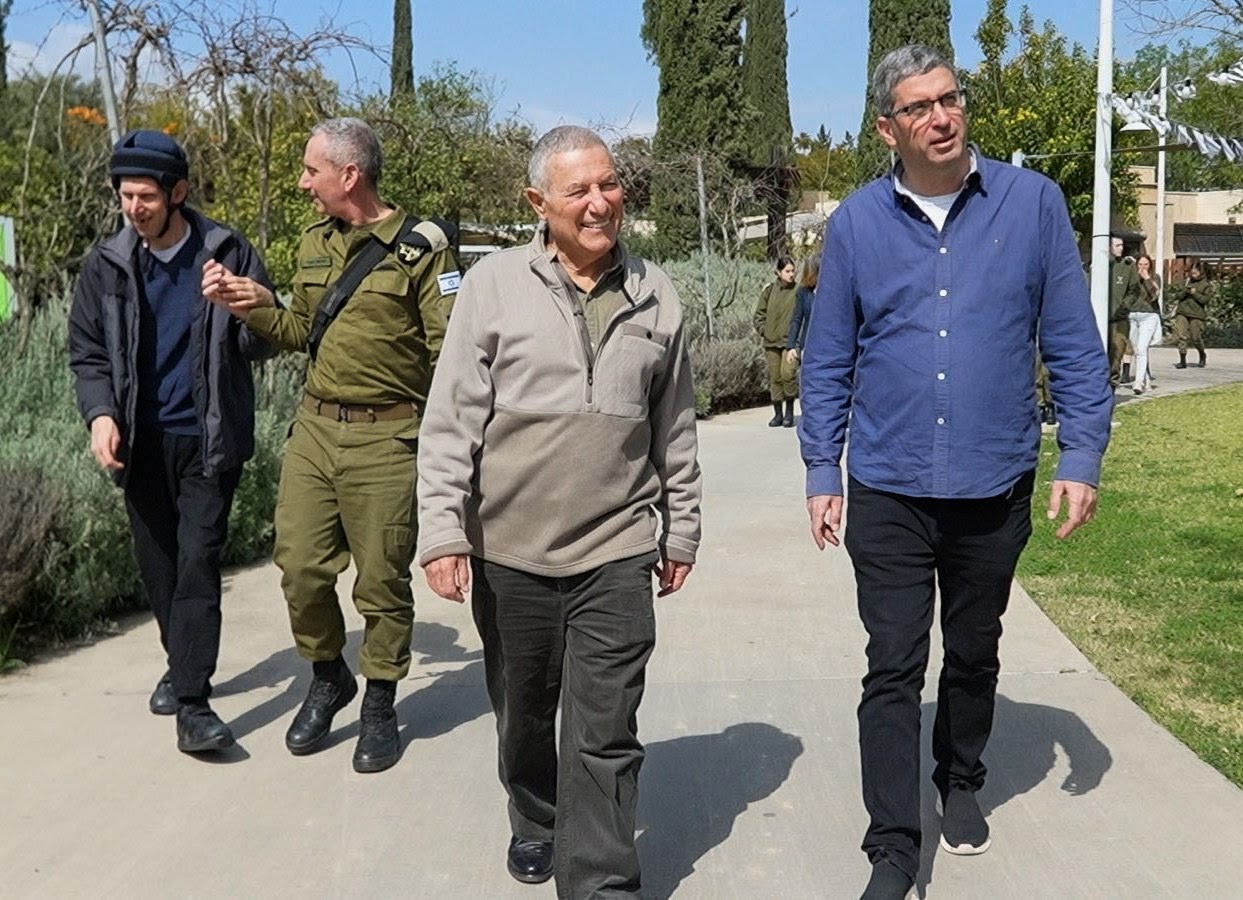
When I walk through the village, I think about the oath I made to my brother, the oath that sent me to Entebbe. That oath has become a lifelong commitment to ensure that those unable to fight for themselves, those whose lives are a daily battle for acceptance and inclusion, will never be left behind.
At Entebbe, the mission lasted fifty-two minutes. At ADI Negev-Nahalat Eran, the mission continues every day. It is the “social Entebbe” that Eran challenged me to create.
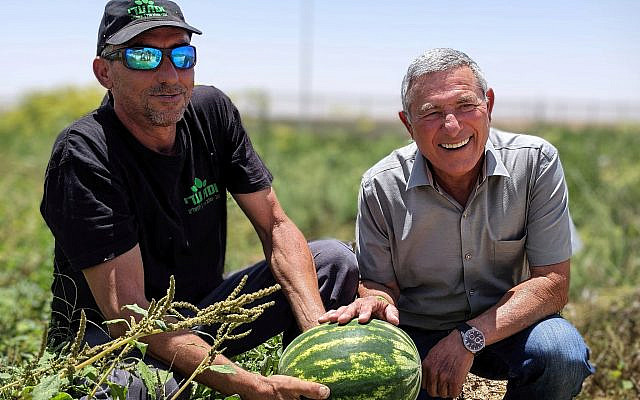
Today, as Chairman of the Executive of the Jewish Agency, I carry that same responsibility in yet another form, and I am prepared to move forward, strengthened by my commitment to my two Erans. Now, in a time of increasing overt antisemitism, it is our responsibility to strengthen the bonds between Israel and Jewish communities throughout the world, to deepen our sense of responsibility and ensure that no Jew ever feels alone.
Fifty years ago this week, we accomplished what most people thought was impossible. We flew four thousand kilometers, surprised the enemy, and brought our people home. We turned a potential catastrophe into a moment of national pride. Those fifty-two minutes represented far more than a military operation. They reflected the Jewish people’s deep value of mutual responsibility.
Eran taught me that refusing to leave the wounded and vulnerable behind is a daily and demanding social mission, with no return flight and no end date.
It is the mission that I am still on.