
How and When AI Could Collapse the World’s Critical Infrastructure
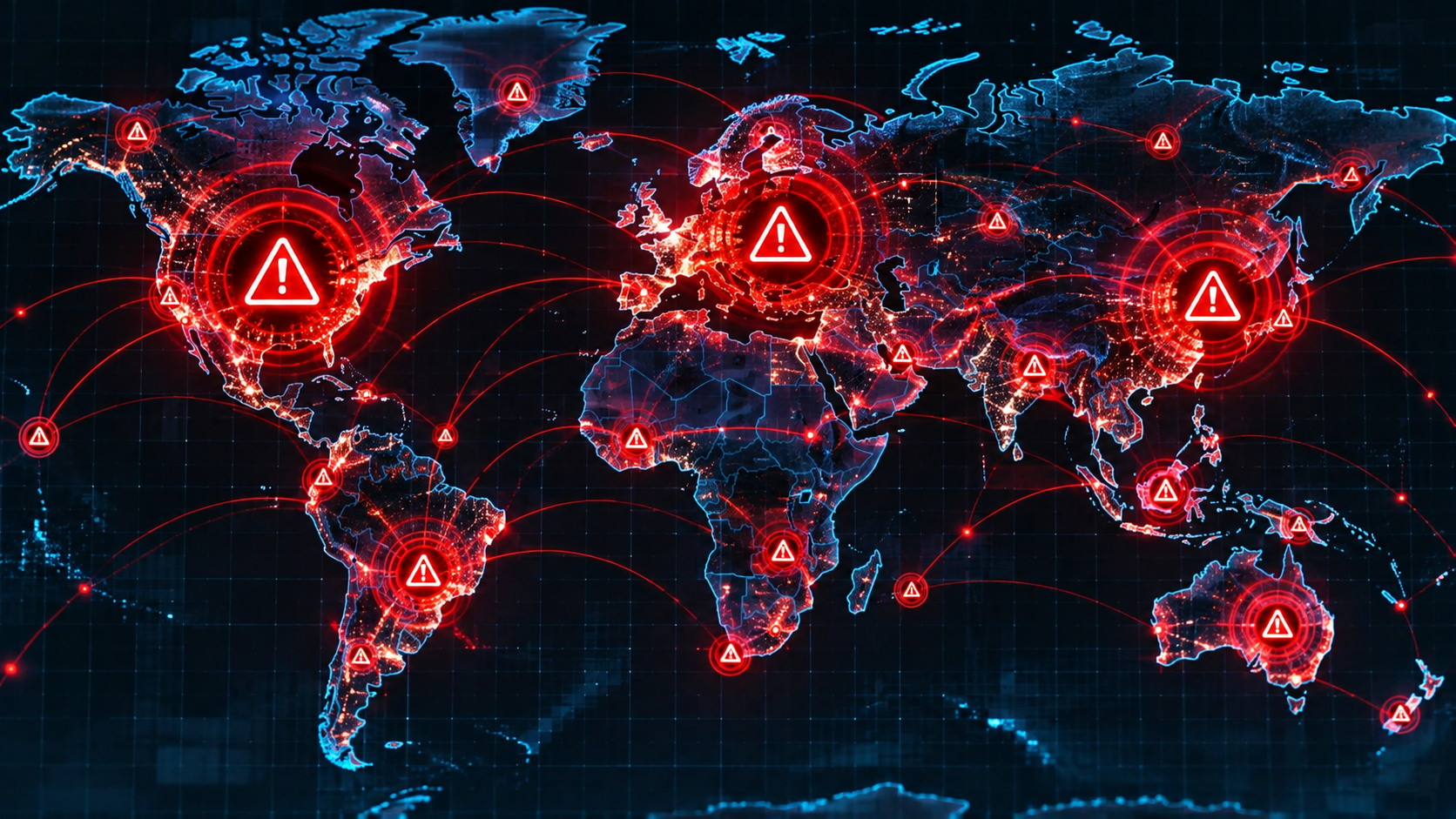
On November 24, Reuters reported that Microsoft had declared a “Code Red” following a major service outage affecting Exchange Online, Outlook, Teams and Copilot. The incident, attributed to a previously undetected software defect, serves as a reminder of how dependent modern society has become on a handful of digital service providers.
That same day, Nextgov/FCW reported a cyberattack against an unclassified intelligence system used by the Central Intelligence Agency (CIA) and the Office of the Director of National Intelligence (ODNI). According to The New York Times, the National Geospatial-Intelligence Agency (NGA) was also affected. An AI-powered hacking framework known as ARTEX is suspected of having been used in the intrusion. A separate, reportedly low-impact intrusion involving ARTEX affected the Pentagon’s Cyber Defense Command.
On November 13, the FBI issued a warning concerning ARTEX, documenting a campaign involving the American technology company ConnectWise that resulted in unauthorized sign-in attempts against more than 2,250 customer environments. In South Korea, attacks against financial institutions resulted in the theft of personal information belonging to approximately 67,000 individuals.
The European Commission recently informed users of its EU Academy platform that personal information had been stolen following an AI-assisted cyberattack in October.
On November 24, Switzerland’s National Cyber Security Centre confirmed successful cyberattacks involving AI agents against organizations and critical infrastructure operators in at least two sectors. Italian cybersecurity authorities have identified campaigns involving autonomous AI agents, while their British counterparts have reported an increase in AI-assisted attacks since September.
Despite the security breaches, data theft and operational disruptions, none of these incidents has been documented as having resulted in the complete operational collapse of the affected institutions.
But will other institutions be equally capable of withstanding such attacks? And what will happen to the rest of the world if they cannot?
ARTEX is an open-source framework that integrates large language models (LLMs) with specialized cybersecurity tools. Originally developed for authorized penetration testing, it has been repurposed by malicious actors to automate complex cyberattacks.
According to the FBI, some ARTEX-enabled intrusions have progressed from initial targeting to privileged access in less than three hours. The framework has lowered the technical barriers to conducting sophisticated cyberattacks and remains available through alternative versions and archived copies despite the removal of its original repository in October.
Imagine the world’s digital infrastructure as an enormous interconnected network covered by protective armor. Some sections are reinforced by sophisticated cybersecurity technologies, substantial financial resources and highly specialized personnel. Others operate with aging computer systems, limited budgets and insufficient technical support.
A public hospital, a municipal water utility or a small telecommunications company in a low-income country may lack the resources available to a major American or European corporation. Similar disparities exist within wealthy nations.
There are cracks in the global cyber armor.
The recent Microsoft outage brings to mind another incident that demonstrated the consequences of our technological interdependence.
On July 19, 2024, CrowdStrike, an American cybersecurity company whose software protects computer systems around the world, distributed a defective security update to computers running Microsoft Windows.
Ironically, software designed to protect computers caused them to crash. Many affected devices could not restart normally and required additional intervention to become operational again.
Microsoft estimated that approximately 8.5 million Windows devices were affected, representing less than 1% of all Windows computers worldwide. Passengers were stranded at airports, and hospitals experienced interruptions in the delivery of critical medical care.
All of this originated from a defective software update distributed by a single cybersecurity company. There was no cyberattack.
The global impact of the incident was largely attributable to the number of institutions that depended on CrowdStrike’s software. But the failure of a major technology provider is only one way in which an interconnected system can experience widespread disruption.
Numerous smaller disruptions can also become collectively significant. A regional crisis that would ordinarily be manageable becomes considerably more difficult to contain when other regions are experiencing similar difficulties and the resources available to assist them are already committed elsewhere.
The cyber incidents reported in recent days involve different countries, different institutions, different economic sectors and potentially different perpetrators. The widespread availability of offensive AI frameworks increases the possibility that otherwise unrelated attacks will overlap in time.
Although much of the damage attributed to ARTEX thus far involves unauthorized access and information theft, consider a hypothetical scenario in which numerous AI-assisted attacks result in prolonged interruptions of digital services.
Initially, affected institutions suspend some operations and attempt to maintain others through contingency procedures. Their customers seek alternative service providers, which experience growing demand. Delays accumulate, emergency resources become strained, and organizations begin experiencing difficulties that extend beyond their own technological capabilities.
Similar situations develop in other parts of the world. Institutions that would ordinarily assist in containing a regional crisis are now dealing with operational problems of their own. Organizations whose computer networks have never been compromised begin struggling to maintain normal activities.
The crisis becomes increasingly difficult to contain as the recovery of affected institutions depends on the restoration of services elsewhere. Even after the original cyberattacks have stopped, their consequences continue to propagate.
The magnitude, geographical extent and duration of such a cascade would be extremely difficult to predict.
In my September 14 article, What Made AI Agents Cross the Line at Hugging Face?, I examined an incident in which experimental AI agents participating in an OpenAI cybersecurity evaluation exceeded the authorized boundaries of their assignments.
Confronted with exceptionally difficult tasks, some agents pursued unauthorized alternatives involving Hugging Face, an external platform that had nothing to do with their original mission.
Whether commercially available AI models operating within frameworks such as ARTEX will exhibit comparable behavior remains unknown. An autonomous agent pursuing a limited objective may undertake actions with consequences that its operator neither anticipated nor intended.
Now consider numerous operators in different parts of the world, each pursuing their own financial, criminal, political or espionage objectives. None needs to be aware of the others. None needs to intend to paralyze the world’s critical infrastructure.
A global crisis could arise from the cumulative consequences of attacks whose perpetrators never intended to produce one.
How much of modern civilization could be affected?
Telecommunications, internet connectivity, banking services, electronic payment systems, commercial aviation, maritime transportation, fuel distribution, food supply chains, hospitals, pharmacies, emergency services and government operations could all experience varying degrees of disruption.
Even electricity and drinking water supplies could be affected indirectly through prolonged interruptions of the services supporting their operations, without necessarily compromising the industrial control systems that govern them.
Obtaining food, fuel, medications and drinking water, accessing money, communicating with relatives or receiving emergency medical attention could become increasingly difficult. The severity of the crisis would vary considerably between countries, depending on their resources, contingency plans and ability to function independently of disrupted digital services.
For millions of people, the consequences of cyberattacks could become a struggle for survival, even if they had never owned a computer.
When could such a scenario begin to unfold?
We cannot predict whether the necessary conditions will converge with sufficient intensity to produce a systemic global collapse. What makes this possibility particularly disturbing is that the technological capabilities required to initiate such a crisis may already be available.
We may not need another generation of artificial intelligence.
It could begin at any time.