The views expressed herein are solely mine.
How Israel Shattered Hezbollah’s Terror Empire
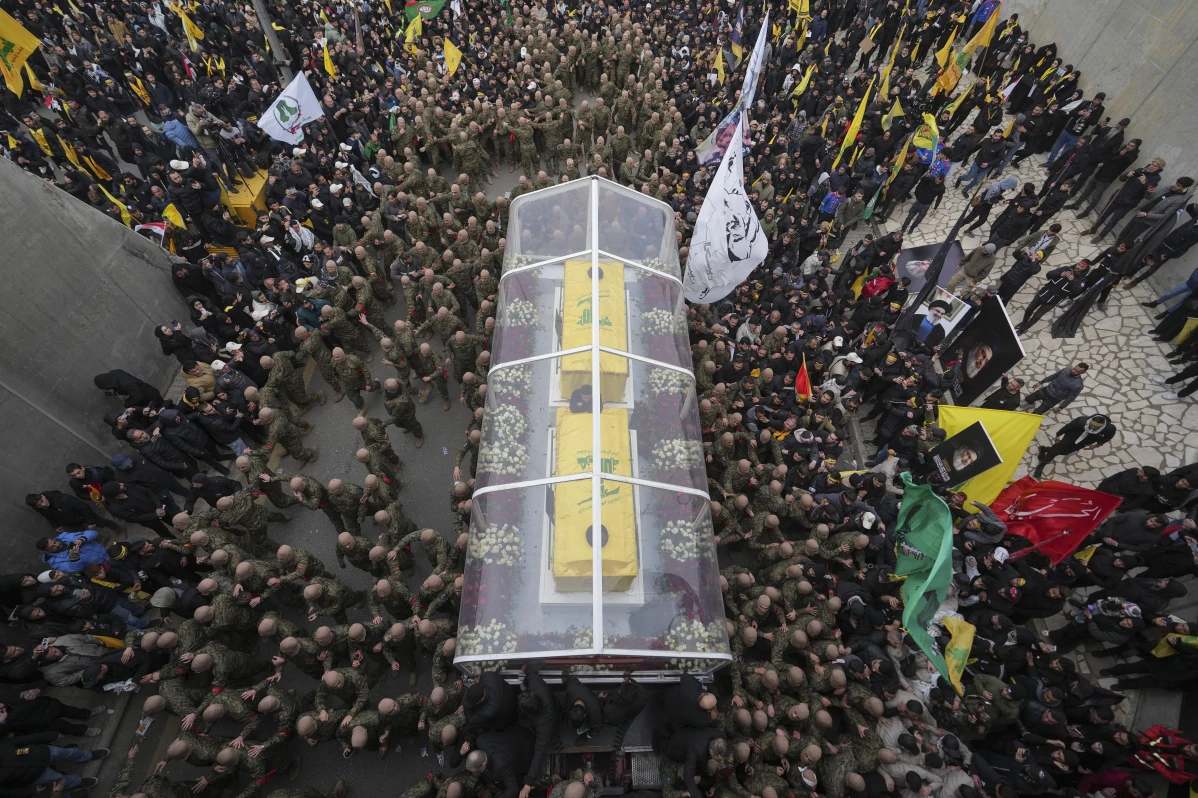
A trailer carrying the coffins of Hassan Nazrallah and his cousin and successor Hashem Safieddine (AP Photo/Hassan Ammar).
Israel has done what the world thought impossible: it has broken Hezbollah. Since the 34-day war of 2006, the UN’s demand that the terror militia disarm was treated as a joke. But in the latest campaign, Israel’s creativity and firepower changed the game. The covert pager and walkie-talkie detonations in September 2024 that killed and crippled thousands, the systematic destruction of missile launchers, and the elimination of Hassan Nasrallah himself have left Iran’s crown jewel in tatters. The once “invincible resistance” is reduced to a wounded gang clinging to survival.
The figures are staggering. Between 2,500 and 4,000 Hezbollah fighters are dead. Seventy to eighty percent of its rockets, drones, and cruise missiles lie in ruins. In two days of synchronized detonations, over 1,500 militants were put permanently out of action. Lebanon, meanwhile, has been dragged into economic freefall: more than 3,000 civilians killed, a GDP crash of 7.1% in 2024, and a $14 billion reconstruction bill. Hezbollah’s “defense of Lebanon” has been nothing more than national suicide.
Even the United Nations—the same hypocritical body once led by an Austrian Nazi who smeared Zionism as racism, the same UN that still shields UNRWA despite its Hamas-infested staff—has been forced to talk about Hezbollah’s disarmament. The hypocrisy is revolting, but the fact remains: Israel’s victory has made it impossible to deny that Hezbollah is broken.
The geopolitics are aligning in Israel’s favor. A new Saudi-American-Lebanese front is pressing to put all weapons under the Lebanese Army. The precedent already exists. In May 2025, after a deal between President Joseph Aoun and Mahmoud Abbas, the PLO gave up truckloads of weapons from camps like Ein el-Hilweh. Two hundred thousand Palestinians -mainly pro-PLO and Fatah- remain stateless in Lebanon, yet even they are surrendering arms. Hamas and Islamic Jihad refuse, but the model has been set. Hezbollah’s excuses are running out.
Strengthening the Lebanese Army is now key. U.S. aid—$95 million already redirected—must build mobility, border control, and counter-rocket units. Saudi money is backing it. The UN must either impose deadlines and enforcement or step aside. If Hezbollah’s arsenal keeps shrinking and the state’s army grows, the balance tips once and for all.
And then comes the unthinkable: Lebanese voices speaking of peace with Israel. Samir Geagea insists arms must belong only to the state. President Joseph Aoun has openly distinguished “peace” from “normalization.” Analysts Hussain Abdul-Hussain and Hicham Bou Nassif have urged the same on Lebanese TV. If Hezbollah is defanged, its veto over dialogue collapses, and Lebanon could finally break free of Iran’s chokehold.
Israel has proved that terror empires are not eternal—they collapse under relentless pressure, superior intelligence, and Western resolve. Hezbollah is bleeding men, weapons, and credibility. For the first time in decades, its disarmament is a real possibility. And if Lebanon’s leaders choose sovereignty over servitude, the road to peace with Israel may finally open.
Related Topics
Related Posts