
Educator, Mother, Learner, Wife — Guided by Torah
How Kosher Restaurants Build Jewish Continuity
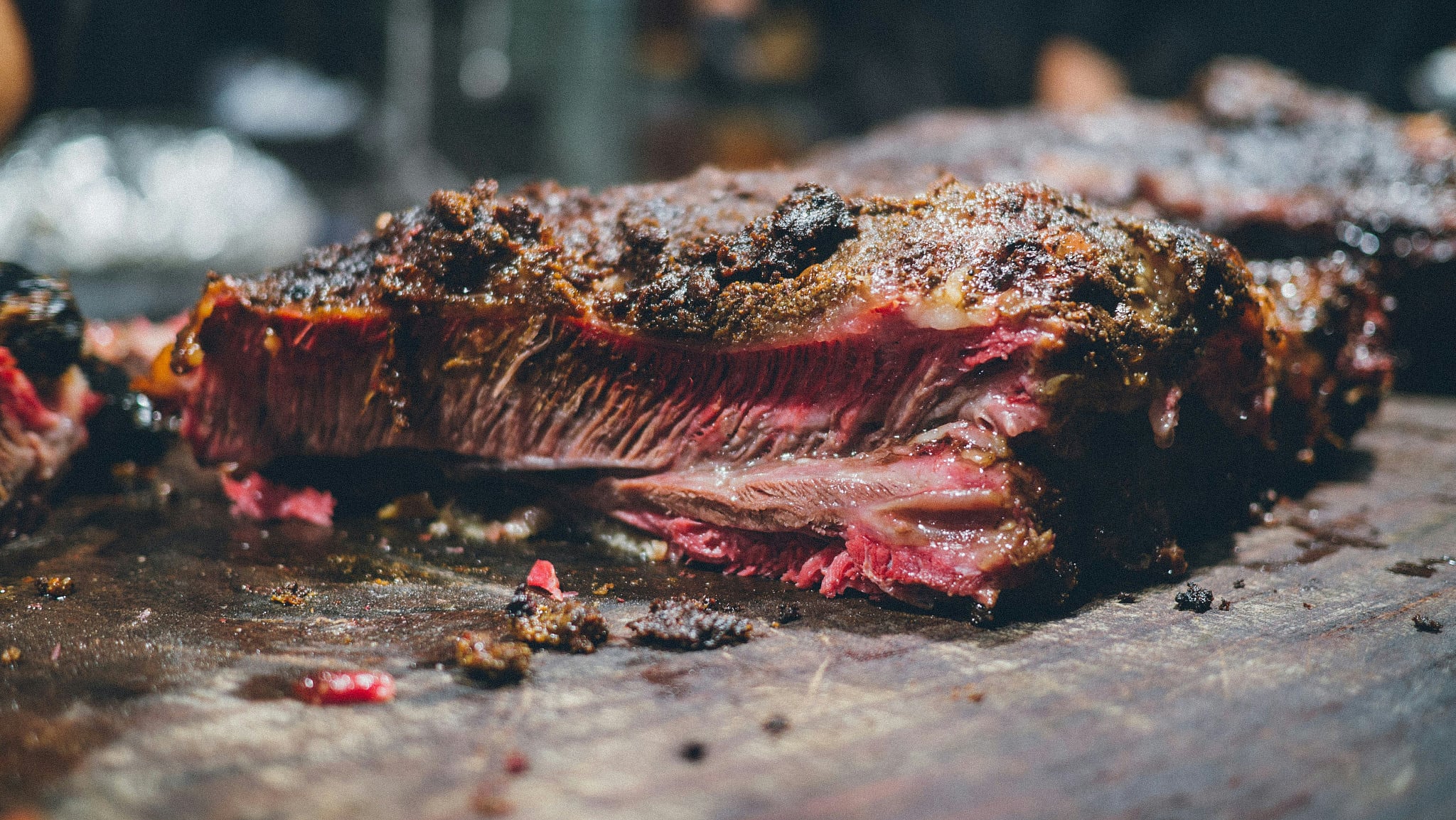
There is enough brisket to satisfy — and strengthen — all of klal yisroel (Yoad Shejtman, Unsplash).
Whilst rebbes daven and toddlers colour, kosher restaurants quietly unfold the Jewish future.
The Meal as a Meeting Place
When one thinks of a restaurant, one usually imagines a place to eat, perhaps to enjoy an evening out with friends. Yet kosher restaurants — whether in New York, Jerusalem, Paris, Kyiv, or Cape Town, all cities where I have had the privilege of living at least briefly — are something more. They are not merely businesses serving meals; they are amongst the last great crossroads of Jewish life, where families, friends, and even strangers sit shoulder to shoulder. In an age when synagogues and schools often divide along denominational lines, kosher restaurants remain rare spaces where the entire spectrum of Jewish experience gathers together.
I recall one evening in Kraków, seated in a modest kosher restaurant with my daughter. She was colouring diligently on a placemat, her crayons clattering onto the table as she concentrated. Behind us, a rebbe in his black hat bentched aloud after his meal, his words rising and falling in a cadence as familiar as it was timeless. The sound of his blessings mingled with the scratch of her crayons.
In that city, where Jewish voices once filled streets now largely silent, the scene carried an added weight. The innocence of a child at play and the sanctity of a rebbe’s bentching coexisted naturally, without tension, in the very heart of Europe where so much Jewish life had been extinguished. That simple meal felt like quiet defiance — continuity lived not in theory, but in practice.
As the Yiddish saying goes, “Az di mame lakht, lakht dos kind” — “When the mother laughs, the child laughs.” In that moment I understood the truth of it: my daughter’s joy and calm did not come from the crayons alone, but from the space itself, which welcomed her as naturally as it did the rebbe’s bentching.
Family in Public Space
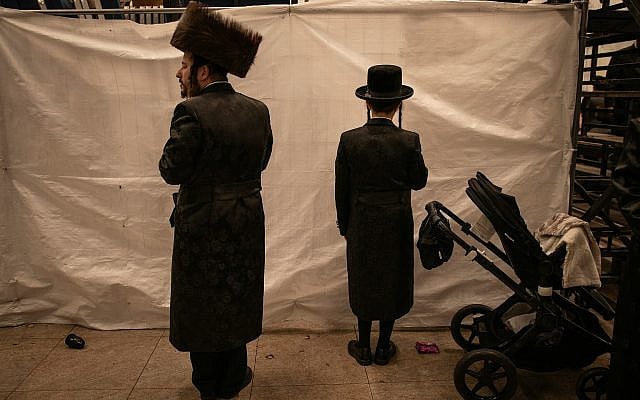
In much of Western dining culture, children are viewed as intrusions into sophistication. Fine restaurants in Paris or New York frequently discourage children, and parents are subtly shamed for bringing strollers into refined spaces. By contrast, kosher restaurants integrate family as an expected part of communal life. Booster seats are stacked in corners, waiters take toddlers seriously, and the occasional outburst is met with patience rather than disdain.
Sociologists describe restaurants and cafés as “third places” — spaces outside home and work that sustain community. In many Western contexts, these third places are increasingly adult-only. Studies have noted the growing exclusion of children from upscale public life in the West, in sharp contrast to Mediterranean or Middle Eastern cultures where children are woven seamlessly into the social fabric. Kosher restaurants embody the latter model: they teach children that Jewish life, even at its most refined, belongs to them too.
This is not trivial. For a mother, it means one need not choose between family and sophistication. A restaurant that can hold both a crying child and a business deal within its walls transmits a powerful message: the future and the present sit together. Al shlosha devarim ha’olam omed — the world stands upon Torah, avodah, and gemilus chasadim — and here, amidst the tables and chairs, the chesed of welcoming families becomes communal Torah in action.
Inclusivity as a Jewish Value
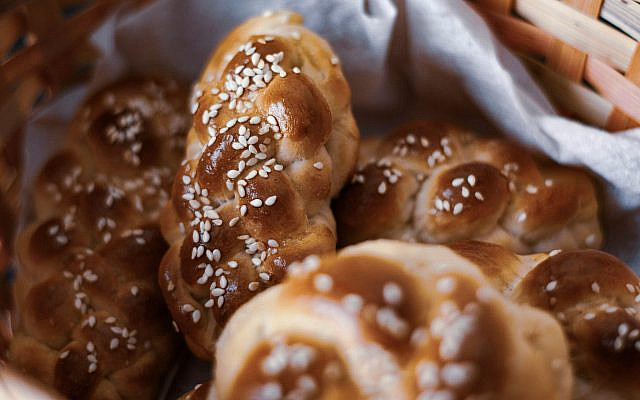
Kosher dining is also strikingly inclusive. In a single room one may see a family in black hats, a group of bareheaded professionals just off work, others Jewish by heritage but not observance, and occasionally non-Jewish neighbours curious to join. All eat together, each welcomed with menus and warm bread rather than sermons.
This inclusivity is not a modern invention, nor is it a watering down of tradition. It flows from hachnosas orchim, the mitzvah of hospitality. A kosher restaurant must adhere to halachic standards; yet within those boundaries the spirit is expansive. Those who often feel at the margins of Jewish life discover a place here — connection without coercion, kiruv without pressure.
This stands in contrast to other dining cultures. Secular Western fine dining often defines itself by exclusion: children, noise, or perceived “outsiders” are unwelcome. Certain religious eateries in other communities project insularity, serving only the in-group. Kosher restaurants occupy a different middle ground: deeply rooted in halacha, yet open and porous, binding diverse Jews and even non-Jews into a single shared experience.

Global Perspectives
The character of kosher restaurants shifts with local context, yet always sustains Jewish presence.
- In New York, over 300 kosher establishments thrive, from fine steakhouses to trendy cafés, making it the largest concentration outside Israel.
- In Jerusalem, kosher innovation pulses, from the humble stalls of Machane Yehuda to Michelin-level dining. The city’s food scene mirrors its essence: ancient and modern existing side by side, tradition and creativity flavouring the same plate.
- In Paris, many kosher restaurants preserve the flavours of North Africa — couscous, tagines, and pastries that keep Moroccan, Tunisian, and Algerian Jewish heritage alive. Dining becomes cultural transmission, allowing children and grandchildren to taste the homes their families left behind.
- In Kyiv, kosher eateries stand resilient. Where once Jewish practice had to be hidden under Soviet rule, dining openly in a kosher restaurant now represents freedom regained — a public affirmation of Jewish identity.
- In Cape Town, with its small Jewish population, kosher restaurants serve not only as eateries but as communal hubs. Simchos are marked, friendships renewed, and travellers connected with locals. In such settings, a restaurant becomes almost like a mini–community centre.
Whether in bustling metropolises or fragile communities, kosher dining carries weight. In some cities it is a proud declaration of visibility; in others, it is the very glue that sustains continuity.
Data and Community
The economic and social impact is enormous. Pew Research (2021) showed that only about 17% of American Jews keep kosher at home, yet kosher food sales are a multi-billion-dollar industry. The Great Kosher Restaurant Foodies network, led by Elan Kornblum, has nearly 100,000 members and millions of interactions. Far more than a review forum, it mediates disputes, celebrates milestones, and connects communities — functioning like a modern mishpocha for me and others.
Even disputes and complaints point to vitality. In an era when many communities suffer from apathy, people care enough about kosher restaurants to argue, post online, and seek resolution. Passion itself is evidence of life.
What Is at Stake
One must ask: what would Jewish life lose if kosher restaurants disappeared? In fragile communities like Kyiv or Cape Town, they may be the last visible markers of Jewish continuity. In stronger centres like New York or Jerusalem, they are the crossroads where denominations, generations, and identities meet naturally. Without them, we risk losing one of the few remaining spaces where klal Yisroel sits together as one.
As a mother, I notice this acutely. When I bring my daughter into these spaces, she learns unspoken lessons: that she belongs in sophisticated settings, that her presence enriches rather than diminishes the room, that Jewish life has breadth enough to hold her future. She sees men and women of all kinds sharing meals with dignity. Amidst the clatter of cutlery and conversation, she learns what no textbook or sermon could convey: being Jewish is not a solitary fact but a communal feast.
The Future on Our Plates
Kosher restaurants gift us a vision of Jewish life that is both timeless and timely. Timeless, because hospitality and family have always been at the heart of our tradition. Timely, because in a fractured and anxious age, we desperately need spaces where people can still gather, eat, and feel at home. If synagogues remind us how to daven, kosher restaurants remind us how to sit together. A healthy Jewish future requires both.
Should kosher dining fade, we risk losing one of the last natural meeting points of klal Yisroel. Yet if we cherish and sustain it, we model for our children a community that is hospitable, resilient, and whole. The table itself becomes our teacher: it shows that amidst difference, amidst difficulty, we can still sit, eat, and live together.
Having glimpsed this truth in every city where I have lived, at least briefly — from New York to Jerusalem, Paris to Kyiv, and even Cape Town — I know it to be consistent. Wherever Jews gather around a kosher table, continuity is strengthened and community is renewed.

Related Topics
Related Posts