Cohost of "Physics to God" podcast
How Mamdani’s Global Intifada Causes His Worst Fears
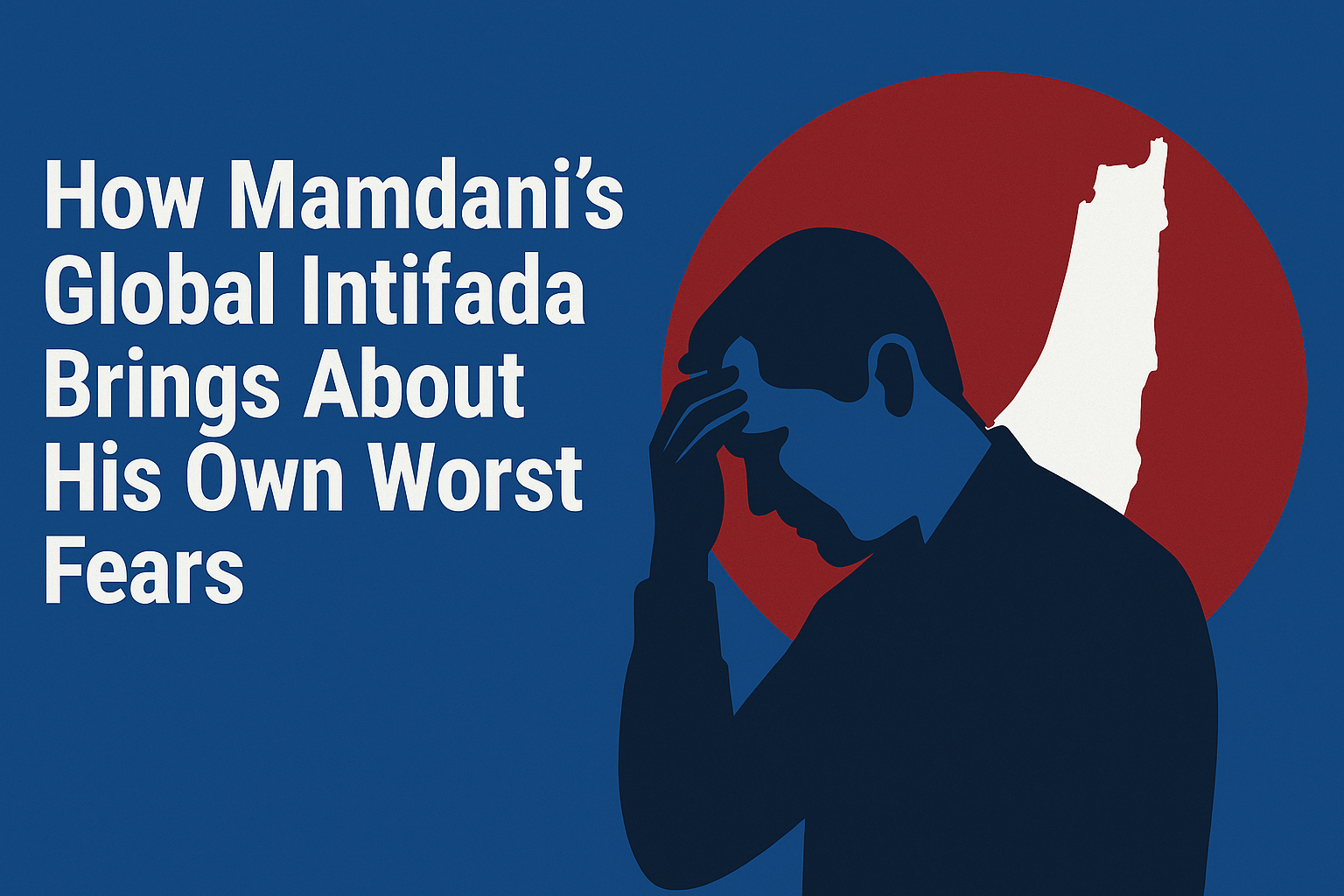
By refusing to condemn calls to “globalize the intifada,” Zohran Mamdani and his movement are causing the very outcome they fear most.
There is a wise saying (Proverbs 10:24): “The fear of the wicked shall come upon him.” Why does this happen? The case of Zohran Mamdani offers a striking demonstration.
Mamdani and other militant anti-Zionists harbor a deep-rooted fear: that the Jewish people will one day all return to Israel. They portray Jews as colonizers who have unjustly taken land from Arabs who lived there before modern Zionism. Their greatest dread is a thriving, united Jewish presence in the Land of Israel, with all the diaspora Jews gathered there, strengthening the Jewish state.
Yet in practice, their anti-Zionism often morphs into anti-Semitism expressed via verbal insults, intimidation, and even physical assaults against Jews living outside Israel. When Mamdani refuses to condemn the slogan “globalize the intifada,” which many interpret as a call to incite violence against Jews worldwide, he implicitly supports a campaign that aims to terrorize Jews who don’t live in Israel.
What happens when Jews begin to feel unsafe outside Israel? What happens when the mayor of New York, one of the world’s great Jewish cities, signals tolerance for “global intifada” rhetoric, mass protests, and calls for targeting Israel’s supporters? The result is predictable. Look to Europe: whenever antisemitism surges there, immigration to Israel rises. The largest Jewish migration to Israel in modern history occurred after the Holocaust, when European Jews, terrified by cruel violence and persecution, fled to Israel en masse.
So the very outcome Mamdani and his allies claim they most dread, the complete ingathering of the Jewish people to their homeland, is exactly what their movement helps to bring about. If you wanted to ensure that Jews leave New York for Israel in large numbers, there is hardly a more effective plan than electing a leader who (a) refuses to denounce slogans perceived as incitement to violence against Jews; (b) portrays the only Jewish state as genocidal; (c) frames Jewish identity as part of a colonising enterprise.
Here lies the paradox: The movement designed to weaken the Jewish state inadvertently strengthens it. By driving Jews to feel unsafe in the diaspora, it accelerates their return to Israel — exactly what these anti-Zionist activists claim they want to prevent.
Why do the wicked often bring about the very thing they dread? Because they operate from emotion rather than strategy. They act out of hatred and fear, not reason. Mamdani despises the return of Jews to Israel, yet his rhetoric helps push more Jews toward that decision. His fear becomes his fate, just as the proverb warned.
The anti-Zionist moral crusade centered around slogans like “globalize the intifada” is self-defeating. The result is to hasten Jewish migration from places of insecurity back to Israel. When the return of the Jews is the very outcome you fear, the fastest way to bring it about is through terrorizing Jews outside Israel. That is the irony of Mamdani’s campaign: by cultivating the insecurity of Jews outside Israel, it drives them home.
Related Topics