How Many Years Can Mockery Reverberate? (Ki Teitzei)
Do Not Ignore It
Parashat Ki Teitzei presents us with a clear moral imperative: the prohibition against ignoring the suffering of others:
If you see your fellow’s ox or sheep gone astray, do not ignore it; you must take it back to your fellow human (Deut. 22:1).
The phrasing “do not ignore it” exposes the human tendency to avert our gaze, to continue as if we saw nothing. The Torah explicitly forbids this and expands the prohibition through the notable repetition of “and so shall you do”:
And so shall you do with his donkey; and so shall you do with his garment; and so shall you do with every lost thing of your fellow’s, which he has lost and you have found; you may not ignore it (Deut. 22:3).
If we’re forbidden to turn a blind eye to our neighbor’s stray animal, how much more so are we forbidden to disregard the suffering of a human being. Western literature reflects this tendency toward willful blindness in characters like those in Franz Kafka’s short story “The Passers-by” or the description of the body hitting the water from the bridge in Albert Camus’s novel The Fall. In both of these works, people convince themselves they did not see the suffering before them.
The parashah deepens our social responsibility with an additional commandment:
…you shall make a parapet for your roof… (Deut. 22:8).
What emerges here is a principle of prevention: to provide the remedy before the affliction, not to wait for disaster. A consciousness that acts to prevent future dangers expresses a deeper responsibility than merely responding after harm has already occurred.
Unlike in biblical times or even the days of Kafka and Camus, today the need to address social injustices is high on the public agenda, and there is a consciousness of acting to prevent, not simply address after the fact. And yet we still have work to do. In the below I wish to direct attention to a specific wrong that still plagues us today: social ostracism and exclusion.
Ignoring ostracism is participation in violence. When harm is wrapped in indifference and silence, responsibility falls upon all who enable it. Only if we recognize ostracism as a violent act of a group against an individual, only if we feel empathy towards its victims, can we hear the moral imperative urging us to act,– to establish protective frameworks and tools for intervention, prevention, and repair.
An Urgent Call to Action
At the threshold of a new school year, as formal and informal educational systems prepare once again to welcome their students, it is worth speaking of the elephant in the room – or more precisely, the child who sits alone in the schoolyard.
Social ostracism or exclusion is not “something that happens only to others.” It appears wherever human beings gather: from kindergartens to nursing homes, from boardrooms to walking groups. By our very nature, we move between social frameworks, longing to feel part of them. Few of us expect to be the “star” of the group, but none of us wish to become its shadow, its invisible member, its convenient target for ridicule.
As a society, we must recognize that dynamics of exclusion and ostracism generate a toxic space in which the strong trample and the weak are trampled – and, in truth, fragments of this dynamic wound us all, and can last for many years.
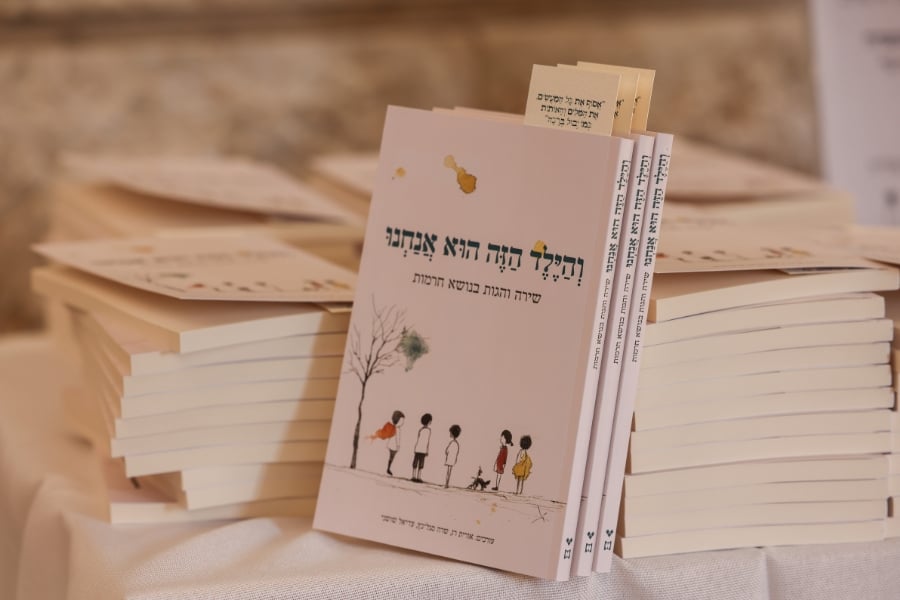
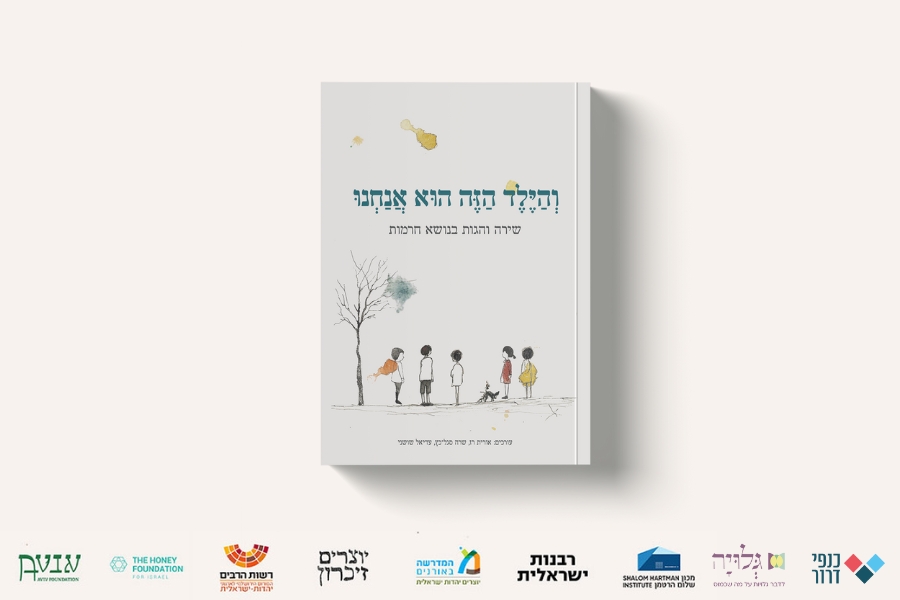
A year ago, together with Rabba Orit Raz, Hakham Adiel Shoshani, I edited the anthology This Child Is Us, published as a joint project of Kanfei Dror and Gluya. Its aim was to break the silence surrounding social ostracism and exclusion and to offer both textual and practical tools for confronting these phenomena together with rejection. As a new school year begins, we must again set before our eyes the urgent need to cultivate values of acceptance and inclusion within our educational frameworks, alongside the practice of “wise intervention,” as Kanfei Dror recommends, from the moment a dynamic of exclusion emerges in any social circle.
Shaike El-Ami, one of the founders of Kanfei Dror, offers practical insights for confronting ostracism in schools (p. 108):
The phenomena of ostracism and exclusion are social curses that have permeated throughout the public sphere and into our educational systems. Their impact is serious and painful, their damage profound and enduring. The good news is that they can be addressed, and it is within our power to do so.
(…) Ostracism in school warrants halting the routine of studies so that parents and educators may speak with their students.
The anthology This Child Is Us is a call to action: to open discourse around issues that too often remain hidden in our personal and communal lives, and to remind us that we must not turn away from the abusive patterns of groups toward individuals. It brings together poems, prayers, and short essays by over fifty contributors – among them poets, mental-health professionals, educators, and community leaders – on themes of exclusion, rejection, bullying, and exclusion at every stage of life. The book aims to help identify these dynamics in real time, to moderate their escalation before it intensifies, and to enable reflection upon past experiences of social ostracism as a step toward learning and repair.
The Child Who Sits Apart
In the chapter of the anthology titled “A Tear Welling in the Eye,” devoted to belonging and difference, the recurring figure of the child who sits apart is depicted. This is a real-life figure appearing repeatedly in our classrooms, youth movements, and community gatherings.
Poet Amos Noy sets this child before us (p. 28):
One Child by Amos Noy
For there is a child, always one
sitting off to the side, utterly alone.
He has tears but will not cry
to them that pleasure he will deny.
No, he will not be hurt by children
he’s seen it all in grown men and women.
He has a plan he will not share
when he grows up, he’ll be slender and fair
For there is a child, always one
off to the side, utterly, utterly alone.
As this new year begins and children return to school, our challenge is clear: to see the child sitting apart, to recognize the dynamics of exclusion in real time, and to intervene. We have all been (or could yet become, God forbid) that child at the gate. Thus every discussion of social bullying, with its attendant ostracisms and exclusions, raises a critical question: will we encounter the ostracized child, will we recognize it in time, will we extend a hand, will we break the circle of pain?
A teacher who notices a child sitting alone and draws them into the classroom dynamic; a parent who inquires with genuine listening about their child’s social life; even a single classmate who says “come, sit with us” – whether in formal or informal settings, these are all partners in breaking the cycle, ambassadors of profound change.
The Endless Echo of Exclusion
The pain of exclusion is not confined to a single moment or place. As described in the anthology’s chapter “Alone in Two Voices,” which explores loneliness and the attempts to endure it, the trauma of ostracism is carried from one schoolyard to another, from one age group to another.
Poet Shiran Haviv (a pseudonym) articulates the unending reverberation of that experience (p. 62):
I Am Still There by Shiran Haviv
Boundary lines carved upon sand.
I stand at the far edge of the field –
my eyes follow a ball that rolls,
not toward me.
In every schoolyard I am still there, waiting to be included.
From sea to sea, yet another trip –
no one asks me to share a room, a garment, a book.
When all gather in a circle,
I slip away to the room of all who do not.
Why is it always me?
Between breakfast plates I deny echoes of the night,
bound to solitude.
I cloak myself in indifference, dull my pain.
Standing before the restroom mirror, I hurl blame and curses:
Only you. Only you. You are everyone who is not.
I am still there.
The eternal bystander in every play,
the silence in the classroom’s melody.
I am the discord they wish to erase.
If I absent myself, fall ill, abandon –
they will not stick around. Perhaps they’ll call it victory. Perhaps
I am everyone who is not.
I no longer struggle with it.
In every schoolyard I am still there.
In the following, Rabbi Tamar Elad–Appelbaum defines ostracism as a social phenomenon of degrading the individual singled out as “other.” She urges us never to stop noticing it, never to lend a hand to the normalization of such abusive behavior (p. 93):
An act of social ostracism is a sustained, shared, and sanctioned act of humiliation toward an individual. It is a searing and violent insult, a mass occurrence in which participants jointly normalize a contemptuous stance toward a single person. Ostracism is consensual bullying, latching onto a vulnerability, defining sensitivity as a flaw while turning callousness into the norm. People act together, in consensus and in silence. Sensitivity requires a voice that departs from the normative, while the callous heart seemingly remains within normative bounds. At that moment, the individual is cast out by the group, made a communal scapegoat, in the triumph of social callousness over human sensitivity. What individual can endure this?
Attention and recognition are only the first steps toward repairing such exclusion. The ostracized child needs tools: to build friendships, to set boundaries, and to find a place within the social circle.
Poet Avishai Huri, writing in the first person, gives voice to the question: does the harm caused by mocking children ever expire? (p. 93)
Expiry by Avishai Huri
In terms of sound traveling through space,
how many years can children’s mockery reverberate?
Has the counselor forgiven me yet
for being fat?
I thought I’d been embraced enough
around every scarred limb.
In abandoned rooms I fostered permanent tenants.
And still,
when the blade turns within me,
it finds no other-just myself.
Here, childhood trauma is shown as inseparable from the adult self, reflecting a persistent moral and educational challenge. It is evident that the wound has become etched across years: the speaker may go on crushing himself with those piercing voices or alternatively seek paths of healing. As individuals and as a society, we must ask ourselves how to halt the mockery and its persistent inner ripples.
A data report presented to the Knesset Education Committee on November 29, 2022, revealed that one in six children in Israel experiences social ostracism. Educational psychologist Yael Avraham, in her book Social Rejection: Turning Our Back Is Not an Option (Niv Publishing, 2018), shows how in Israeli society – which places such a high premium on cohesion and comradeship, from kindergarten through the army – social rejection is perceived as a direct threat to a child’s sense of worth and belonging.
Avraham distinguishes between two kinds of children harmed: the rejected children who suffer active dismissal, sometimes accompanied by bullying and violence, and the invisible children who are not mocked, but simply remain unseen and unacknowledged as part of the group. Both experiences leave enduring wounds and corrode the social fabric as a whole.
Poet Yael Ran reminds us of our collective responsibility toward those “invisible children” – those whose presence is an absence, whose existence is a painful transparency (p. 32).
The Girl at the Gate by Yael Ran
I was the girl who had quickly acquired
Excuses and lies from an age so small,
All just to avoid the anger, the fire
Of children who wounded me, time and all.
(…)
I was the girl who was always the last,
When all had assembled in orderly lines,
Who fled to the pendulum’s rhythm so fast,
And counted each bell that for recess chimes.
(…)
If ever you see such a girl at the gate,
With trembling legs and a fearful stare,
Then walk with her in, do not hesitate –
Lead her deep to the forest’s care.
Do not leave her alone to contend with the fight,
But shelter her soul and guard her night.
A Model for Wise Intervention
The Kanfei Dror method of “wise intervention” proposes systematic work in situations of ostracism and exclusion. This includes early detection of harmful dynamics; active steps during ongoing events through conversations with all sides, including the “bystanders”; and the building of a new group culture. The approach focuses not only on the hurt child but on repairing the social space as a whole. For this purpose, a community team of “ambassadors” is formed, addressing each case of ostracism through mapping relationships, empathetic listening, and sustained accompaniment of the child, parents, and educators until a resolution is achieved.
The core innovation lies in shifting from individualized treatment of the ostracized child to systemic change, emphasizing the responsibility of the entire community to halt exclusionary patterns. Grounded in current research in social and educational psychology, the model is supported by professionals who help transform harmful dynamics into spaces of safety and inclusion. In this way, “wise intervention” becomes not a one-time response but an enduring communal tool for social change.
As educator Daniel Topaz, writing in This Child is Us, emphasizes (pp. 113-114):
“A shared ethical language is essential, for indeed it takes a whole village to raise a child. A community in which adults speak a language of inclusion and emphasize the belonging of every member will raise a young generation that internalizes the importance of granting belonging to all. Every discord, every retreat from the practical responsibility of caring for all members of the community, will be heard – even if it happens in silence. (…) We must not relent in the critical task of modeling a society intolerant of abuse, a society that enacts this not only in words but in deeds.”
In truth, every case of social ostracism or exclusion reflects the “village” in which we are raising individuals and shaping our collective life. What is required of us is that every such “village” cultivates children and adults alike who are committed never to ignore, never to remain silent in the face of wrongdoing.
Elul, Teshuvah, and the Circle of Pain
Every discussion of social bullying and exclusion gives rise to the same critical question: will we meet the ostracized child? Thanks to the work of Kanfei Dror, that question is sharpened and expanded to: will we recognize that child in time, will we extend a hand, will we break the circle of pain?
The teshuvah in which we engage during the month of Elul and the High Holy Days is not only directed towards God but also towards our fellow human. As we are taught concerning Yom Kippur itself, no divine forgiveness can atone for harm between people without real, embodied repair.
These days of new beginnings are thus an opportunity to examine how we see the other, how we grant them a place. This is a time to confront the social tide of exclusion and erasure, and to choose to halt the bulldozers of shaming and injury that resonate painfully – in the present and for years to come – within all who witness them.
For this child is us.
And the question “How many years can mockery reverberate?” must echo back within us, until we stop and prevent the destructive dynamics of social ostracism and exclusion.
_________________________________________________________________________________________
* Raz, Orit, Sarah Segal-Katz, and Adiel Shoshani, eds. This Child Is Us: Poetry and Thought on Social Ostracism. Jerusalem: Gluya and Kanfei Dror, 2024.
We thank Yehuda Atlas for granting us permission to name the book in dialogue with the world he created in his book series This Child Is Me, and we thank Rabbi Tamar Elad-Appelbaum for wisely suggesting this title.
**All essay and poetry quotations in this article appear in the book.