
How Netanyahu taught Israel to give up on peace
For the last 15 years, I’ve been told that even talking about peace is naïve or reckless. People I love and admire catalogue the events that have led them to this conclusion. These events, they argue, are the cold, hard reality that has entrenched the opinion of most Jewish-Israelis and much of the Diaspora that peace with the Palestinians is impossible.
Palestinian terror and rejectionism, the trauma of the Second Intifada, the rockets, and above all the horrors of October 7, 2023 are real and searing. I sympathize with the resulting caution and skepticism. Nor do I pretend the Palestinian leadership has been a reliable partner. But none of this can sufficiently explain the collapse in visible support for two states for two peoples.
Opinion does not simply form. Opinion is taught. And, over the last 17 years and more, we have been deliberately and effectively taught to despair of peace, not just through events imposed by Israel’s enemies but through the rhetoric and policies of Israel’s leaders.
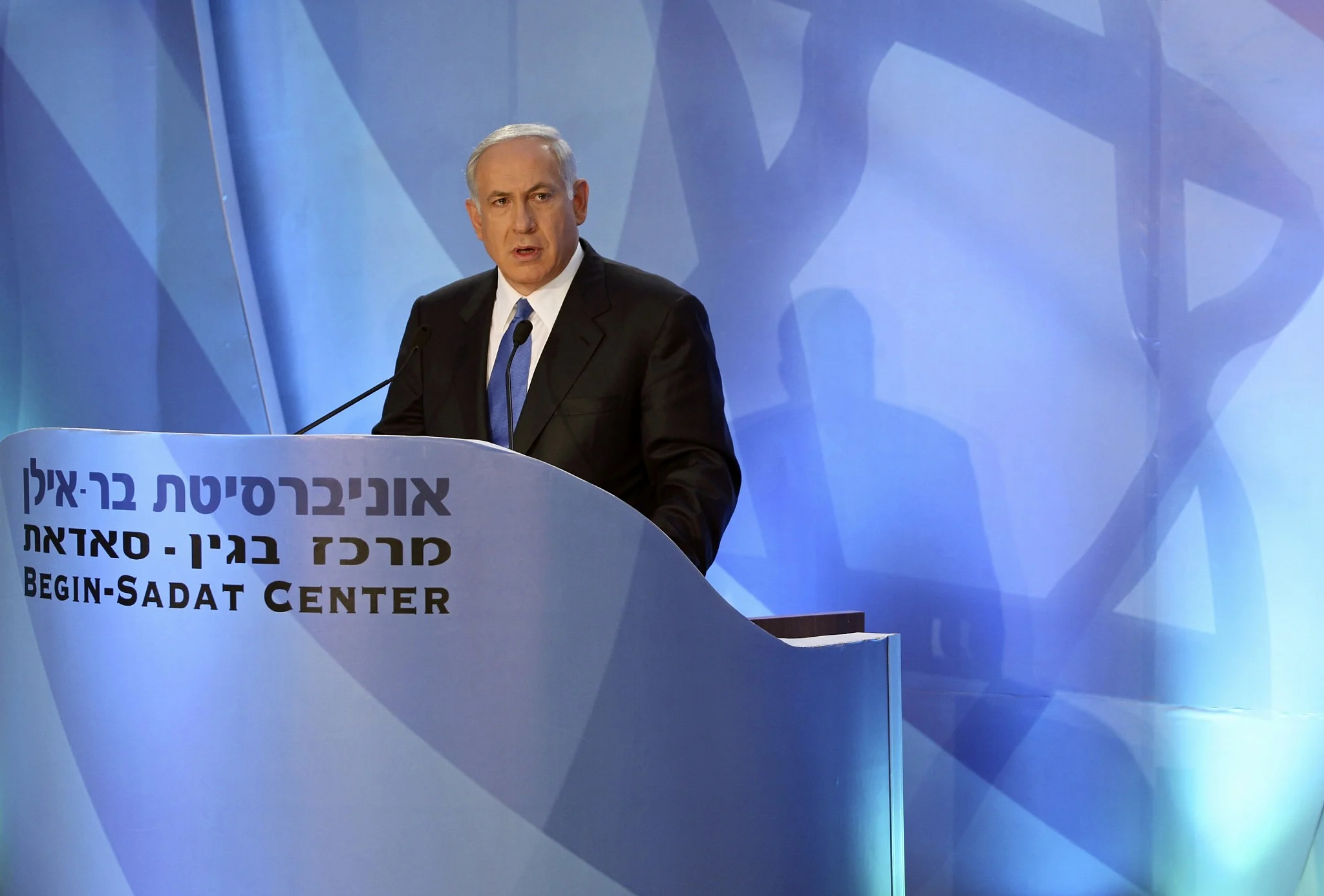
The numbers are stark, and match the rhetoric. In 2009, after Netanyahu endorsed a demilitarized Palestinian state at Bar-Ilan, the Israel Democracy Institute polled Jewish-Israeli support for two states at around 63 percent, even nudging his own Likud voters that way. By August 2018 it was about 47%, by 2023 roughly a third; by Tel Aviv University’s Peace Index in 2025–26 down to barely 20%.
Yet Arab citizens of Israel, who lived through the same events still back two states at around 70%. The events were shared. The despair was not. It was taught.
In 2009 Netanyahu said “yes, if” — a demilitarized state, and if the Palestinians recognize Israel as the Jewish state. By 2011 the failure was all theirs: “Israel wants peace with a Palestinian state, but the Palestinians want a state without peace.” By 2015 the answer was no, not on his watch. By 2017, standing beside President Trump, he said: “rather than deal with labels, I want to deal with substance,” i.e. Israeli security control over “the entire area west of the Jordan River.” After October 7 he made that control absolute and named it the whole point. Then, in June 2026, setting out his stall ahead of October’s election, he arrived at the terminus — there is “no room for two states” between the sea and the river.
From “yes, if” to “no room,” in 17 years.
Policy reinforced words. Settlement construction advanced, and never with greater intensity than in the last four years. Over 500,000 Israeli citizens now live in the West Bank, making a contiguous Palestinian state look ever less “realistic.”
Governments elevated “conflict management” over resolution. Damningly, as the Jerusalem Post reported in March 2019, Netanyahu told his own party that whoever opposes a Palestinian state should support the transfer of Qatari money to Hamas as a way to keep the Palestinians divided — a rationale his government acknowledged again in 2025.
If the state itself works to ensure the Palestinians have no unified, legitimate leadership, “there is no partner” stops being an observation and becomes a self-fulfilling prophecy. Palestinian dysfunction was an obstacle for Israel to overcome, not a strategy to preserve. To pursue that strategy by strengthening and empowering the Palestinian faction committed to genocide is incomprehensible.
Israeli-Jewish despair was not simply a response to horrific events. It was enabled — spoken into being by leaders who found electoral advantage in fear, and hardened by policies that made hopelessness look like realism, and optimism seem treasonous.
Some of this conditioning predates Netanyahu’s 2009 return to office. Successive Israeli leaders described peace not as an opportunity but an amputation. Barak, Sharon and Olmert all filed the Palestinian state under loss, danger and “painful concessions,” never under security or normalization. And Ehud Barak, understandably exasperated by Arafat in 2000, gave currency to the phrase “There is no partner,” which became reflexive national common sense. Netanyahu seized it, welding it to his 2015 promise of no Palestinian state on his watch. The phrase’s genius is that it does not attack the desire for peace, but the belief that peace is possible. And a people persuaded that peace is impossible will never vote for it.
But if despair can be taught, hope can be too. Opinion is malleable and there are precedents. Before Anwar Sadat stepped off a plane at Ben Gurion in November 1977, barely a quarter of Israeli Jews believed Egypt wanted peace; within months, roughly three-quarters did — a swing of some 50 points, recorded by pollsters and the world’s press at the time (The Washington Post, December 1977; TIME, June 1978). Within 18 months Menachem Begin — an ostensible hardliner — signed away every last grain of Sinai sand. A people who had known only war with Egypt learned, almost overnight, to imagine peace with it.
Rabin carried a divided country into Oslo. Sharon — another hawk — led a majority out of Gaza in 2005, with 53% backing disengagement in one poll and nearly 70% at an earlier peak. In Northern Ireland, 71% voted ‘Yes’ to the Good Friday Agreement once their leaders committed to it. In South Africa — and I speak as a South African who watched it happen — nearly 69% of white voters backed F. W. de Klerk’s reforms to end apartheid.
A frightened, embittered or traumatized public can be led — not dragged — toward the outcome it had been taught to fear. Great change always requires leadership strong enough to take a people to a place it did not, at first, want to go.
Skeptics will say that October 7 changed everything — that no framing can survive that day. It is the strongest objection, and deserves the utmost respect. But notice how swiftly the atrocity was folded into the pre-existing script: proof, its proponents say, that there is no partner and never was. That reflex is itself the product of years of conditioning. A different conclusion could yet be drawn – that alongside the vital need for strength and deterrence against a murderous foe, the belief that this toxic conflict could simply be “managed” indefinitely died in the fields around Re’im.
The Palestinians, too, must be led toward compromise by their own leaders, and the Arab world must finally accept its share of the burden. The security guarantees Israelis rightly demand — that a Palestinian state must be demilitarized chief among them — would have to be real, verifiable and permanent.
But a political horizon is not a concession to be extracted from Israel; it is a force multiplier for Israel — the thing that strengthens moderate partners, isolates Iran, sustains the regional and global alliances that already shield it, and starves the extremists of oxygen.
And there is a deeper truth. It was the Jews who accepted the concept of two states for two peoples in UN Resolution 181in 1947, having accepted it on harsher terms still in 1937. Israel’s own legitimacy flows from that concept. To slam the door on any Palestinian state, at any point, is not to protect Israel but to imperil the very idea of it. The maximalist dream that has taken hold, even if we have been conditioned to view it as “common sense,” imperils Israel’s future as a Jewish and democratic state. A political horizon is an opportunity. It is political maximalism that is the danger.
That is why I will be voting for opportunity and against the existential danger of maximalism and hope my fellow voters do so too.
What one generation of leaders taught, the next can and must unteach. We are not powerless before it; not by the cards we are dealt we are remembered, but by how we play the hand. Despair, it turns out, is not a fact about the Israeli public. It is a policy – and policies, thank God, can change.
Justice, justice you shall pursue. Not vengeance, not the illusion of “total victory,” but justice. That pursuit built the Jewish state. It can yet secure its future.