
How the Board of Peace could privatize lawfare
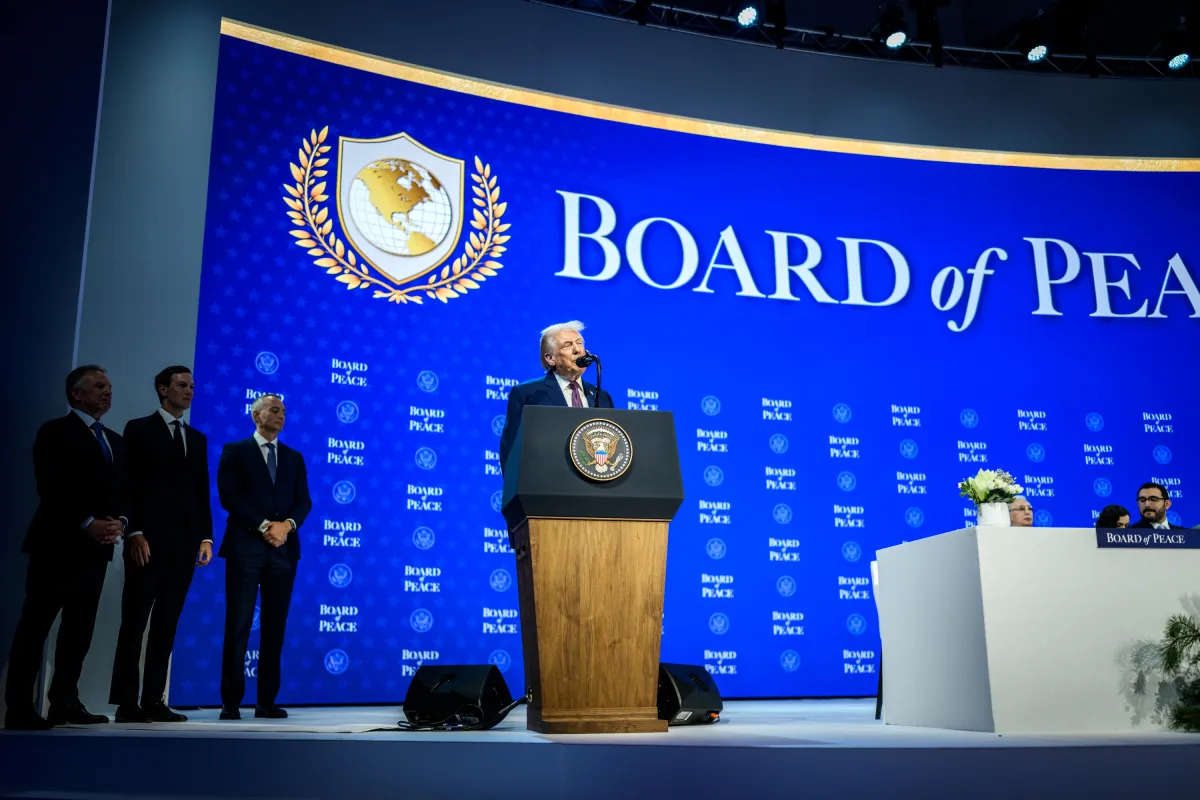
President Donald Trump’s “Board of Peace” has already drawn attention as an unconventional vehicle for reconstruction and investment in conflict zones. But the real danger it poses is not political, diplomatic, or even humanitarian. It is legal.
By combining international legal personality with a UN Security Council mandate, the Board of Peace creates the conditions for something far more consequential: the transformation of ordinary commercial risk into legally actionable harm. And once that transformation occurs, liability does not stop with Israel. It potentially reaches the United States, private investors, and even individual political actors involved in designing or endorsing the framework.
This is not speculation. It is how the Board of Peace can be used as a new type of lawfare.
This Is Not a Novel Theory
This model has been used before—successfully.
International investment arbitration under frameworks like ICSID and UNCITRAL has repeatedly converted political instability and armed conflict into private litigation once consent and reliance were established. Post-Arab Spring claims against Egypt, Crimea-related cases against Russia, and the landmark Yukos v. Russia ruling all followed the same logic.
Tribunals did not adjudicate sovereignty or legitimacy. They adjudicated frustrated expectations and financial harm.
The lesson is consistent: once an internationally sanctioned body exists, consent is documented, and private actors invest in reliance on that framework, courts stop debating politics and start awarding damages.
That is how diplomacy quietly becomes lawfare—and how nations can be overwhelmed or even bankrupted through litigation without a single sanction or military confrontation.
Under normal circumstances, investing in a conflict zone like Gaza is understood to be inherently risky. War, terrorism, and state action routinely destroy projects. When that happens, investors absorb the losses as part of doing business. Courts are generally reluctant to hold states liable for such outcomes, precisely because the risks were known and assumed.
That changes once investment is routed through an internationally recognized body like the Board of Peace.
The Board is not an ad hoc committee or a political talking shop. It is constituted as an international organization with legal personality—capable of contracting, holding assets, and operating within recognized legal frameworks. When investors rely on such a body, they are no longer merely gambling on stability. They are relying on a structured, internationally sanctioned legal environment.
That reliance matters.
Imagine a multinational firm or a sovereign wealth fund financing a development project in Gaza. If the project is undertaken independently, losses from military action would almost certainly be treated as assumed commercial risk. But if the same project is structured, endorsed, or administered through the Board of Peace, the legal character of the investment changes.
Investors are no longer relying solely on political hope. They are relying on representations embedded in an international legal framework—one backed by UN authorization and explicit state consent.
If Israel later conducts military operations or blocks the entry of materials or equipment that destroy or delays the project, courts will not ask whether the Board is liable. They will ask a much simpler question: who caused the harm?
The answer will be Israel.
The Board merely provides the scaffolding. Investors provide the capital in foreseeable reliance on that scaffolding. When destruction occurs, liability flows to the actor whose conduct caused the loss. Claims cease to be about geopolitics and become about causation, reliance, and damages.
UN-backed projects typically benefit from institutional immunities and lack direct enforcement mechanisms for private actors. While UN agencies may confer legitimacy, they rarely create enforceable economic expectations that private investors can litigate against states.
The Board of Peace is different.
Once recognition and reliance exist, ordinary defenses—non-consent, sovereignty, non-ratification—begin to collapse. Courts do not require a state to ratify a body to find liability. They require documented consent to a framework and foreseeable reliance by third parties.
UNSC language, and operational acceptance—not domestic ratification—are what courts look to when determining jurisdiction and responsibility, leaving both Israel and the United States exposed despite the absence of formal approval.
That distinction is critical.
For lawfare of this kind to function, several elements must align. In the case of the Board of Peace, most already have.
First, the entity must be an international organization with legal personality. The Board of Peace meets this threshold. Without legal personality, there are no enforceable obligations, no contractual hooks, and no litigation anchor.
Second, there must be a UN Security Council mandate authorizing operations in a specific conflict zone. That mandate already exists through Security Council Resolution 2803, which authorizes civil, administrative, and economic activity in Gaza under UN auspices. This creates jurisdictional gravity that courts treat very differently from NGO activity.
Third—and most crucially—the resolution must affirm the consent of the affected state. Resolution 2803 contains language indicating Israel’s acceptance of the operational framework. That language is the keystone future plaintiffs will cite to defeat defenses based on sovereignty, lack of jurisdiction, or the act-of-state doctrine.
Consent converts what might otherwise be imposed supervision into voluntarily assumed legal obligation.
The final step—one not yet completed but entirely plausible—is the Board entering independent economic or investment agreements. If the Board begins signing contracts with private investors or administering reconstruction capital, the legal trap snaps shut. Those agreements create non-sovereign contractual hooks that allow private litigation to proceed even when political remedies fail.