How the West Fell for Tehran’s Favorite Lie
The Citizen Lab report that accused Israel of running fake Persian-language accounts, and the Haaretz coverage that amplified it, was an exercise in speculation presented as fact. What should have remained an unproven theory was presented as a revelation. Haaretz claimed the study showed Israel orchestrating a covert campaign to boost Crown Prince Reza Pahlavi, relying on little more than timing overlaps and repeated hashtags. Once the paper treated this as confirmation, Tehran got exactly what it wanted. IRIB and the IRGC-linked Tasnim News Agency quickly cited the report as legitimate. The next day, IRIB aired a coerced confession from activist Amir Hossein Mousavi, visibly terrified, claiming he was part of an Israeli network. A flimsy idea, inflated by careless reporting, had reached the audience most eager to weaponize it.
The ease with which the Islamic Republic used the story highlights a deeper problem. When researchers present conjecture with the tone of forensic certainty, and when journalists remove the caveats, authoritarian regimes do not hesitate to use those claims as validation. The Citizen Lab report was framed in a way that made this outcome predictable.
Despite its confident language, the study never produced evidence linking the accounts it flagged to any Israeli institution. The researchers identified patterns in posting schedules and similarities in content, then concluded that the behavior resembled a state-directed influence effort. There were no technical identifiers from platforms, no financial trails, and no independent corroboration. The report described a possibility. Public interpretation treated it as proof.
Haaretz and its business affiliate, The Marker, pushed the story further. They claimed Israel had been running an online network designed to promote the Crown Prince and prepare the ground for a return to monarchy, echoing a sentiment Ali Khamenei himself voiced just two months before the report’s release. The reporting carried a moralizing tone, as if an elaborate scheme had been uncovered. The idea that an Iranian opposition figure might find sympathy in Israel fit comfortably within the ideological outlook of those publications, and the coverage reflected that assumption.
Tehran seized the moment, treating the Haaretz coverage and the Citizen Lab report as outside “proof” that the opposition is not Iranian at all. Inside Iran, this has immediate consequences. The government already arrests people for ordinary political expression. In the two months following the 12-Day War, Islamic Republic security forces arrested more than 21,000 people for “espionage,” “ties to the exiled opposition,” or simply “sharing unauthorized footage of the war” on social media.
Claims of foreign influence give interrogators another excuse to intimidate citizens who use social media to share information or express dissent. After the publication of the Citizen Lab report, any Iranian who posts pro-democracy content risks being accused of participating in a foreign scheme. Mousavi’s televised confession showed how easily that accusation can be deployed.
The echo did not stop with Citizen Lab and Haaretz. A wider group of commentators in the West and within the Iranian diaspora amplified the story because it aligned with their long-standing hostility toward the Crown Prince. Some have spent years insisting that Pahlavi’s support is exaggerated or manufactured. For them, the suggestion that online manipulation might be responsible for his visibility was convenient. Many journalists with a history of spreading fake news in favor of the Islamic Republic circulated the claims with little hesitation. Their enthusiasm suggested that the conclusion mattered more than the evidence.
This reaction reveals the political instinct driving much of the amplification. It is easier for some critics to cast doubt on Pahlavi than to accept that many Iranians see him as a unifying figure. He speaks openly about secular democracy, women’s rights, and national reconciliation. He rejects the anti-Western posture that often shapes academic and media narratives about the region. His critics prefer to question his legitimacy rather than engage with the fact that many Iranians view him as a credible voice for a different future.
Meanwhile, the Islamic Republic operates a vast, well-documented disinformation apparatus of its own. Its cyber units run multilingual propaganda networks targeting audiences across the Middle East, Europe, and North America, operations repeatedly exposed by Meta, Microsoft, Reuters, and Axios. Their scale dwarfs anything described in the Citizen Lab report, yet they rarely receive comparable scrutiny. Under authoritarian regimes, where dissent is crushed and data is routinely fabricated, there is ultimately no empirical way to prove or disprove either narrative.
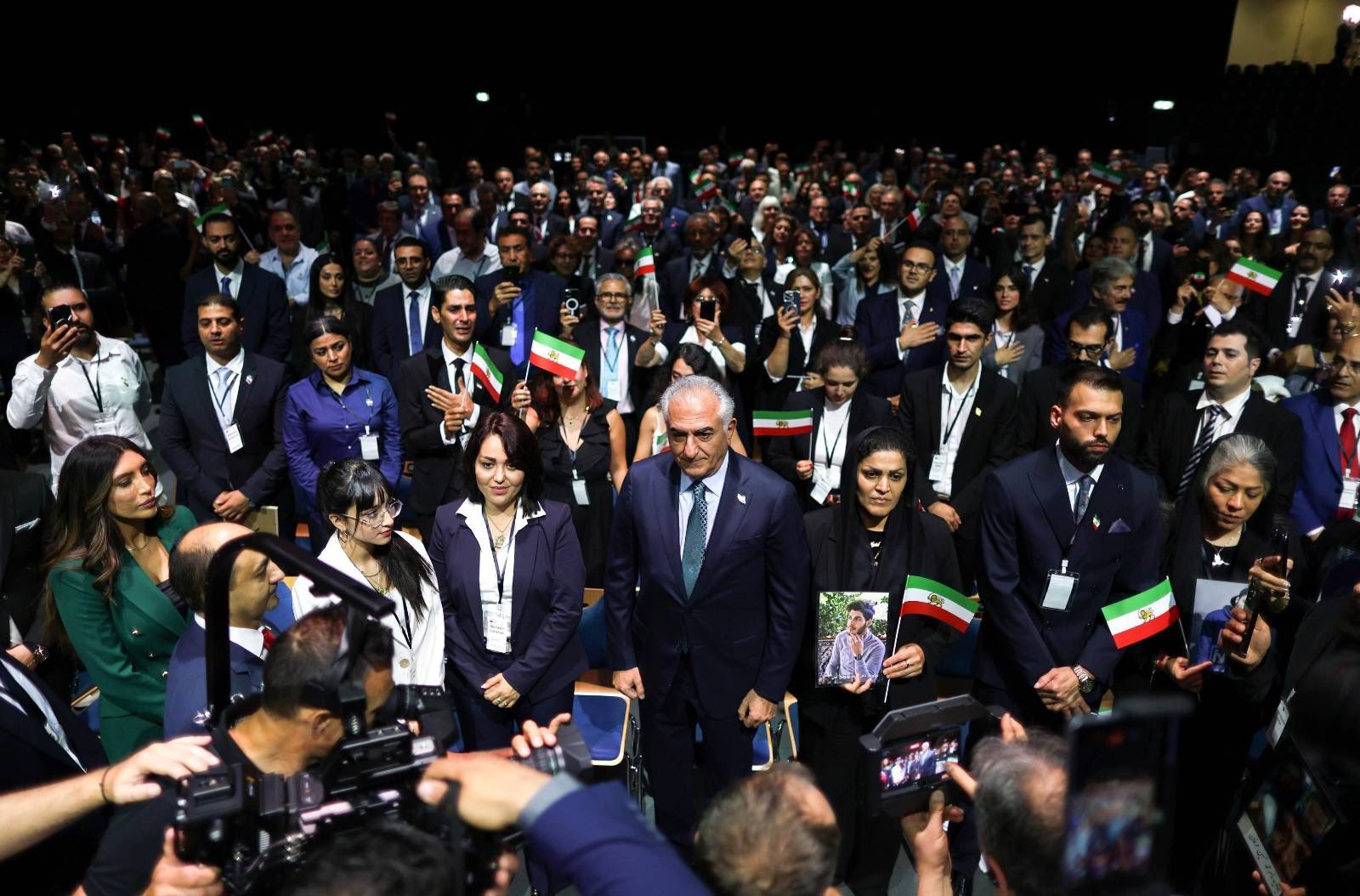
But what is clear is how ordinary Iranians respond: with their own voices. From chants of “Reza Shah, may your soul be blessed” to declarations that “this is the last battle, Pahlavi will return,” their demands emerged long before any theory about foreign orchestration. When Tehran spreads falsehoods, it is treated as expected. When Iranians express democratic aspirations online, it is treated as suspect.
This episode has created an additional burden for Iranians who depend on digital platforms to communicate. Casting doubt on online expressions of dissent fosters anxiety among people who already fear surveillance. It also provides Western policymakers with an easy way to dismiss Iranian voices by suggesting that their activism might be manufactured. The confusion benefits only the Islamic Republic, which wants the world to believe that domestic opposition is an illusion.
The Citizen Lab report may have been produced with sincere intentions, but the result strengthened one of the regime’s most effective narratives. Those in the diaspora and in Western media who embraced it without questioning the evidence helped reinforce that narrative. Their political preferences obscured the reality that Iranians have demonstrated their desire for freedom through years of sacrifice.
The struggle for a democratic Iran is not a digital mirage. From the nationwide protests of November 2019 to the Woman Life Freedom movement of 2022, Iranians have risked their lives to demand change. Their voices are real, their courage is real, and their movement is real. Suggesting otherwise only repeats the Islamic Republic’s most enduring lie.
For those living under that regime, this debate is not abstract. It further empowers the regime’s brutal suppression. The world should recognize their struggle as authentic and treat it with the seriousness it deserves.