
How to Constrain Mamdani If He Wins: A Lesson from Seat Pleasant, Maryland
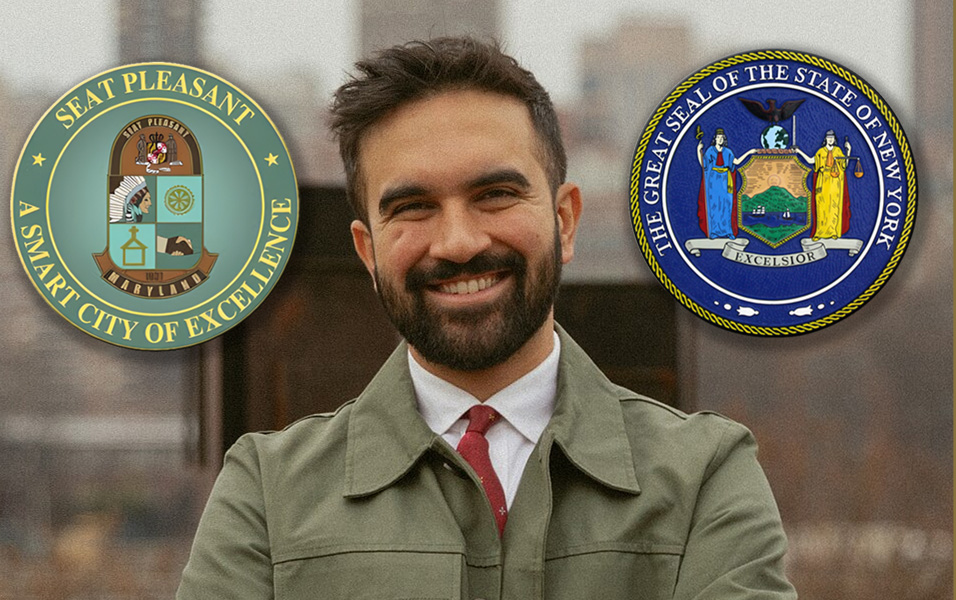
The 2025 New York City mayoral election is shaping up to be one of the most consequential in decades. Progressive Assemblymember Zohran Mamdani, a figurehead of the city’s far-left movement, has thrown his hat into the ring. His vision of rent cancellation, radical policing reforms, and sweeping redistribution programs appeals to his base — but raises alarms among moderates, centrists, and conservatives who fear his policies could destabilize the city’s already fragile economy.
The looming question is not only whether Mamdani can win. It’s what happens if he does.
The Limits of Mayoral Power
Contrary to popular perception, the New York City mayor is not an all-powerful executive. While the mayor proposes budgets, appoints commissioners, and has a bully pulpit, he must govern within the framework of the New York City Charter. The 51-member City Council serves as a co-equal branch of government.
The council passes local laws, approves the budget, and conducts oversight. The mayor may veto legislation, but the council can override that veto with a two-thirds vote. In short: no matter how bold a mayor’s agenda may be, it cannot become reality without council buy-in.
This is where history — particularly the history of a small Maryland municipality — offers an important lesson.
The Case of Seat Pleasant, Maryland
In the city of Seat Pleasant, Maryland, just outside Washington, D.C., the relationship between the council and the mayor broke down in spectacular fashion.
For years, Mayor Eugene Grant clashed with the council over policy, governance, and control. Tensions escalated after Grant was accused of sexual misconduct by a former employee, but the misconduct allegations were only part of the story. Grant was also accused of a series of “rogue actions” during his tenure — decisions and maneuvers that bypassed or alienated the council.
In response, the Seat Pleasant Council took extraordinary action: it stripped the mayor of most of his governing powers. The move effectively reduced the mayor’s role to ceremonial status, transferring real authority to the council itself.
Grant was eventually forced out of office and lost re-election. But critically, the council’s decision outlasted him. The charter amendments remained in place, leaving the mayoralty permanently weakened.
The lesson is clear: under the right circumstances, legislative bodies can claw back power from an executive, particularly if that executive abuses authority or pushes beyond the limits of consensus.
Can New York Do the Same?
New York City is not Seat Pleasant. It is a metropolis of over 8.5 million people, with a charter deeply enshrined in law. Stripping the mayor of power would not be as straightforward as a council resolution. Any serious alteration to the mayor-council balance in New York would likely require:
-
City Council action to propose charter revisions.
-
Approval by a Charter Revision Commission or via local law.
-
Ratification by the voters in a referendum — or, in some cases, approval by the New York State Legislature.
It’s a higher bar than Seat Pleasant, but not an impossible one. After all, New York’s charter has been amended before — sometimes in major ways, such as after corruption scandals or structural failures of government.
The 2025 Council Elections Are the Key
Here’s what makes 2025 especially critical: all 51 City Council seats are up for election this year. The primaries are in June, and the general election is in November, the same day as the mayoral vote.
That means New Yorkers who are concerned about Mamdani’s agenda have a clear path: elect a council that will serve as a check. A disciplined bloc of moderates — Democrats, independents, and Republicans alike — could prevent radical overreach.
Even without charter changes, the council holds tremendous power:
-
Budget approval: No spending plan passes without council consent.
-
Oversight: The council can haul commissioners into hearings and investigate administration actions.
-
Law-making authority: The mayor cannot unilaterally legislate.
-
Veto override: The council can override the mayor’s veto with two-thirds support.
A strong council majority could ensure that Mamdani — if elected — governs from the center, not the fringes.
Learning from Seat Pleasant
Seat Pleasant shows what can happen when a council unites against a mayor who oversteps. Eugene Grant’s fall was hastened by misconduct allegations, but it was his long-running clashes with the council that set the stage for the stripping of powers.
The important takeaway is not just that a small town could sideline its mayor. It’s that legislative bodies — whether in a town of 5,000 or a city of 8.5 million — can assert themselves when the stakes demand it.
New Yorkers have the same opportunity in 2025. By paying close attention to council races, and by supporting candidates willing to place guardrails on executive power, they can ensure that the city does not swing uncontrollably leftward should Mamdani capture City Hall.
Conclusion
Politics is not just about personalities. It’s about institutions. Eugene Grant’s story in Seat Pleasant is a cautionary tale of what happens when a mayor overreaches and a council fights back.
If Zohran Mamdani wins the mayoralty, he will inherit immense powers — but only if the council allows it. The voters hold the key. By shaping the composition of the City Council in 2025, they can ensure that New York City remains balanced, pragmatic, and accountable.
Seat Pleasant may be small. But the lesson it offers New York is enormous: the mayor’s power is not absolute, unless we let it be.