
How We Forced Britain to Finally Name the IRGC for What It Is
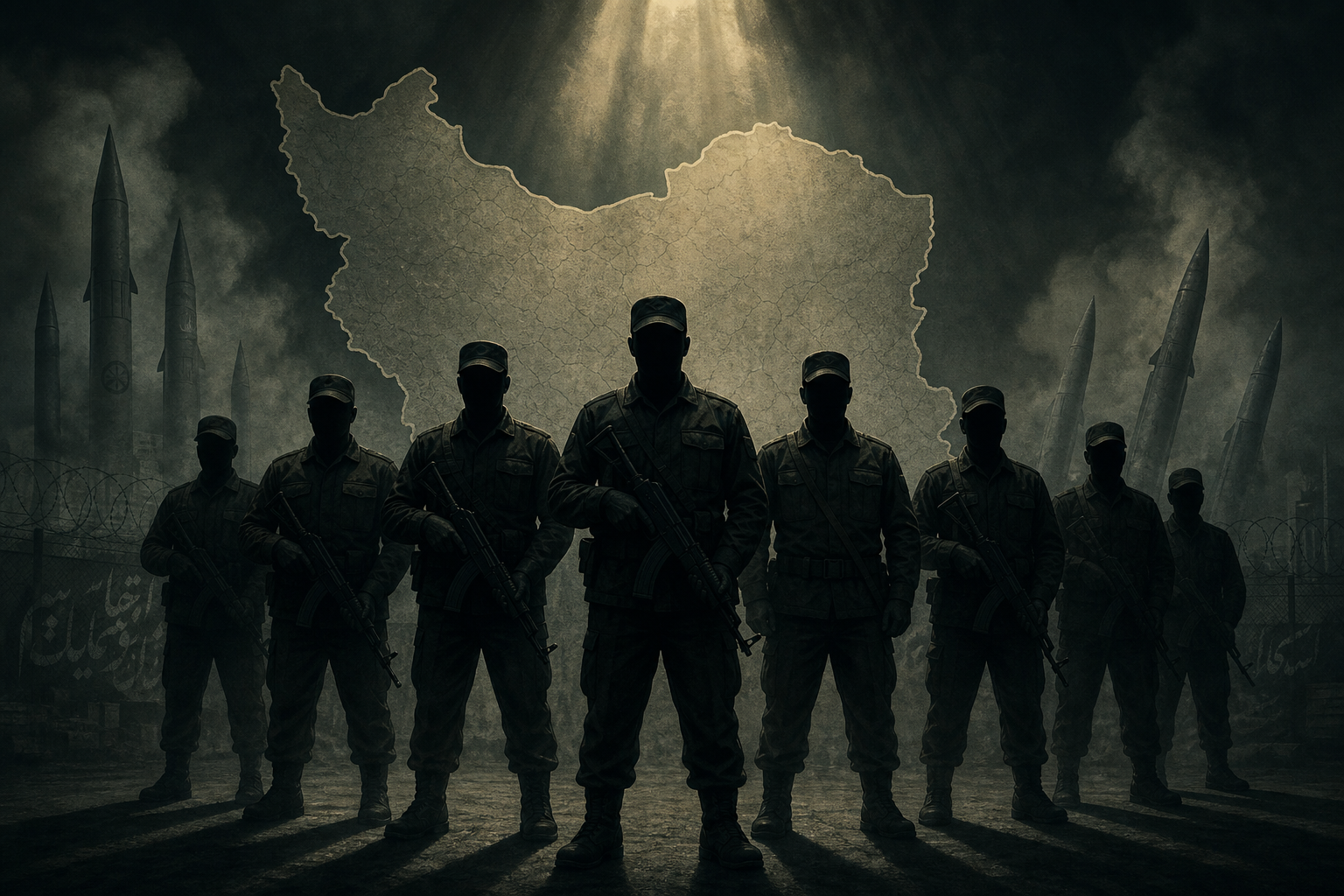
One of the more curious features of Westminster life is its talent for recognizing a blazing house only once someone else has sprinted up and down the street ringing every bell in sight. For years, the Islamic Revolutionary Guard Corps was precisely such a conflagration: a sprawling, openly theocratic terror‑bureaucracy masquerading as a branch of a foreign state, and yet, in the strange etiquette of Whitehall, somehow considered just beyond the reach of the fire brigade.
The IRGC is not, as some earnest apologists would have it, a slightly over‑zealous regiment with a flag and a hymn. It is the iron fist of the Iranian regime: part Gestapo, part mafia, part foreign legion. It crushes dissent at home, bankrolls and arms proxy militias abroad, orchestrates plots on European soil, launders money and ideology with equal gusto, and makes a particular sport of menacing Jews and dissidents wherever they happen to live. To treat it as a normal arm of state is as daft as treating the Kray twins as a neighborhood watch scheme.
Into this polite derangement stepped the We Believe Alliance, which made a simple but impolite observation: if one is serious about national security, about antisemitism, about foreign dictators reaching into British streets and campuses, then leaving the IRGC off the proscribed list is not prudence – it is dereliction. And rather than merely muttering this over canapés, they set about forcing the question.
The first decisive move was a House of Lords briefing that did what our politics so often avoids: it joined the dots. Peers, MPs and advisers were taken, calmly but relentlessly, through the evidence – the IRGC’s command structure, its role in arming Hamas and Hizbollah, its plots in Europe, its intimidation of Iranian and Jewish communities in the UK – and then through the absurdity of a legal regime that could ban a scruffy little splinter group while leaving the godfather untouched. The point was not to shock; it was to embarrass. Once you have seen the whole picture, continued inaction looks less like caution and more like cowardice.
That briefing did not exist in a vacuum. It was backed by months of letters, questions, op‑eds, constituency pressure and a patient refusal to let ministers wriggle back into comfortable clichés about “keeping all options under review”. The We Believe Alliance helped to create what Westminster truly fears: a consensus that is both cross‑party and public. When the House of Lords moved to back proscription, it was not a bolt from the blue. It was the sound of a dam finally cracking after someone had spent a very long time tapping the same spot.
Even then, the Government tried its usual repertoire of throat‑clearing. The powers, we were told, were not “designed” for state‑linked entities. How frightfully awkward. One might have thought we were trying to seat a particularly tall uncle at a dinner table, rather than deal with a transnational terror apparatus that has quite literally plotted murder in European capitals. Here again, We Believe Alliance refused to be fobbed off by the delicate sensibilities of the drafting office. If the law is ill‑designed to meet the threat, it is the law that must be altered, not the threat politely ignored.
And then, as so often happens, the political weather shifted all at once. The Prime Minister, who had previously preferred the safety of studied ambiguity, announced that he would bring the question before Parliament, and that legislation would be introduced to create powers capable of catching the IRGC in the proscription net. Officials began quietly sketching amendments. What had been painted as impossible without upending constitutional principle was suddenly, wonderfully, a question of “the right vehicle” and “the parliamentary timetable”.
Here it is worth pausing. Governments do not undergo such conversions from sheer moral illumination. They respond to pressure, to argument, to the awkward fact that the cost of doing nothing has been deliberately made higher than the cost of action. The We Believe Alliance played a central role in raising that cost – by ensuring that peers and MPs were armed with serious briefings rather than slogans, by stitching together alliances with those who understood the IRGC’s reach, and by making it increasingly difficult for ministers to explain to Jewish communities and Iranian dissidents why the regime’s favorite instrument still enjoyed the courtesy of our legal blind spot.
The IRGC itself provided the most eloquent brief. Consider what it represents: a revolutionary guard that regards the export of its ideology as a religious duty; a patron of proxy armies that rain rockets on Israeli civilians and destabilize Lebanon, Syria, Iraq and Yemen; a body whose officers think nothing of plotting killings in Europe while their propagandists incite Jew‑hatred and conspiracy at a distance. To decline to proscribe such an organization is not neutrality. It is an invitation.
Proscription will not, of course, dissolve the IRGC in a puff of Parliamentary incense. But it will close loopholes, criminalize open support and fundraising, give law enforcement sharper tools, and send a clear signal to banks, charities, universities and would‑be fellow‑travelers that this is not a respectable partner in dialogue but a listed terror entity. It drags our statute book, kicking and screaming, into alignment with the facts that have been staring us in the face.
There is a temptation now for everyone involved to don laurels and compose self‑congratulatory threads. That would be a mistake. A promise of legislation is not the same as a proscription order, and a cleverly drafted bill can still be blunted in committee. The IRGC will not retire out of embarrassment. The apparatus that has been assembled to shield it – in law, in diplomacy, in the more shadowy corners of British public life – will not melt away overnight.
Which is precisely why the sort of relentless, well‑targeted advocacy that brought us to this point must continue. The We Believe Alliance has shown that a small, determined group can nudge a great, lumbering political system towards facing an unpleasant truth. Its task now is to ensure that the IRGC’s name does not merely appear in a clause but on the proscribed list proper – and that the powers granted are used with the seriousness that the threat deserves.
If there is a moral in all this, it is a simple one. Tyrants and their enforcers rarely yield because they are finally understood; they yield because they are finally constrained. The IRGC has long understood the power of patient, incremental pressure. It is rather good news, not least for Britain’s Jews and for Iranians who want their country back, that someone on our side has learned to apply the same principle.