
Leadership With Heart
Humanity Beyond All Differences
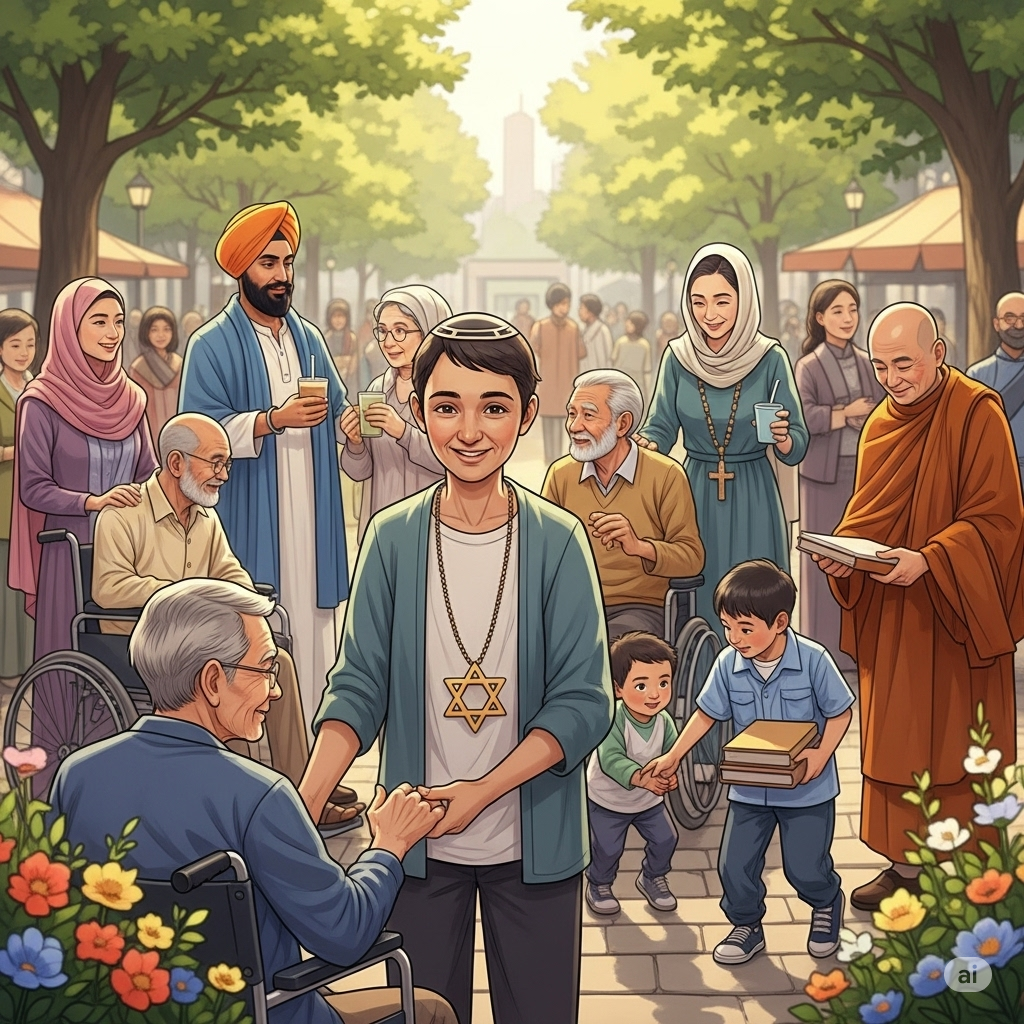
AI generated image via Gemini
Last week, I stepped outside my home and began to cross the street when I saw something unusual: a man lying across the grass and sidewalk. At first, I thought he might simply be resting from the summer heat. But as I drew closer, unease grew—something was very wrong. My walk turned into a sprint.
It was an elderly man shielding his eyes with his hands. He looked up at me, his voice urgent and distressed: “I need help.”
Thank G-d, I saw no blood or visible injuries. But as I spoke to him, it was clear he was disoriented, unable to answer even the simplest questions. I reassured him that help was on the way and called for an ambulance, giving the dispatcher our location and description.
Before I had even hung up, a car pulled over. A woman leapt out, concern written on her face. She identified herself as a nurse, rushed for her medical bag, and returned with professional calm. She checked his vitals, relayed information to emergency services, and gently cushioned his head on a rolled jacket—careful not to move him in case of neurological risk.
Within minutes, emergency responders arrived, secured him, and rushed him to the hospital. As the ambulance pulled away, we prayed for his recovery.
That moment left me with a powerful truth: our responsibility to one another transcends every barrier of race, faith, or background. At our core, we are all human—vulnerable, fragile, yet deserving of dignity and compassion. Shakespeare asked: “If you prick us, do we not bleed?”
Whether Jewish, Christian, Muslim, Buddhist, Hindu, or secular, each of us shares the same humanity. Imagine the world we could build if helping each other was instinct, not exception—if compassion, not cruelty, defined us.
But let us be clear: compassion does not mean surrender. Coexistence cannot be built on naïveté. Humanity cannot afford to turn a blind eye to evil, terror, and those who thrive on destruction. To ignore this truth is to endanger innocent lives and betray our moral duty.
Evil seeks to delegitimize and dehumanize. Terror seeks to divide. They flourish when people look away or excuse them. That is why we must reject them—utterly, completely, without compromise. Forgiveness can heal honest wounds, but it cannot excuse malice, such as what occurred on October 7. Mercy belongs to the repentant, not to those who murder, terrorize, and destroy.
True peace requires security. No one—especially Israel, which has been attacked again and again—can embrace coexistence while living in fear of violence or erasure. Every community is entitled to live free from terror, free from the shadow of annihilation. Without that assurance, peace will always be fragile, and mistrust will return.
We cannot live at war forever. But neither can we ever accept terror as normal, nor legitimize evil as just another “side.” To do so is to surrender the very essence of our humanity. Instead, we must unite with good people of every background to affirm life over death, dignity over hatred, and hope over despair.
If we could truly see one another as children of the same Creator, bound by the sacred duty to protect and uplift—not to harm or destroy—then the world would begin to reflect His holiness and His unity.
And oh, what a world that would be.
Related Topics
Related Posts