
Hungary’s Jews Need More Than a Pro-Israel President
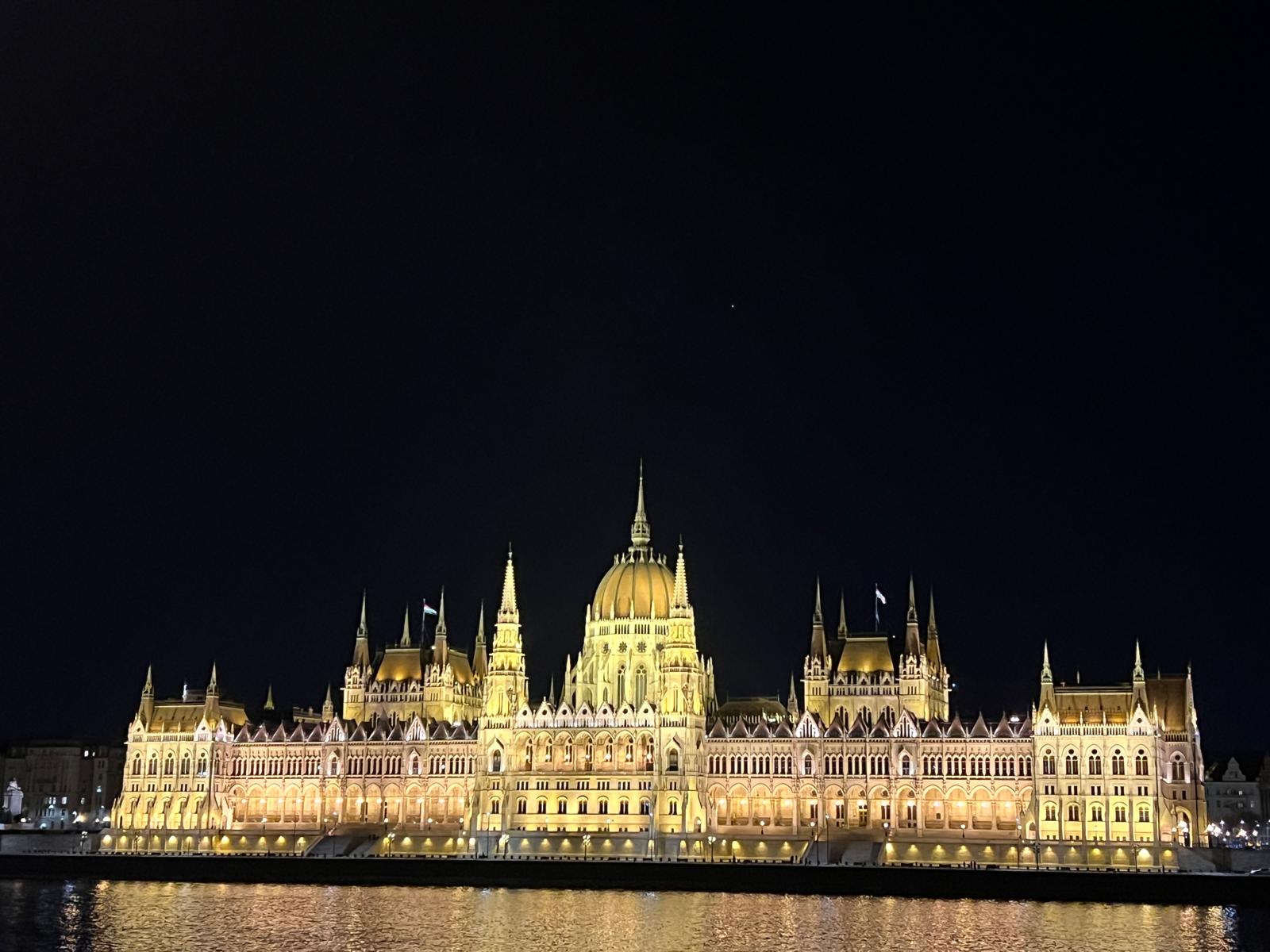
Hungary is about to elect a new president, and this time the choice is not Viktor Orbán’s. Péter Magyar’s Tisza party, which won a landslide election in April and holds a constitutional majority in parliament, has nominated András Baka, the former president of Hungary’s Supreme Court whom Orbán’s government removed from that position in 2012. Parliament is expected to confirm him this week, and the symbolism is difficult to miss. Tisza has framed the nomination as a statement about judicial independence and the rule of law, principles Baka came to personify after his removal.
For Hungarian Jews, and for those watching Hungary from Israel, the nomination raises another question. What does Baka’s long career tell us about his attitudes toward Jews, antisemitism, Holocaust memory, and Israel?
Baka has no substantial public record on Israel and has not been a prominent participant in Hungary’s often contentious debates about the Jewish state. It would be misleading to describe him as either pro-Israel or anti-Israel.
He does, however, have a documented judicial record on Jewish issues, found mainly in his years as Hungary’s judge at the European Court of Human Rights from 1991 to 2008. Several cases in which he participated concerned antisemitism, the Holocaust, and Jewish religious practice, offering clues about the principles he has been prepared to defend.
One of the most important concerns the boundary between freedom of expression and Holocaust denial. In the 1998 case Lehideux and Isorni v. France, the Court considered the conviction of two men who had published material favorable to Marshal Philippe Pétain, leader of the collaborationist Vichy regime. Baka sat on the Grand Chamber and joined the majority in finding that France had violated their freedom of expression.
The conclusion is easily misunderstood. The Court was not legitimizing Holocaust denial. It drew a distinction between controversial interpretations of the past, which democratic societies must generally tolerate, and denial of the Holocaust itself, a clearly established fact that could fall outside the Convention’s protection. Democracy tolerates arguments many find offensive. It does not require treating denial of the destruction of Europe’s Jews as merely another opinion. Baka joined the majority that drew that line.
A more revealing case followed. In Giniewski v. France, Baka presided over the Chamber. The applicant, Daniel Giniewski, a journalist and historian of Jewish origin, had written critically about Catholic teachings, arguing that certain doctrines concerning Judaism had contributed to antisemitism and ultimately to the conditions that made Auschwitz possible. French courts punished him for religious defamation. The Court, with Baka presiding, unanimously found a violation, recognizing that examining the roots of antisemitism was a legitimate matter of public concern.
Protecting minorities does not mean shielding society from difficult conversations. It means preserving the space in which uncomfortable questions can be asked.
Baka’s approach to Jewish religious freedom is more nuanced. In Cha’are Shalom Ve Tsedek v. France, an Orthodox Jewish association argued that France had violated religious freedom by refusing to authorize it to perform ritual slaughter under its own strict standards. Baka joined the Grand Chamber majority, finding no violation, reasoning that observant Jews remained able to obtain meat satisfying their requirements without that authorization. This was not an expansive reading of minority rights. It reflected proportionality: religious freedom must be genuine and practicable, but the state need not accommodate every institutional preference.
Baka also participated in Stoll v. Switzerland, arising from the dispute over Jewish assets left in Swiss banks after the Holocaust, and in a family law case involving Israel. Neither reveals hostility toward Israel nor particular attachment to it.
Nothing here supports portraying Baka as an opponent of Israel or as indifferent to Jewish concerns. Yet it would be equally misleading to manufacture a pro-Israel politician from a judicial record that does not support that conclusion. What emerges instead is a jurist shaped by a European legal vocabulary: religious liberty, free expression, historical memory, minority protection, and institutional restraint.
That same outlook eventually placed Baka in conflict with the Hungarian state. In 2011, while president of the Supreme Court, he publicly criticized changes to the judiciary introduced by Orbán’s government. Parliament reorganized the judicial system in a way that ended his mandate before its scheduled expiration. Baka took Hungary to Strasbourg, and in 2016 the Grand Chamber found that Hungary had violated his Convention rights, concluding that the premature end of his mandate had been prompted by views he expressed professionally and had interfered with judicial independence.
The jurist who spent years applying European rights standards to others found himself protected by those same standards.
That episode matters for what a Baka presidency might mean for Hungarian Jews. Under Orbán, Hungary’s relationship with Israel became closely tied to a political partnership between governments, with Budapest presenting itself as one of Israel’s strongest allies in Europe. Yet the same period produced controversies over Hungary’s responsibility for the Holocaust, the rehabilitation of controversial historical figures, and campaigns against George Soros that drew on antisemitic tropes.
Baka represents a different tradition. If his record is a guide, his instinct is less likely to begin with whether Budapest enjoys good relations with Jerusalem than with whether Hungary protects Jews as equal citizens, safeguards religious liberty, confronts antisemitism, and deals honestly with its past.
Those are not the same thing.
A government can maintain excellent relations with Israel while Jewish citizens feel uncomfortable at home, or disagree sharply with an Israeli government while remaining deeply committed to protecting Jewish life. The health of Jewish communities cannot be measured through diplomacy with Jerusalem alone.
Hungary’s president has limited formal power. But presidents help define the moral vocabulary of the state, choosing which anniversaries to mark, which wounds to acknowledge, and which democratic boundaries deserve defense.
Baka’s time on the bench cannot tell us exactly how he will use that role. Judicial decisions are collective acts, not political manifestos. But they offer a compass, pointing toward an order in which Holocaust denial is not merely another interpretation of the past, antisemitism is treated with particular seriousness, religious minorities receive meaningful protection and honest debate about Europe’s responsibility for the persecution of its Jews remains possible.
For Hungary’s Jews, that may ultimately be a more meaningful test of a president than how warmly Budapest speaks about Israel.