Author of Just, Reasonable Multiculturalism (2021)
I Beg My Pardon
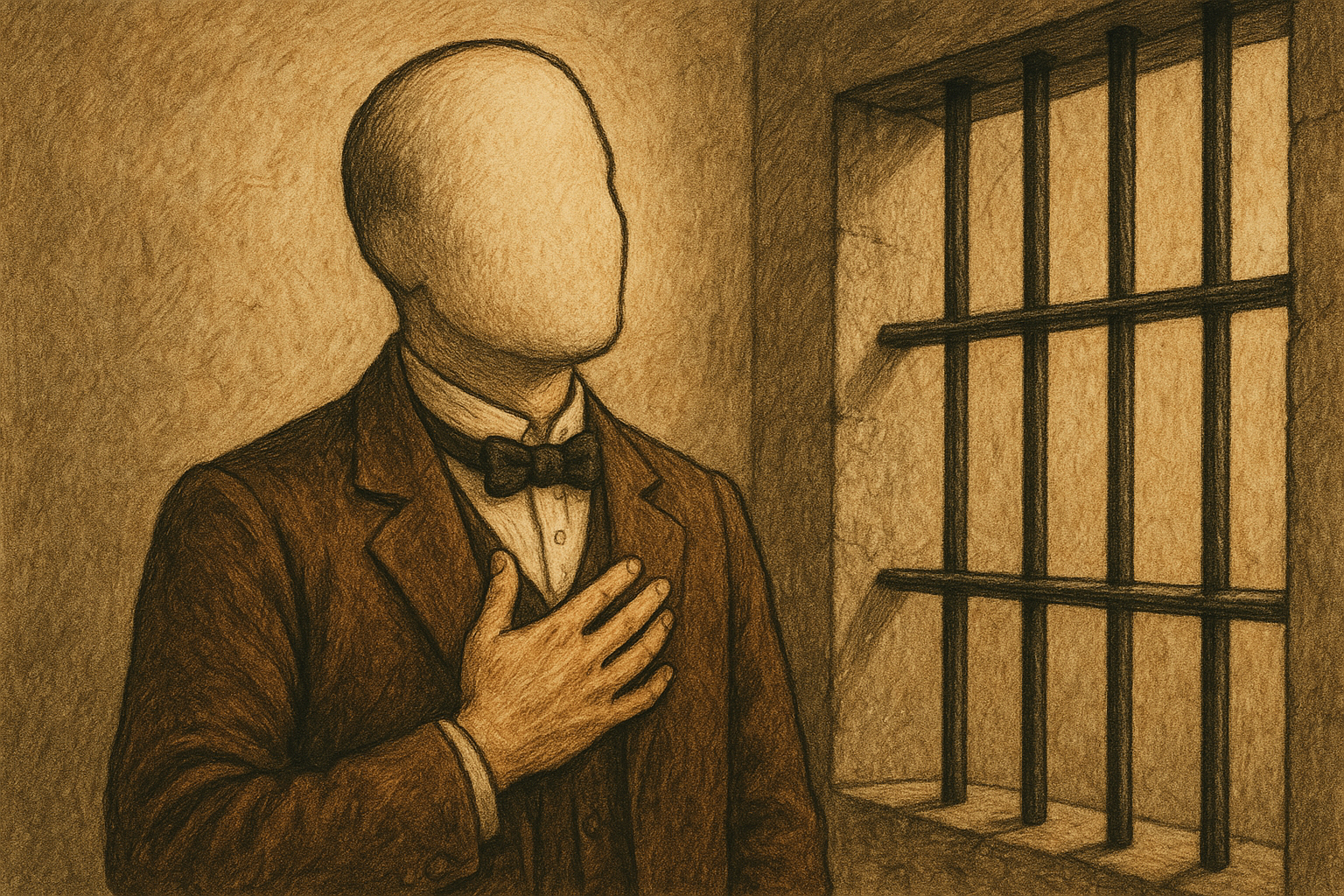
I beg my pardon/created by AI
For many years, when allegations against Netanyahu surfaced for ill-judged behaviour, corrupt conduct and bribery, Netanyahu repeated the mantra: There was nothing. There is nothing. There will be nothing.
Netanyahu stopped repeating the mantra in December 2016 when the then Legal Adviser to the Government, Avichai Mandelblit, ordered a criminal investigation. Then Netanyahu rushed to hire top lawyers to defend them. If there is nothing, why does he need top lawyers?
Netanyahu’s trials began in May 2020. It is still in motion. Netanyahu has used every trick in the book to prolong the trial. And then complained that the trial is taking too long.
Before he was elected prime minister, he said time and again that he would be able to attend trial hearings and that he would be able to serve as prime minister and a defendant. In reality, Netanyahu repeatedly cancelled hearings, sending private letters to the judges saying that “essential” state matters prevent him from attending the hearings.
At the hearings, Netanyahu appears as if he suffers from amnesia, dementia or both. Countless times he said “I do not remember” when asked about his conduct, orders, statements, promises and actions. Concerned citizens should be worried about the ability of this man to serve them as their prime minister.
His loyal ministers, helpers and crowd went on a campaign to defame the justice system and the trials as a “corrupt witch hunt”. And now he wants to “get it over with” not with court judgments but with a presidential pardon.
Netanyahu’s request for a presidential pardon before sentencing and without admitting guilt is unprecedented and unjust. It undermines Israel’s law and order and the foundations of the justice system. This contradiction—asserting innocence while seeking clemency—underscores the weakness of his position.
Netanyahu is testing Israel’s Justice and Democracy. His 111-page petition, submitted by his lawyer Amit Hadad, was accompanied by a video appeal to the nation. In it, he claimed that nearly a decade of investigations and six years of trial had already disproven the allegations against him (they did not). He insisted that exonerating evidence had emerged (what evidence?), portraying himself as the victim of crimes committed by investigators who are simply doing their job. He, whose politics is based on divide-and-rule, intimidation, incitement and undermining the nation’s fabric and now argues that “national unity” requires ending the trial prematurely.
The charges against Netanyahu are grave. In Case 1,000, he is accused of accepting lavish gifts worth hundreds of thousands of pounds from businessman Arnon Milchan in exchange for favors, including visa assistance and legislative support. In Case 2,000, he allegedly negotiated with media mogul Arnon Mozes to secure favorable coverage by curbing the circulation of a rival newspaper. In Case 4,000, the most serious, he is charged with bribery, fraud, and breach of trust for regulatory decisions benefiting Bezeq owner Shaul Elovitch, allegedly in return for positive coverage on Walla News—benefits estimated at $500 million.
Despite these allegations, Netanyahu framed his pardon request as a “patriotic” sacrifice. Playwright Samuel Johnson famously said in 1775 that “Patriotism is the last refuge of the scoundrel.” He said this as a critique of those who use the guise of patriotism to further their own selfish or wicked ends.
Netanyahu claimed the trial had “torn us apart,” deepened divisions, and imposed an “impossible demand” by requiring him to testify three times a week. The trials are in order because of Netanyahu’s corrupt and irresponsible conduct. His claim to infamy is his “success” in tearing the country apart. He has done this systematically since the 1990s, when he incited violence against Yitzhak Rabin and his government for their attempts to resolve the Israeli-Palestinian conflict and bring peace to a troubled nation that has been suffering from endless wars and terrorism. Netanyahu’s incitement campaign ended on 4 November 1995 with Rain’s assassination. Once Rabin was removed, Netanyahu was able to pave his way to the prime minister’s office.
Netanyahu recruited Trump to help him after agreeing to the Trump plan to end the war in Gaza. He invokes Trump’s appeals for clemency, suggesting that ending the trial was necessary, no less, to advance US-Israeli interests. As if this is a core issue in US-Israel relations. He presented himself as “indispensable”, citing repeated electoral victories as proof of public trust. Netanyahu seems to think that “Israel is me” and without him, the country will be doomed.
Netanyahu’s conduct is no more than a cynical attempt to evade accountability. A pardon without admission of guilt, remorse, and retirement from politics would undermine the rule of law. Naftali Bennett proposed a sensible compromise: Netanyahu’s respectful retirement in exchange for ending the trial, a path toward unity. Yair Golan echoed that only confession and resignation could heal the nation. But Netanyahu wishes to enjoy power until the last day of his life.
President Herzog now faces a historic decision. Legal experts note three possible paths: reject the request outright, grant it fully and risk judicial annulment, or condition it on Netanyahu’s retirement and admission of guilt. Polls show a divided public: 38 percent support a pardon, 43 percent oppose. The country is divided because of Netanyahu’s cynical and irresponsible conduct.
Ultimately, Netanyahu’s conduct reveals a troubling pattern: invoking national unity while deepening division, professing innocence while seeking extraordinary relief, and elevating personal survival above institutional integrity. His pardon request is less an act of magnanimity than a calculated bid to escape justice, testing the resilience of Israel’s justice system.
Related Topics