I Bore Witness to an Age and Felt the Spirit of Masada
I am a son of this moment.
Since October 7, for over 2 1/2 years, I have lived inside a nightmare that the world prefers to read in headlines and forget by morning.
We buried our dead. We waited in agony for any word of the hostages. We ran with our children to shelters as sirens tore the sky. We watched our sons and daughters, our brothers and sisters, our neighbors leave for war, not knowing if we would see them again. Every day brought new names, new graves, new silences that no prayer could fill.
I saw this. I lived it. And beside the war, I watched something else unfold. Something almost as terrible:
the world’s response.
What began as a flicker of horror at the largest massacre of Jews since the Holocaust soon twisted into accusation. The murdered became footnotes. The hostages vanished from memory. The Jewish state, bleeding and besieged, was placed in the dock. Those responsible for the atrocities were granted explanation, context, and accommodation.
I documented it day after day. Not because I wanted to, but because I could not look away. What I thought I was recording was a war. What I came to understand I was recording was the slow, visible cracking of the moral order the world claimed to have built after Auschwitz.
One by one, the assumptions fell.
First, that evil would be recognized when it showed its face. On that black Sabbath, families were slaughtered in their safe rooms. Young people were hunted like animals at a music festival. Infants and grandparents were dragged into tunnels. For a few brief hours the world seemed to remember what Jewish blood looks like when it is spilled. Then the words changed. The crime became “resistance.” The victims became “occupiers.” Moral clarity dissolved into the fog of false equivalence.
I saw it happen in real time.
Second, that facts still mattered. Ancient lies put on new clothes and marched across every screen. Blood libels from a terrorist regime were repeated by professors, diplomats, and respected newspapers as though they were holy writ. Corrections, when they came at all, arrived too late. Jewish pain became an inconvenience. Jewish dead became statistics. Jewish hostages became background noise in someone else’s story.
Third, that humanity had finally grown immune to the old poison. Instead I watched hatred reborn, faster and more viral than ever before. Algorithms fed it. Universities protected it. Streets celebrated it. The same slogans, the same choreography of hate—only now wrapped in the language of justice.
I saw the mirror Israel had become for the West: a civilization no longer sure of its own right to exist, no longer willing to call evil by its name, trading truth for narrative, strength for apology, and life for the cult of death.
The great institutions born after the catastrophe:
the United Nations, the universities, the human rights organizations, the governments that swore “Never Again”—were all put to the test.
Many failed.
Some failed through cowardice. Some through ideology. Some through the simple exhaustion of moral conviction. Faced with the oldest hatred in history wearing a modern mask, they proved unable or unwilling to recognize it.
What I witnessed was not merely a war. It was the end of an illusion. I had believed that after Auschwitz, the civilized world had built permanent guardrails against this descent. That memory itself would serve as a warning. That the lessons had been learned.
I no longer believe that.
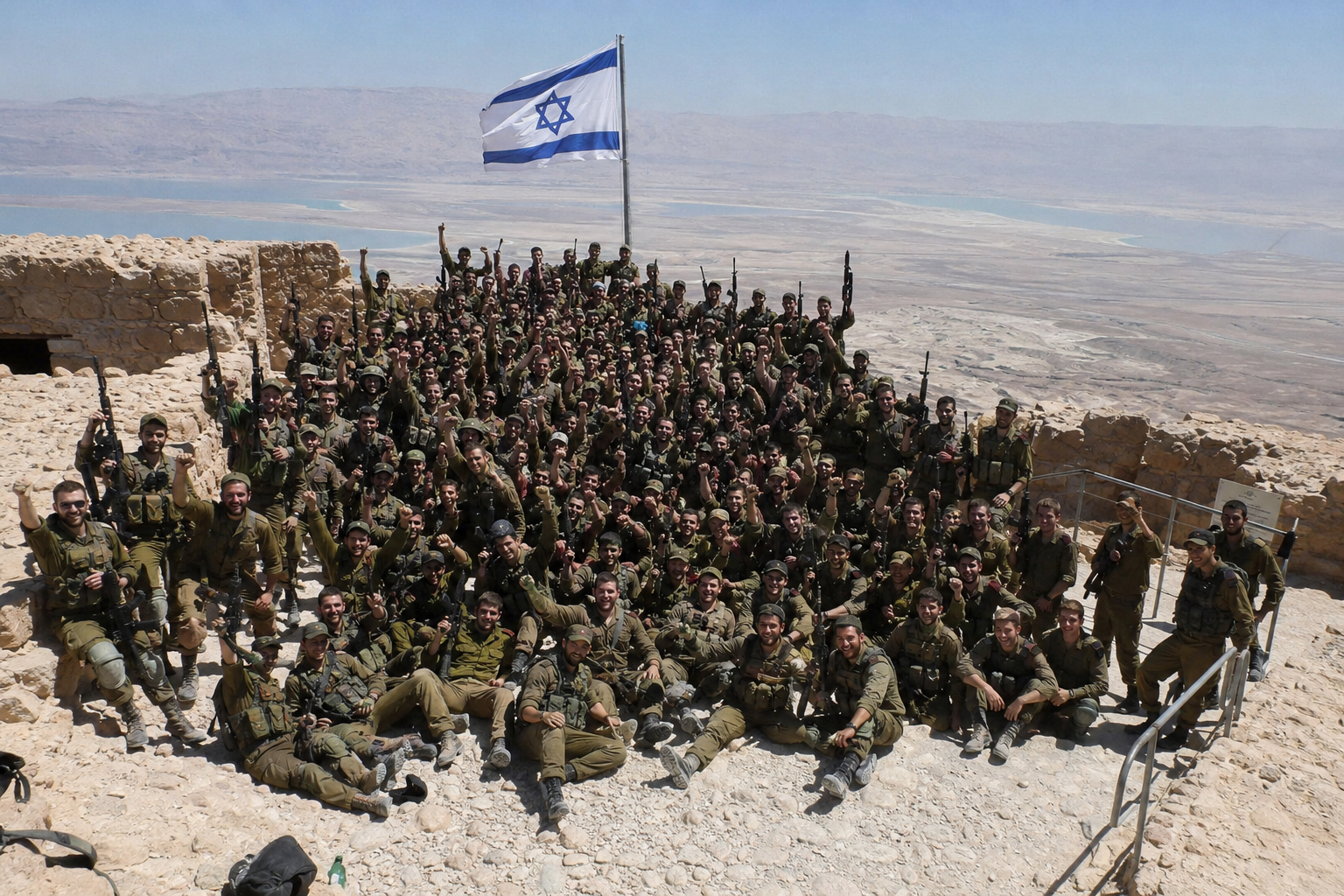
And it was there, amid that realization, that I found myself returning to fortress of Masada.
Every year, the army still finishes its training on Masada. There, where ancient defiance ended in death rather than become slaves or worse. Now. new soldiers swear that this time the fortress will not fall. Not as a suicidal last stand, but as a living vow:
Jewish strength will endure, that the Jewish people will never again be helpless, and that what was rebuilt from the ashes will be defended for generations to come.
That is the lesson I have carried from this age. Not despair. Not victimhood. Not surrender.
The lesson is that memory alone is not enough.
The world’s promises are not enough.
The institutions are not enough.
In the end, the responsibility for Jewish survival rests where it has always rested: with the Jewish people themselves.
I bore witness to an age and I’ve returned to Masada.