I don’t connect to the Kotel. Here’s why
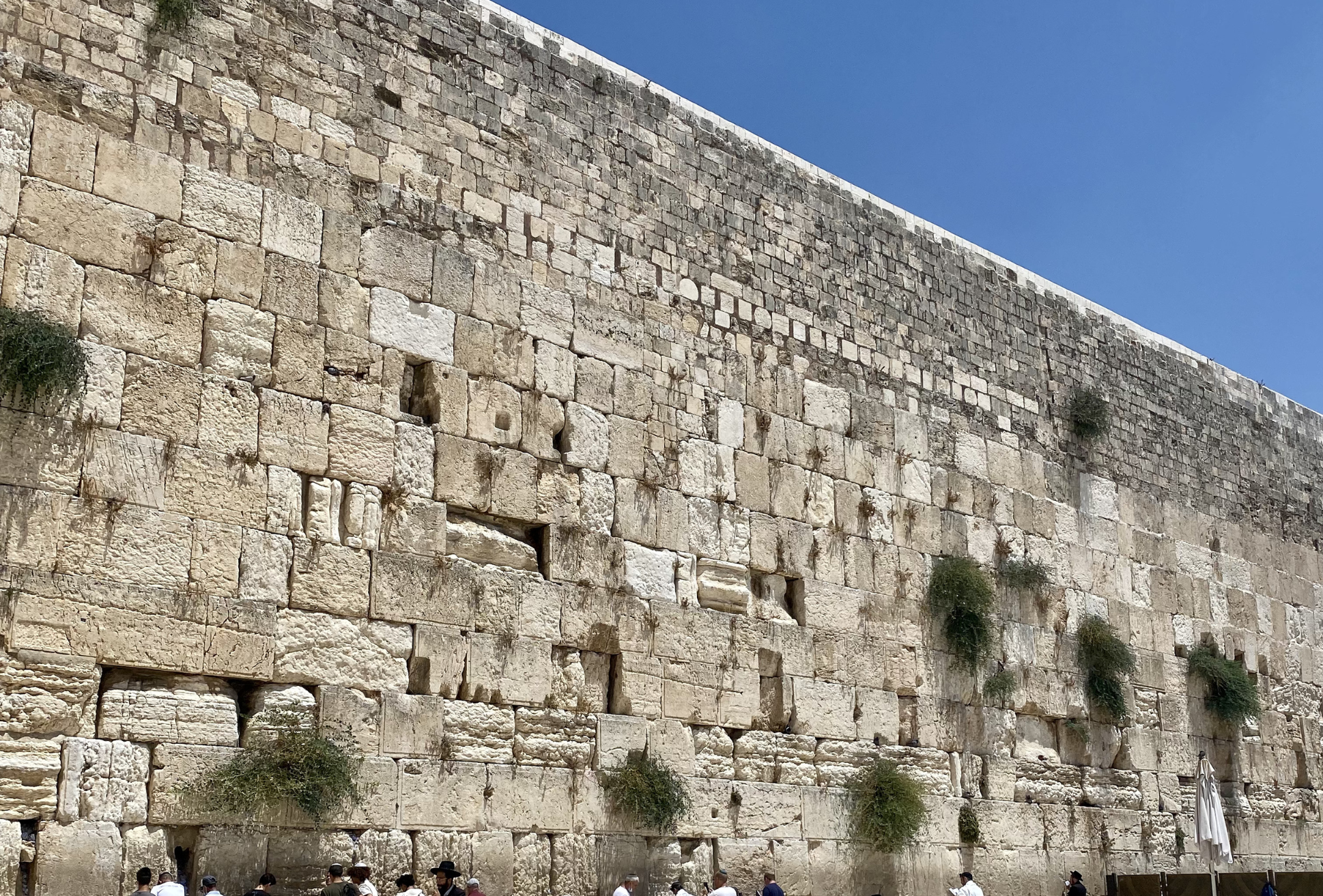
I don’t connect to the Kotel. Not in the same way many others do.
There. I said it. Now let me explain before you report me to the rabbinate.
Every day, thousands of people press their lips and their tears against those ancient stones. They tuck folded prayers into the cracks. They kiss the limestone like it’s the face of God Himself. And I’ve stood there too. I’ve prayed there. I’ve felt something move in me there that I can’t explain away.
But here’s what I can’t stop thinking about: that wall was built by Herod. A paranoid, murderous tyrant of a king who slaughtered his own family to keep his throne. He didn’t build it as a place to pray. He built it as a retaining wall. Engineering, not holiness. A structure to hold up the platform he expanded for God’s home. It is, quite literally, a wall that holds up dirt.
So no, I don’t believe the stones themselves are holy. Holy-by-contact, yes, soaked in centuries of prayer and defended with Jewish blood. But that borrowed holiness isn’t the point.
What’s holy is the ground. The location. The place God Himself chose. The place about which God said “And now, I have chosen and consecrated this House that My name be there forever, and My eyes and heart will be there at all times.” The address is sacred, not the architecture.
And whether there’s a golden Temple standing there or a pile of rubble or a retaining wall left over from a dead king’s vanity project, the holiness of that ground does not move. It cannot be built up and it cannot be torn down, because it was never ours to make holy in the first place. God made it holy. We’re just visitors.
And yet, I still go. I still press my hand to those stones and rest my head upon them in prayer.
Why? Because that wall, to me, is not an idol. It’s a promise. It’s the last standing witness.
And here’s the part that should scare us a little: a placeholder is exactly how it always begins. The golden calf wasn’t a rejection of God, it was a people who couldn’t bear to wait any longer, reaching for something they could touch while they waited for the real thing to come down the mountain.
That’s the danger sitting in our own hands at that wall. Not that we’d ever bow to stone on purpose, but that we’d let the stone quietly inherit the love and connection that was only ever meant for what it’s holding the place for. The calf was a placeholder too. The whole sin was forgetting that.
Empires rose specifically to erase us, and they bulldozed everything they could reach; The Temple, the vessels, the priesthood, the city. They tried to make it as if we were never here. And after all of it, after two thousand years of exile and slaughter and people insisting we don’t belong, the wall is still standing. Not because it’s holy, but because it’s a placeholder. A bookmark God left in the pages of history that says: I’m not finished. I’m coming back. Hold this place for Me.
And so, we hold it. Not because IT is holy, but because of what it means.
That’s what I feel when I touch it. Not the holiness of the stone, but the stubbornness of the promise.
I started thinking about all of this because of a video going around this week. An AI short film where a Jewish man falls backwards through history, through every pogrom and expulsion and burning, and finally lands safe at the Kotel, wrapped in tefillin, praying and smiling, like the wall is the happy ending. Everyone’s sharing it and crying. And I understand why. But it left me uneasy, and I immediately knew why. Because the wall isn’t the ending. It’s the bookmark. To stop the story there is to mistake the placeholder for the thing it’s holding the place for.
So when people kiss the wall, I don’t judge them. But I want them to know what they’re really touching. You’re not touching God. You’re touching the physical proof that our haters couldn’t erase Him. You’re touching the evidence that no matter how much they hated us, how hard they tried, how many times they swore this was the end, they couldn’t take everything. They left us a wall. And a wall that’s still standing is a wall waiting for what comes next.
And while we are at that wall, that is where our prayers should focus. Yes, of course on our needs and desires; health, happiness, success, parnassah, Hashem is listening. He chose that land. But He needs to know how much we want what that wall stands for. What that wall held up.
The Temple will return to that ground. Not because the wall is holy, but because the place always was.
And that’s why I can say it without flinching: I don’t connect to the Kotel. I connect to the promise it’s still standing to keep.