Who “Owns” the Torah?
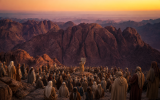
A few days ago, we celebrated the giving of the Torah, our most sacred text, at Mount Sinai.
Paradoxically, this legal, ethical, and spiritual covenant is what makes us free, since without law there is no freedom. Law provides a framework, and that framework is what allows human beings to live in society.
The Torah is that text whose influence became universal, pioneering the systematization and democratization of moral and ethical principles and values, as well as fundamental rights essential for the construction of society, at a time when such ideas were reserved for elite minorities or left to the discretion — and often the whims — of rulers.
Perhaps the Torah’s greatest innovation was transforming morality into a sacred covenant, in which justice is not merely a political prerogative and compassion is not simply kindness, but an obligation. Ethics itself becomes sacred.
The protection of strangers, widows, and orphans, together with the mandatory rest granted to all living beings — free or enslaved, human or animal — every seventh day through Shabbat, are only some examples of this vision.
In this democratic spirit, in which nothing is left entirely to chance, even if explicit answers are not always provided, the Torah was given in the desert: a land that belongs to no one and, therefore, to everyone at the same time.
The desert is a place without a fixed political power, where, despite temporary and circumstantial hierarchies that may have existed to maintain order, everyone ultimately depended on one another in order to survive.
But how do we know that this event actually occurred on the 6th or 7th day of the month of Sivan, which is when we celebrate it?
The truth is that nowhere in the Torah does it explicitly state that the revelation took place on that date, much less that it occurred on Shavuot. And yet, Shavuot is one of the three pilgrimage festivals explicitly mentioned in several places throughout the biblical text, albeit in different contexts and with different rituals — none directly connected to the giving of the Torah.
This association was a later rabbinic construction, linking the festival to the counting of the Omer, perhaps for reasons of liturgical convenience and the organization of a calendar that was still evolving.
One of the central teachings passed down by sages throughout the generations is that every day is an opportunity to receive the Torah — its teachings, messages, and commandments.
Indeed, this idea emerges directly from the biblical text itself on the verse that was taken to fix the date on Sivan: “In the third month after the Israelites had left Egypt, they came to the Sinai Desert, ON THIS DAY”. (Exodus 19:1).
Sages from every generation understood this to mean that every day we are given the opportunity and privilege to receive the Torah. It is up to each one of us how we choose to do so.
Every time we open the text and immerse ourselves in it, it becomes THIS DAY.
It is a living and ongoing process, not a static or ancient one, as my teacher, Rabbi BaruJ Plavnik z”l, taught: the Torah is a living text not merely a text of history or archaeology.
Another fundamental question that has long been discussed regarding this foundational event of our tradition is: who received the Torah?
Again, teachers of all times agree that the Torah was received not only by the Jewish souls present at Sinai, but by all Jewish souls of every generation — becoming “AM ECHAD, LEV ECHAD” “One People, one heart,” in the words of Rashi (Rabbi Shlomo Yitzchaki, 11th century, one of the greatest commentators on Jewish texts).
Each person according to their own capacity and condition, added later the Baal Shem Tov (Rabbi Israel ben Eliezer, 18th century and founder of the Chassidic movement), Rabbi Nachman of Breslov (eighteenth and nineteenth centuries, great-grandson of the Baal Shem Tov), the Piaseczno Rebbe Kalonymus Kalman Shapira (nineteenth and twentieth centuries), among many others.
So if the Torah — perhaps the most revolutionary text of its time for its ideas of freedom, compassion, and ethics — is given anew each day to anyone willing to approach it, in the present time, without distinction of education, hierarchies or zeal in a land that belongs to no one and therefore to everyone, how is it that we still find ourselves fighting against people who seek to monopolize a legacy that teaches precisely the opposite?
And worse still, many of them do so from positions of power.
Ministers and rabbis who abuse their authority, provoking and promoting an unacceptable violence that harms Jews throughout the world.
Among the many troubling situations taking place both in Israel and throughout the Diaspora — in political, communal, and institutional spheres — I would like to focus on one event that occurred shortly before this year’s celebration of the giving of the Torah.
On May 17, the Knesset discussed a bill seeking to prohibit egalitarian prayer at the Kotel — the Western Wall — one of the holiest and most emblematic sites for Jews worldwide, regardless of religious affiliation.
The proposed legislation would ban prayer services led by groups or movements outside Orthodox authority, including, of course, the Masorti and Reform movements. The penalty? Imprisonment for those who violate the law.
The bill defines the desecration of the holy site as any “behavior that stands in opposition to the instructions and rulings of the Chief Rabbinate.” an institution that, regrettably, has hardened its positions year after year, becoming a source of discrimination and exclusion toward those who think differently.
If enacted, such a position would stand in direct contradiction to the values, principles, and teachings that have shaped Jewish history, including those upheld by previous generations of Chief Rabbis.
It never ceases to amaze me that those who call themselves custodians of Jewish faith and tradition — though no one appointed them as such — so often forget the very teachings they claim to defend.
Or perhaps it is not surprising, but painful, that pettiness and the pursuit of power can override good faith and respect for the broader values of our tradition, undermining the very foundations that enabled Jewish survival throughout the centuries.
The expression “One people, one heart” was never meant to erase those who think differently. Quite the opposite.
Just as each of the twelve tribes had its own place in the camp while in the desert, its own symbols and banners, without implying superiority over the others, Jewish sages throughout history taught that this expression represents the highest ideal of inclusion: that every Jewish soul has a place within the People of Israel. No one can be excluded for thinking differently.
This same idea is repeated throughout texts concerning the Revelation at Sinai, the Passover Seder, the symbols of Sukkot, and countless other rituals and teachings that reaffirm this principle.
It is encouraging, however, to hear the President of Israel, Isaac Herzog, raise his voice against these reprehensible actions, honoring the humanitarian values that have distinguished and defined the Jewish People throughout history and that later inspired so many traditions and religions, whether they acknowledge it or not.
At a recent Jerusalem Unity Award ceremony — an initiative recognizing institutions, organizations, and individuals who promote Jewish unity — Herzog openly condemned the recent actions of Minister Ben Gvir and other groups who have normalized violence against those who think differently, emphasizing clearly that such actions violate both the legal and moral foundations of Judaism and place all of us at risk.
Mexican journalist Silvia Cherem summarized the consequences of complicit silence in a recent article published in Revista Milita, a Latin American Magazine that promotes Jewish Ideals and Values: “We know that the Shoah did not begin with trains or ovens, but with the permissiveness of the world, with the normalization of violence and with a pedagogy of fear. Complicit silence, when the rise of cruel leaders is normalized and given space to act, when the state becomes indifferent to violence, when the world is silent and allows manipulation, reaches a point at which it becomes extraordinarily difficult to turn back.”
Let us not, as a People, wherever we find ourselves, allow complicit silence to overtake our sense of humanity.
Kol Israel Arevim Ze la Ze, All the People of Israel are responsible for the actions of others, says the Talmud in discussions concerning the transgressions of some and the silence of others, specifically in Tractate Shavuot.
We, therefore, are the guardians of our own survival. For that reason, it is essential that we publicly denounce and actively resist the abuse of those who seek to lead us in a disgraceful way.
Only in this way will we continue honoring the Torah — the divine text given to us on this very day, more than 3,000 years ago, in a land belonging to no one, and meant to be shared by all
Vicky Ludmer