‘I Have to Fight’: A Nova Survivor Story
At 6:29 on the morning of October 7, 2023, the music stopped.
Millet Ben Shabat had come to the Nova Music Festival in southern Israel to dance and celebrate life. Within minutes, she was running for it.
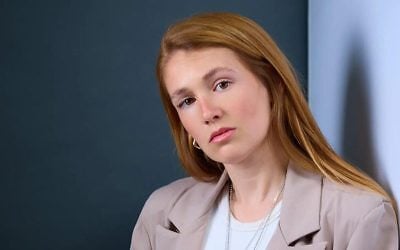
This month, Ben Shabat shared her story with Westchester’s Jewish community at its community-wide gathering to remember October 7. The evening was presented by UJA-Federation of New York, the Jewish Agency for Israel, AJC Westchester/Fairfield and the Westchester Jewish Council. I sat down with her there.
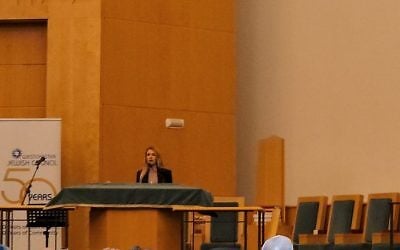
Three years on, the facts of that morning are widely known. Hearing them from someone who lived them is different. Ben Shabat spoke with precision, and at times with visible pain, about the minutes that changed her life — and about what she has built since.
Nowhere to hide
“We noticed a massive barrage of rockets, and we had to escape,” Ben Shabat said.
She and her friends first tried to flee by car. They did not get far. Ahead of them was a pickup truck carrying eight terrorists, who were murdering anyone who came near.
“We had to take a quick U-turn and drive as fast as possible in the opposite direction,” she said.
Two minutes later, they were forced to stop again. They abandoned the car and ran into the open fields. There was no cover there. “We were pretty quickly surrounded by terrorists,” she said.
‘One step at a time’
I asked her what it feels like in that moment — terrorists ahead, people dying on either side, nowhere to go.
“You feel completely helpless,” she said. “When you see people being murdered right beside you, and you don’t have a place to hide — there’s something that is so terrifying. It feels like, because your soul doesn’t want to take part in it, you’re about to just die. I felt like I was about to die of a heart attack.”
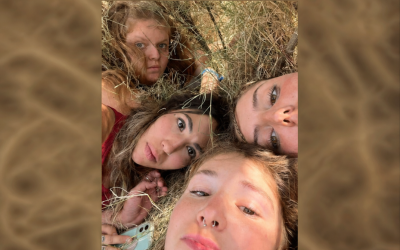
She paused. “Sorry, it’s very hard for me to speak about this moment.”
Then she described the decision that kept her alive. “I told myself, ‘I cannot allow this to happen. I have to fight. I can’t give up. Even if I can survive only 10 more seconds, then this is what I’ll do.’”
“I just told myself, ‘I’m going to run one step at a time. And if I’m going to be murdered, then I’ll be murdered — but at least I’m going to try.’”
The real victory
Looking back, does she wish she had done anything differently? Ben Shabat has learned, she said, not to go down that road.
“Honestly, we suffer from so much survivor’s guilt that I learned, with a lot of treatment, not to go back and ask myself questions of ‘what if,’” she said. “Of course, I wish I could save everyone. I wish I could talk to people half an hour before and say, ‘Escape!’ But that’s not an option.”
What she holds onto instead is how people behaved in the worst hours imaginable.
“The thing I’m most happy about is that I feel like I stayed very human under those circumstances, and we were functioning as a community,” she said. “I think that’s the actual victory for us.”
From survival to purpose
Ben Shabat went to Nova to have fun. That morning, our enemies set out to kill everyone there. I asked how she has made the transition from festivalgoer to someone who tells this story in public.
At first, she said, there was no time to process. Hostages were still in Gaza, the losses were staggering, and antisemitism was surging around the world.
“I felt like I had to take action,” she said. “I felt like I had to go out and share my story, speak, and try to do whatever I can.”
Only later did she give herself room to heal. “With time, thank God, all the hostages returned, and I felt like I could allow myself to take time to heal,” she said. She threw herself into therapy and “took time to really embrace the pain” and process what had happened to her.
Today she sees resilience as both things at once. “It’s a combination,” she said. “Doing something meaningful, and also allowing yourself to feel the pain and grow stronger.”
A message to the next generation
For many teenagers, October 7 is something they are only now learning about. I asked Ben Shabat what she wants them to know.
“I believe it’s our responsibility to educate ourselves,” she said. “If we want to make a difference in this world, if we want to make sure the future is bright, it’s our responsibility to understand and distinguish right from wrong. We can’t do that if we don’t have knowledge.”
“Once we have knowledge, we can take action — and we should.”
That is why gatherings like Westchester’s matter. Memory does not keep itself. It is kept by survivors willing to relive their worst day, and by communities willing to listen and then act.
Why we have to share
We need to amplify these stories now more than ever. At IMPACT, the organization I co-founded with Daniel Rosen, we understand how important it is to shape the narrative. If we are going to break through the noise, we have to organize, empower and mobilize.
The numbers show what is possible. Ben Shabat’s story has now been viewed more than 163 ,000 times on IMPACT’s Instagram, @joinimpactnow. Through dynamic storytelling, one survivor’s testimony can reach many thousands of people who will never sit in a room with her. That is why journalism and storytelling matter so much.
For me, this is personal. I am a third-generation Holocaust survivor. My grandmother always came to my schools and community events to tell her stories of survival and resilience. She understood that testimony is a gift, and that it only lasts if someone carries it forward.
We all have a responsibility to help amplify and share these stories. If you can’t go and hear them in person, share them. Each of us has the opportunity to take part in this vital work of education — and in making sure people never forget.
Millet Ben Shabat ran one step at a time to stay alive. Now she is asking the rest of us to take the next step.