CEO of Time to Stand Up for Israel
I Love Jews, But…” Is Not Love
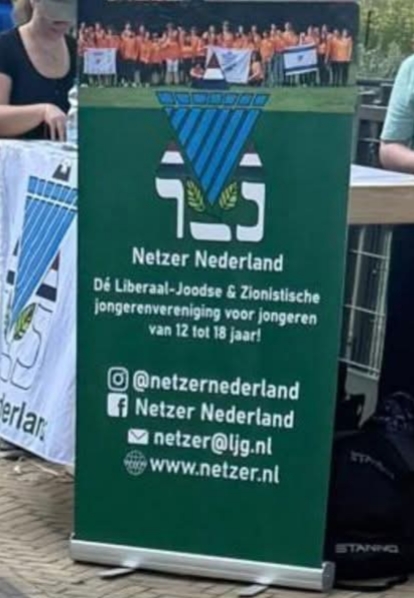
The Poster that "offended" the singer
Douwe Bob Walked Off Stage—And Into Antisemitism
When Dutch singer Douwe Bob refused to perform for hundreds of Jewish children at a non-political cultural event, he didn’t just cancel a show, he sent a chilling message that Jewish identity is conditional, controversial, and expendable.
A Performance That Never Happened
The annual Jom Ha Voetbal (Football Day), held in Amsterdam, has been a celebration of youth, community, and sports for over four decades. Organized entirely by volunteers, it brings together Jewish families from across the Netherlands to play, cheer, and connect. This year, excitement filled the air, especially among the children, because Dutch artist Douwe Bob had been invited as the musical guest. Months of planning had gone into securing his appearance.
But once he took the stage, the celebration collapsed.
Instead of music, Douwe Bob grabbed the microphone and delivered an impromptu statement:
“We saw expressions on posters that made us decide not to go through with it… I love the Jewish community. I’m against Zionism, and that is what is being promoted here. That’s why I can’t play here… Sorry.”
And just like that, he walked off stage—leaving behind stunned volunteers, confused parents, and heartbroken children.
Why This Isn’t Just a “Political Statement”
Douwe Bob may claim this was about “Zionism,” not Judaism. But that’s where the damage deepens. Because what actually happened was a very public rejection of Jewish children, based on a misunderstood political label at an apolitical community event.
Let’s be very clear: these were not IDF soldiers or politicians. These were ten-year-old kids holding soccer balls, not signs.
The posters Douwe Bob referred to were reportedly from a liberal Jewish youth organization, an external stand at the event offering community information, not political advocacy. Still, he chose to walk away from the stage. And in doing so, he walked away from those children.
This Is Antisemitism, Not Activism
1. He punished Jewish children for supposed politics they didn’t choose.
Imagine a singer refusing to perform at a Dutch-Indonesian cultural event because they oppose colonial history. It would be unthinkable. Yet somehow, when it comes to Jews, it’s become acceptable to hold entire communities accountable for things far beyond their control especially when Israel is involved.
The International Holocaust Remembrance Alliance (IHRA), whose working definition of antisemitism is endorsed across the EU and beyond, makes this crystal clear:
“Holding Jews collectively responsible for actions of the state of Israel is antisemitism.”
That’s exactly what happened here.
2. He conflated Jewish identity with a political ideology.
When Douwe Bob said, “I love the Jewish community, but I’m against Zionism,” and used that as a reason to back out of a Jewish event, he revealed a profound ignorance of what Zionism actually is and who gets to define it.
Zionism is the belief that Jews, like all other peoples, have the right to self-determination in their ancestral homeland. It doesn’t mean support for any specific Israeli government or policy. And not all Jews are Zionists but many are, and for most Jews, Zionism is not a dirty word. It’s a connection to survival, memory, and identity.
To exclude Jewish kids because something Zionist-looking was in the vicinity is no different than excluding Muslims because someone wore a hijab. It’s prejudice wrapped in self-righteousness.
3. He chose to divide, not unite.
The core mission of Jom Ha Voetbal is community, coexistence, and sport. Douwe Bob was invited to celebrate that with children, not to exploit the moment for a political outburst.
He had a chance to build bridges, to stand on that stage and bring joy, peace, and maybe even understanding. Instead, he chose to draw a line, painting an entire event and its participants, with a brush of suspicion.
As Chief Rabbi Binyomin Jacobs rightly put it:
“It’s very sad, it’s about little Jewish children who came to play football… These children will never forget this.”
A Pattern of Performative Antisemitism?
Douwe Bob isn’t alone. Increasingly, artists and influencers use their platforms to demonize Jews under the guise of “anti-Zionism.” Last year, rapper Wiley went on a vicious antisemitic rant, calling Jews snakes and cowards. Pink Floyd’s Roger Waters has long faced criticism for imagery many find antisemitic, including performing in pig costumes with Stars of David.
Let’s be clear: criticism of Israel is not antisemitic. Jews criticize Israel, too. But when that criticism results in the exclusion of Jewish people from public life, or the shaming of Jewish children at a community event, the line has been crossed.
What’s being demanded is impossible: that Jewish identity be stripped of anything “Zionist” which, for many, is inseparable from their heritage and history.
The Real Impact: Jewish Kids Got the Message
At a time when antisemitism is on the rise across Europe, when synagogues require armed guards and Jewish schools hide their identities behind fences, this incident sends a clear signal to Jewish youth:
“You’re not welcome here unless you erase part of who you are.”
No child deserves that. No community should have to explain, over and over, that its cultural events are not political protests.
Final Thoughts: Artists Should Build, Not Break
Douwe Bob could have sung. He could have smiled, lifted spirits, and then, if he felt strongly, shared his views thoughtfully, elsewhere. Instead, he made the most fragile targets, Jewish children, the collateral damage of his shallow political stance.
What he did wasn’t courageous. It was cruel. And it wasn’t activism. It was discrimination.
If there’s one thing the Jewish people have learned through centuries of exile and exclusion, it’s this: when someone says “I love the Jewish community, but…”, what comes after is usually not love at all.
Related Topics
Related Posts