
I saw Peter Beinart at Tel Aviv University
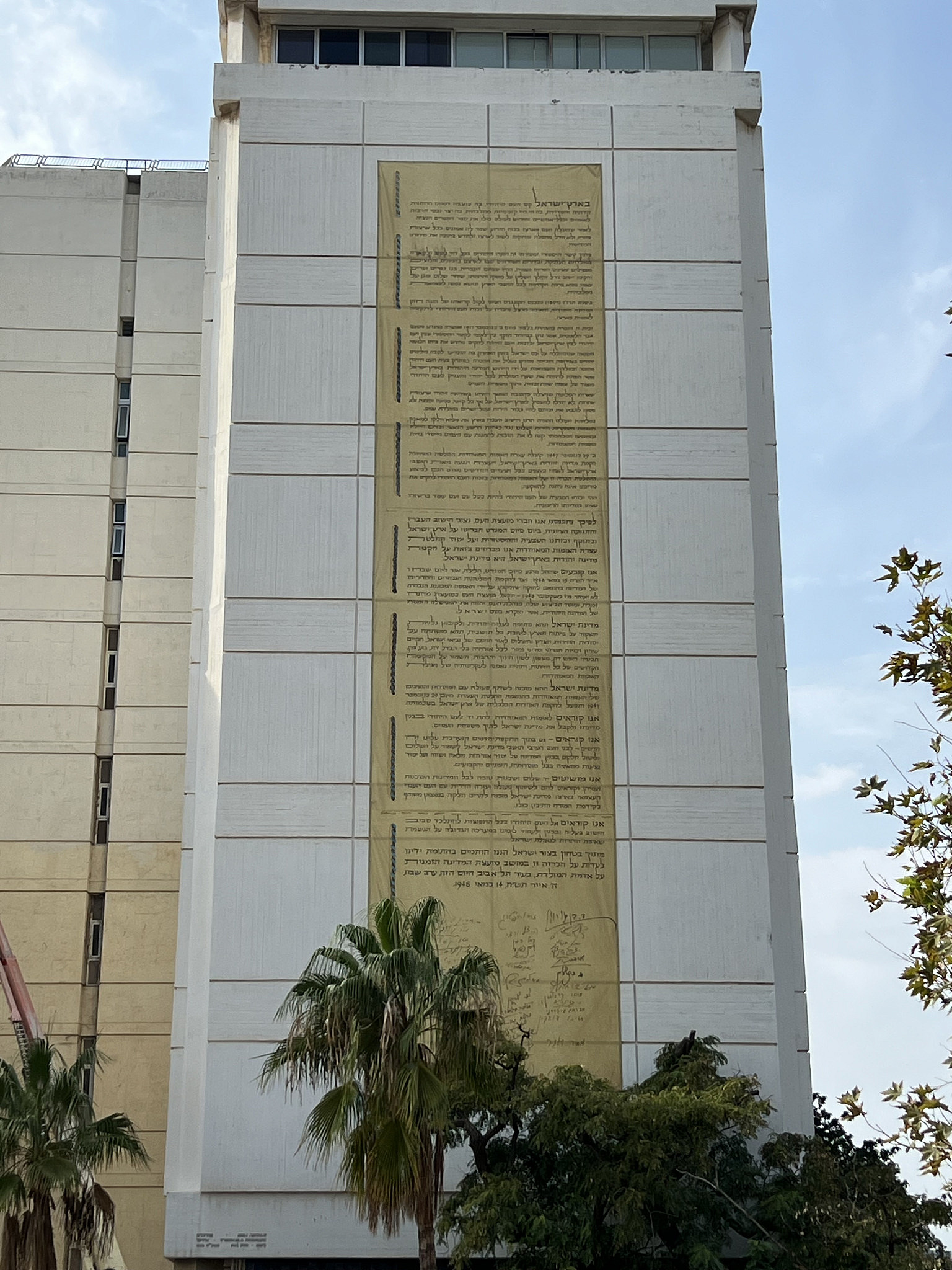
On Tuesday, I attended Peter Beinart’s talk on “Trump, Israel and the Future of American Democracy” at Tel Aviv University. The event was bittersweet for me. Beinart was one of my childhood heroes. When the majority of Israelis and Palestinians still supported two states for two peoples, he championed this aspiration with grace. I followed his writing in the Daily Beast during the height of the Kerry Initiative, and continued to read his Op-Eds in Haaretz until he left the newspaper in 2020. And then he wrote in Jewish Currents “Yavne: A Jewish Case for Equality in Israel-Palestine.” Watching a rather gifted writer throw out any semblance of pragmatism in his politics was heartbreaking.
From a values perspective, it is hard to rebut the arguments he champions within his reimagined political identity. He supports many of his claims with reports written by human rights organizations and grounds his ethics within the ever-elusive goal of equality for all. He also expresses his views within the contemporary discourse of the global left. In his understanding of the Israeli-Palestinian conflict, Israel is a settler-colonial entity, an apartheid state guilty of genocide; for everyone living on the land to achieve civic equality, Israeli Jews cannot be entrusted with national self-determination in a state of their own. It is easy to see his appeal amongst progressive college students.
However, he never offers a prescription for how he plans to convince the most important constituents of his vision: the Israelis and Palestinians actually living here. In this regard, his naivete mirrors George W. Bush’s attitude towards spreading democracy in the Levant. It is difficult to find a poll conducted in the last 30 years where even a plurality of either Israelis or Palestinians claim support for one equal state. And this begs the question as to who exactly he is supporting when he speaks about the Israeli-Palestinian conflict. The State of Israel is not a cause to be for or against in the minds of American Jews. It is an actual country with real human beings. And that is part of what makes his halfhearted embrace of the global boycott movement so frustrating. There are liberals in Israel doing everything within their power to fight for liberal causes, finding outsized support amongst Israeli academics, artists, and filmmakers.
During the Q&A section of his talk, Beinart was careful to say he supports boycotting institutions, not individuals. This is where I found the greatest cognitive dissonance between his proposed tactics and his stated value of political equality. To change the behavior of the Israeli government, he supports cutting off dialogue with large swaths of Israeli society. It strains credulity that a boycotter could meaningfully separate the constituents of an Israeli institution (i.e., Israeli individuals) from the institution itself in a manner compliant with anti-discrimination law.
He was also unsurprisingly inconsistent about where he sees antisemitism stemming from in American society. When discussing which side of the political aisle is most eager to caricature Jews, he pointed almost exclusively to the right, citing academic research on the subject. He acknowledged if one equates anti-Zionism with antisemitism, then the latter appears quite prolific on the left. Yet, he offered no clear definition of antisemitism and spent little time contemplating where the two intersect. As far as protest slogans go, until pressed, he simply stated he does not agree with all the phrases emanating from the campus pro-Palestine movement. He was willing to acknowledge many Jewish students have been made to feel uncomfortable over the past two years, though differentiated their social ostracization from sanctionable discrimination. When asked to comment on the Harvard antisemitism report released in 2024, he noted how none of the authors were scholars of antisemitism. I found this answer quite perplexing since neither was he when he signed the Jerusalem Declaration on Antisemitism in 2021.
Fortunately, I managed to get in my own question before the evening concluded: “As someone who identifies as a Cultural Zionist, how do you feel about protest slogans like, ‘We don’t want no Zionists here,’ and why don’t you condemn them more often?” In response, he claimed he seldom hears this phrase at the protests he has attended and has disavowed this chant on Substack. He also used my question as an opportunity to discuss disparate perceptions on the meaning of “from the river to the sea.” To this, I retorted, “Doesn’t it also matter what people actually living here think the phrase means and what its effect is 6000 miles away on political discourse in this country?” “Yes,” he countered, “for both Israelis and Palestinians.”
After the talk, he walked up to the group of students I was sitting with. He was both affable and disarming. I still have profound misgivings with his milquetoast condemnations of left-wing antisemitism. I am also no less convinced his penchant for analogizing the State of Israel to Apartheid South Africa or the American frontier obscures the unique political complexities of this region and the reasons for the conflict’s intractability. Despite these misgivings, as a Jewish individual studying at an Israeli institution, I was grateful he chose to have a conversation with my classmates and me. Unfortunately, I do not think he feels the same way.
Only a day later, Beinart apologized on X for speaking at Tel Aviv University, stating he did not listen enough to Palestinian voices before making his decision. I wonder if he bothered consulting with any of the 15% of our student body whose native language is Palestinian Arabic.