

I was at Ground Zero on 9/11, but I couldn’t see, which was a good thing
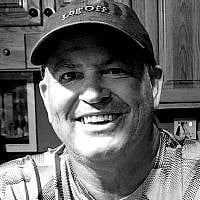
I was Governor E. Pataki’s Chief Speechwriter and, to this day, and many people wonder how, in that capacity, I wound up walking through the rubble of the fallen Towers while the ground was still hot enough to feel through my leather shoes.
On September 11, I was heading down to the Governor’s New York City office in my state car, a 1997 black Crown Victoria with a cassette deck. I was listening to tapes the whole way down, so I didn’t know what was going on at the World Trade Center, but a couple of weird things happened as I got closer to the city.
When I tried to go from the I-95 Extension in New Jersey to the George Washington Bridge, I saw pickup trucks on the grass on both sides of the turnoff and about twenty guys with shotguns blocking the road (they were off-duty cops).
They saw the police placard on the dashboard, and asked for my work ID. They let me through with a heads, “Okay, you’re probably the last person into the city so expect anything.”
Confused and a little worried, I got on the bridge and immediately noticed that I was the only one going into the city, but on the other side of bridge, everyone was leaving.
As I crossed the bridge, I noticed two things. The Twin Towers were on fire and there was a firetruck on the wrong side of the bridge. The only reason I’m still alive and they don’t have a dent on their bumper is because we both picked a lane and stayed there.
The mounted phone in the car rang, and I could also hear my pager and phone going off in my duffle bag.
I couldn’t answer it because when I tried to get on the FDR, there were dump trucks, Humvees and heavily armed soldiers blocking the way. Going any further involved a process, and after about ten minutes, I was on my way.
The Governor’s Office in Albany was calling me, freaking out.
The Governor needed his core staff from Albany. One of them was already there and I was MIA, albeit two blocks away. Me and the other guy were the only ones that got into the city before they locked it down.
The Governor wanted us to ride with him down to Ground Zero, along with about twelve State Police Investigators. I parked on E. 39th and the Investigator driving the main car in the motorcade told me to run to Third Avenue and dive into the Navigator as it drove slowly by (they didn’t bother to stop) the Governor opened a door and said, “Dive right over me,” which I did, headfirst into the door on the other side.
No one even laughed. It was dead silent. Keep in mind, I still didn’t really know what was going on. After a minute or two, I heard enough on the police radio to know that both of the Twin Towers had collapsed.
The Governor yelled up to a Colonel in the passenger seat, “Before we go down there, let’s visit some of the injured firefighters at Cabrini.”
Cabrini Medical Center was on the Lower East side. A group of nurses and doctors greeted us as we walked down a dim hallway. The director of the hospital said, “As you can see, we were prepared for mass casualties. They never came.”
It was a grim statement. But the reality was, you either got out of the buildings, or you died. There were exceptions, but not many.
The proof was on the second floor of the hospital. The director led us to a room with seven patients. The Governor went straight to the closest patient and leaned over the bed of the injured man, who quickly said, “I’m no hero, Governor. I’m just a construction guy who fell off some scaffolding.”
I gave the hospital director a stern look and he carefully pointed the Governor to the right beds.
The Governor leaned over to talk to an injured firefighter and said, “We’re going to stand tall and find these terrorists and rebuild our city.” I had my notepad on the Governor’s back waiting for something to write down. The fireman responded, “You’re damn f-cking right,” Governor. “We’ll get through it because we’re New Yorkers!”
Two hours later, when we were back in the Suburban heading to Ground Zero, the Governor said, “Did you write that down… what that first firefighter said?”
“I need to clean that up a bit.”
The police and National Guard had everything blocked off at Canal Street. Once we drove past that, the visibility went from bad to worse. When it went from worse to dark, we got out and walked.
I knew we reached our destination when the visibility was about 8 feet. There was what seemed like volcanic dust in the air. We kept walking until we reached a big empty area of grey. The empty space was where the Towers once Stood.
As bad as the visibility was, we could see the colored hard hats of iron workers digging through the rubble. The firefighters were hosing hot spots. The NYPD was everywhere and so were the feds. And, yes, they were all trying to talk to the Governor at the same time.
I walked away from the scrum and watched as firefighters were tunneling headfirst into every crevice, in the rubble, hoping to hear a human voice. I was mesmerized as they searched every opening in the pile that they could fit their head into. The giant pieces of steel and cement were going to be removed at some point, and the firefighters wanted to be damn sure it didn’t happen with survivors below.
The been doing this for hours before I got there, but they never found anything. Everyone was looking for a glint of hope in a place where no light and little hope existed.
But then, about fifty yards away, someone yelled, “We found them!” The firefighters were digging furiously into what appeared to be a stairwell, where they found four survivors. I later heard that it was either a firefighter or a police officer who was trapped in a pocket under the stairs. The rescue workers were reenergized and went right back to work digging through the rubble. I couldn’t see it, but I heard that several firefighters were also rescued on the opposite side of the pile, which was about 200 feet away.
In all, firefighters managed to rescue another 20 civilian survivors from what seemed to be an unsurvivable disaster.
At around 3:30 pm, the Governor’s Office called me and said, “I’m sorry, but we’re supposed to tell you that Brian Sweeny [an old friend] was on flight 175.” That was the flight that left Boston at 8:03am and crashed into the South Tower 49 minutes later.
I was already overwhelmed by what was happening all around me, but I couldn’t discount that my friend’s ashes were in there somewhere.
I don’t remember when it started but there was a loud, creaky sound that started piercing the air around 3:00 pm. It sounded like steel beams being twisted in frigid weather.
I later learned that the sound was the opposite of that. There was an interior fire burning within the walls of World Trade Center Seven. The creaking sound was the intense heat weakening the building’s internal steel structure.
A sickly-sounding siren rang out, and the rescue workers dispersed away from the building in a variety of directions. Because of the visibility issue, I just picked a direction and walked away quickly. About three blocks behind me, I heard the 47-story building collapse.
It looked like the building stopped collapsing when it reached the 20th floor. In a picture of me about five blocks away, you can see this strange phenomenon.
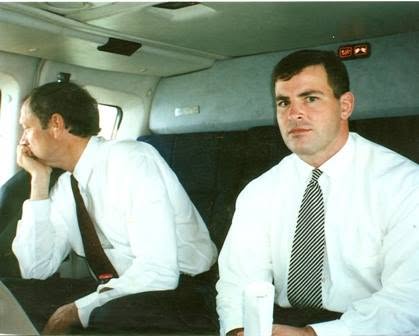
About three days after the attacks, the Governor had to officially request emergency funding from the State Legislature. I wrote half the speech in the city office and the other half on the helicopter. I handed him a hard copy in the chopper. He asked if the Division of Budget checked my numbers. I assured him they did and that it was just a straightforward speech asking for the funding without talking about the attacks.
He handed the speech back to me.
“I trust you,” he said, then put his chin in his hands and stared out the window, sadly and motionless, until we got to Albany.
The Governor lost close friends in the attacks, and he wasn’t in the mood to get swarmed by Legislators and reporters. He addressed the lawmakers in the Assembly Chambers, and three hours later, we were back on the chopper heading to New York City.
Three weeks later, I was still in New York City. The Governor was giving an important speech at Yankee Stadium, which I wrote in advance. As soon as he approved it, I asked him if I could get out of the city for a few days. He approved that, too.
When I got back to Albany, people asked me if there were bodies all over the place and I was disgusted.
“No, there wasn’t and don’t ask me any more questions about 9/11.”
Albany wasn’t far enough away, obviously, so I drove up to our Lake house in the Adirondacks, where I could breathe safely and remember the sweet smell of air. I sat on my dock and thought about all those people in the rubble, something that was difficult to do when I was down there. I quickly learned that it was equally hard to do in the Adirondacks… or 25 years down the road.