IDF’s ‘Small and Smart’ Doctrine Needs Revisiting
Why General Eyal Zamir’s bold shift towards rebuilding armored forces is a vital step for Israel’s resilience, renewal, and long-term military edge
There has been a quiet but growing buzz in Israelis defense circles lately. It is about the future of the IDF under its new Chief of Staff, General Eyal Zamir.
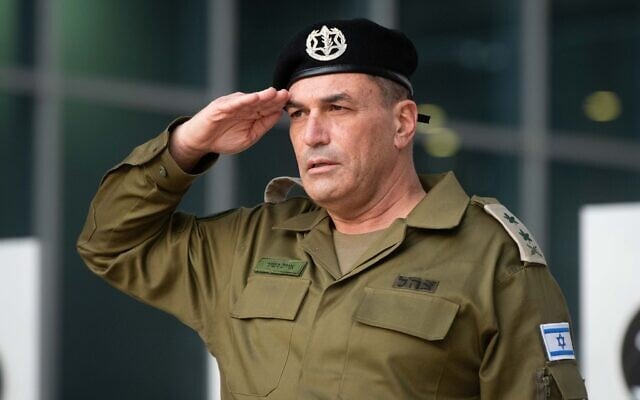
Since taking the reins, General Zamir, who was the first IDF chief in more than 50 years to emerge from the Armored Corps, may have signaled a bold shift. Specifically, he is charting a course away from the long-standing “small and smart” doctrine that prioritized technological superiority and lean forces, towards something bigger, broader and, I would argue, better.
I, for one, welcome this.
Yes, Israel is the Startup Nation. Yes, Israel is tech-savvy and AI-proficient. Yes, Israel deploys drones and sensors and cyber weapons with dazzling precision. But let us be honest, and looking at things from another angle: on October 7, the most sophisticated tech in the world failed to stop a barbaric land invasion.
That haunting day made one thing brutally clear: Israel still needs boots on the ground. It still needs tanks in the field. It still needs mass, critical mass, brains and bandwidth. And Israel needs it now.
The “small and smart” doctrine emerged during Israel’s transition from socialism to capitalism in the 1980s and 1990s. As military spending declined, the IDF gradually downsized, dismantling 28 armored brigades over the course of four decades. The goal was efficiency through technology: smaller, more agile, highly intelligent forces equipped with the latest gadgets.
This made sense for a while. With peace agreements in place with Egypt and Jordan, and the Iraqi threat eliminated after the Gulf Wars, Israel seemed safe enough to downsize.
But wars change. Enemies evolve. And the assumptions that underpinned “small and smart” no longer hold. Perhaps a relic of a bygone era.
Zamir is not your typical IDF chief. He did not come up through Sayeret Matkal or the paratroopers. His roots are in the Armored Corps. He is a self-described “soldier’s soldier,” a strategic planner who listens more than he speaks, and a commander who believes in humility as much as deterrence.
He also understands one thing with crystal clarity: in an age of multi-front wars, when missiles rain down from Lebanon, Gaza, Yemen, and beyond, and when terror groups mobilize thousands of fighters within hours, Israel needs more than software to win.
Israel needs force. Visible, deployable, credible force.
I have noticed a recurring tendency among defense theorists to dismiss tanks as relics of the past. Too heavy, too slow, too exposed in urban warfare. But October 7 flipped that thinking on its head.
What do you do when thousands of jihadists storm civilian communities? You send armor. What do you need when retaking hostile territory quickly and safely? You need tanks. What works when you cannot rely on airpower alone? Ground forces – heavily protected and mobile.
The IDF’s decision to disband nearly 30 armored brigades over the years now looks dangerously short-sighted. The State of Israel lets the pendulum swing too far towards lean, high-tech warfare – and left itself exposed.
Zamir’s intent to rebuild Israel’s armored corps is not nostalgic. It is necessary.
Critics worry that expanding the IDF will make it sluggish. But Zamir knows better. His vision is not just to add numbers; it is to integrate. He wants armored divisions that talk to drones, tanks that share data with satellites, and foot soldiers that operate within an AI-enhanced command structure.
In his thinking, hi-tech and heavy armor are not mutually exclusive. They are mutually reinforcing.
This is not about going backward. It is about going deeper; it is about building an IDF that is resilient in both tech and terrain, agile in cyberspace and on the battlefield.
One of the most alarming lessons from the recent war was Israel’s reliance on imported ammunition. Foreign delays became a form of diplomatic leverage, a vulnerability Israel can no longer afford. Today, we see some European countries bowing to anti-Israel protests at home, delaying or withholding munitions that Israel has already paid for. It is nothing short of diplomatic blackmail.
Zamir, in his prior role as director-general of the Defense Ministry, pushed hard to ramp up local weapons production. He knows Israel has the know-how, but lacking the will and the budget. That same mindset is now informing his leadership as IDF chief.
Self-reliance in production is a smart economics. It is strategic sovereignty. It is resilience in a world where tomorrow’s allies may not answer the phone.
Zamir’s challenges go beyond tanks and tactics. One of the thorniest is conscription – specifically, the haredi draft. Zamir has been unambiguous: Israel cannot afford a military burden that falls on only part of its population. Equal service, he believes, is a national imperative.
It is a tough fight politically. But it is a necessary one. You cannot rebuild the army while letting entire communities opt out. National security must be everyone’s responsibility, especially when the country faces existential threats.
There is something deeply reassuring about seeing an Armored Corps commander rise to the IDF’s highest post. It is not only about the tanks. It is also about the values forged in that crucible: discipline, resilience, and an unyielding grit that holds the line when others falter.
These are not abstract traits. They are the difference between retreat and victory, between hesitation and decisiveness. And Israel needs them now more than ever.
Zamir’s grounding in the Armored Corps will help him tackle both external enemies and internal challenges: a stretched reserve system, morale concerns, and the need for a renewed national ethos after October 7.
Some fear that growing the IDF means returning to blunt force. But Zamir is no warmonger. He is a strategist who once wrote in the IDF’s Maarachot journal that morality is a “force multiplier.” He believes in proportionality, in protecting civilians, in preserving Israel’s moral high ground. In fact, just the other day, Zamir threw his weight behind the proposed hostage deal, reportedly shouting down its opponents during a high-stakes meeting attended by the prime minister.
That does not make him weak. It makes him wise.
His leadership pairs humility with audacity. His doctrine blends steel with strategy. And in him, I see the very essence of what it means to protect Israel: not only through power, but also through purpose.
The era of “small and smart” may have been right for its time. But that time has passed.
We now live in an age of drone swarms, tunnel wars, proxy armies, and regional coalitions stacked against Israel. If Israel is to not only survive but lead, it needs to think bigger, act bolder, and build broader.
I do not know what history will ultimately say about General Eyal Zamir. But I know this: if he succeeds in rebuilding the IDF into a force that is as strong in armor as it is in algorithms, as united in purpose as it is diverse in talent, then the nation will owe him a debt.
Because resilience is not built in a lab. It is forged on the battlefield, and in the moral clarity of knowing what you stand for, and who you are willing to fight for.