
99.6% Ashkenazi + .4% Viking = 100% Zionist
If Biden Dropped the Bombs
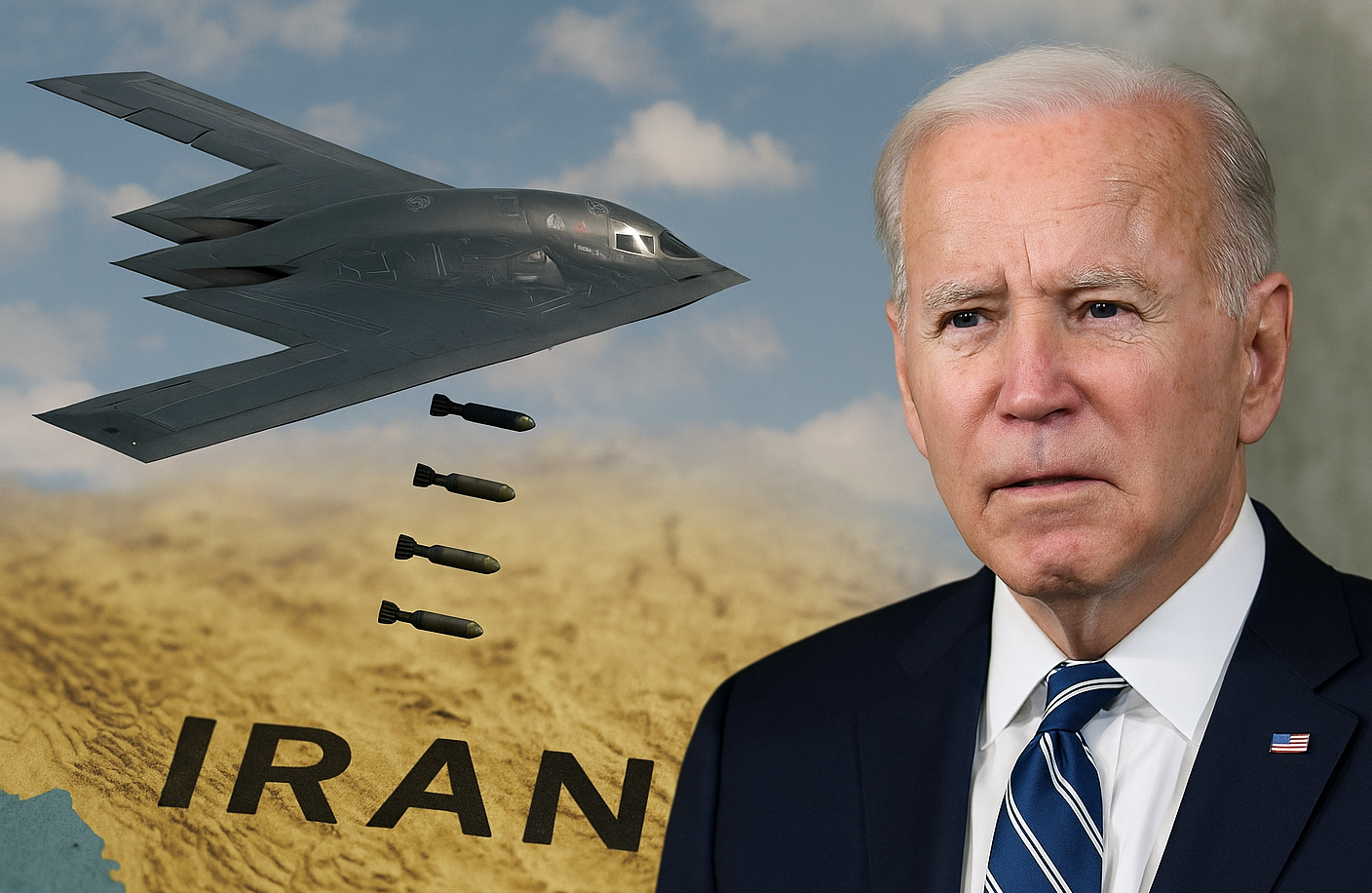
If Biden Dropped the Bombs
Personality, Politics, and Policy
What if President Biden had ordered the airstrikes?
What if it were his voice behind the command to take out Iranian military assets—the ones used to attack Americans and our allies? Would the streets still be filled with protests? Would “no war” banners fly? Or would the media frame it as a reluctant but necessary action—an example of strength under pressure?
If the answer to that question changes based on the name behind the order, we don’t have a foreign policy problem—we have a credibility crisis.
The truth is, many of the policies and actions that draw outrage when carried out by Donald Trump have long-standing precedents under Democratic leadership. But when Trump does it, the response is different—not because of the policies themselves, but because of who enacts them.
Let’s start at the border.
When They Said It, It Was Policy
In 1995, Bill Clinton told Congress that “all Americans… are rightly disturbed by the large numbers of illegal aliens entering our country.” He received a standing ovation.
In 2006, then-Senator Hillary Clinton boasted, “I voted numerous times… to spend money to build a barrier to try to prevent illegal immigrants from coming in.”
President Obama deported more people than any president before him. He called for a secure border and lawful immigration.
Joe Biden has voiced nearly the same principles—both as a senator and as president—emphasizing the need for “orderly and legal” immigration. Trump says much of the same: secure the border, enforce the law, put American workers first. And yet, somehow, when he says it, the label shifts—from pragmatic to xenophobic.
So what changed?
Not the policies. Just the nameplate on the desk.
When They Bomb, It’s Strategy
Military action is another example. Trump’s critics often paint him as reckless, a “loose cannon.” But precision airstrikes are nothing new.
In 1998, Bill Clinton ordered missile strikes against suspected terrorist facilities in Sudan and Afghanistan. The legality was barely questioned.
Under Barack Obama, drone warfare expanded dramatically. Targets included suspected terrorists in Yemen, Syria, Iraq, Somalia, and Pakistan. The number of civilian casualties was deeply controversial—but the protests were muted.
Legally, all these actions—like the recent strikes on Iranian nuclear and military facilities—fall under the category of limited military engagements. These do not require Congressional approval unless sustained conflict is expected. The War Powers Resolution of 1973 allows presidents to initiate short-term military action to protect national interests, especially when responding to imminent threats. Yet for some reason, when a Republican president uses the same authority, it’s suddenly treated like a constitutional crisis.
Are those shouting from the rooftops that his actions are unconstitutional driven by partisan bias, rhetorical posturing, or simple ignorance? If they were my political representatives, I’d be disappointed in any case.
President Biden himself has authorized strikes against Iranian proxies in Syria multiple times. These actions were described by many in the press as “measured” and “strategic.”
When Trump took out Qassem Soleimani—a man responsible for orchestrating the deaths of hundreds of U.S. service members—he was accused of risking World War III.
When Democrats bomb, it’s geopolitics. When Trump bombs, it’s Armageddon.
The Iran America Knows
Let’s talk about Iran.
This is not just Israel’s enemy. It is America’s.
Iran’s fingerprints are all over the bloodshed. During the Iraq War, their IEDs were responsible for the deaths of more than a thousand American troops.
Their proxies have launched attacks on U.S. military installations in Iraq and Syria time and again.
Go back even further, and you find Hezbollah—an Iranian surrogate—behind the 1983 Beirut bombing that killed 241 American Marines. And just in the past few years, U.S. intelligence has thwarted Iranian plots to assassinate former American officials—on U.S. soil.
Their state media and government leaders chant “Death to America” as a matter of routine.
In recent months, American troops have been killed and injured in attacks traced directly to Iranian-controlled groups.
Yet somehow, when Iran gets hit back, we’re told to pause—to de-escalate—to examine root causes.
The root cause is simple: Iran’s regime is the world’s largest state sponsor of terrorism, and they are waging a slow, shadow war against the United States. Responding to that isn’t an act of aggression. It’s an act of defense.
Israel Didn’t Act Alone
When Iran launched its massive retaliatory strike on Israel, it wasn’t just targeting Jews. It was targeting the West.
Those drones and missiles weren’t just headed for Tel Aviv—they were aimed at joint airbases, radar systems, and American-aligned targets. That’s why the U.S. didn’t just watch—we stepped in and helped shoot them down.
That’s why British and French forces joined in. Because the threat wasn’t regional—it was global.
The counterstrikes that followed—by Israel, the U.S., or both—were aimed squarely at Iran’s military infrastructure: nuclear development sites, weapons depots, command-and-control centers. These weren’t acts of escalation. They were acts of prevention—designed to cripple Iran’s ability to launch future attacks, not to provoke more.
If Biden had authorized those exact same strikes, many of today’s critics would be praising his strength. But since it’s Trump—or even Netanyahu—they call it provocation.
That’s not policy analysis. That’s partisan reflex.
A Mirror, Not a Megaphone
This moment is a mirror, not a megaphone. If you’re waving a protest sign today but stayed silent under Obama or Clinton for similar actions, what you’re holding isn’t a protest—it’s a partisan banner.
It’s fair to debate America’s foreign policy. It’s right to scrutinize military action. But that scrutiny must be consistent. If we only object when the other side acts, that’s not civic engagement—it’s tribalism in costume.
So take a moment. If Biden had dropped the bombs, would you be out there protesting? Or would you be applauding his resolve?
Related Topics
Related Posts