Middle East Analyst
If the US Can Normalize Sharaa in Syria, Is Barghouti Next?
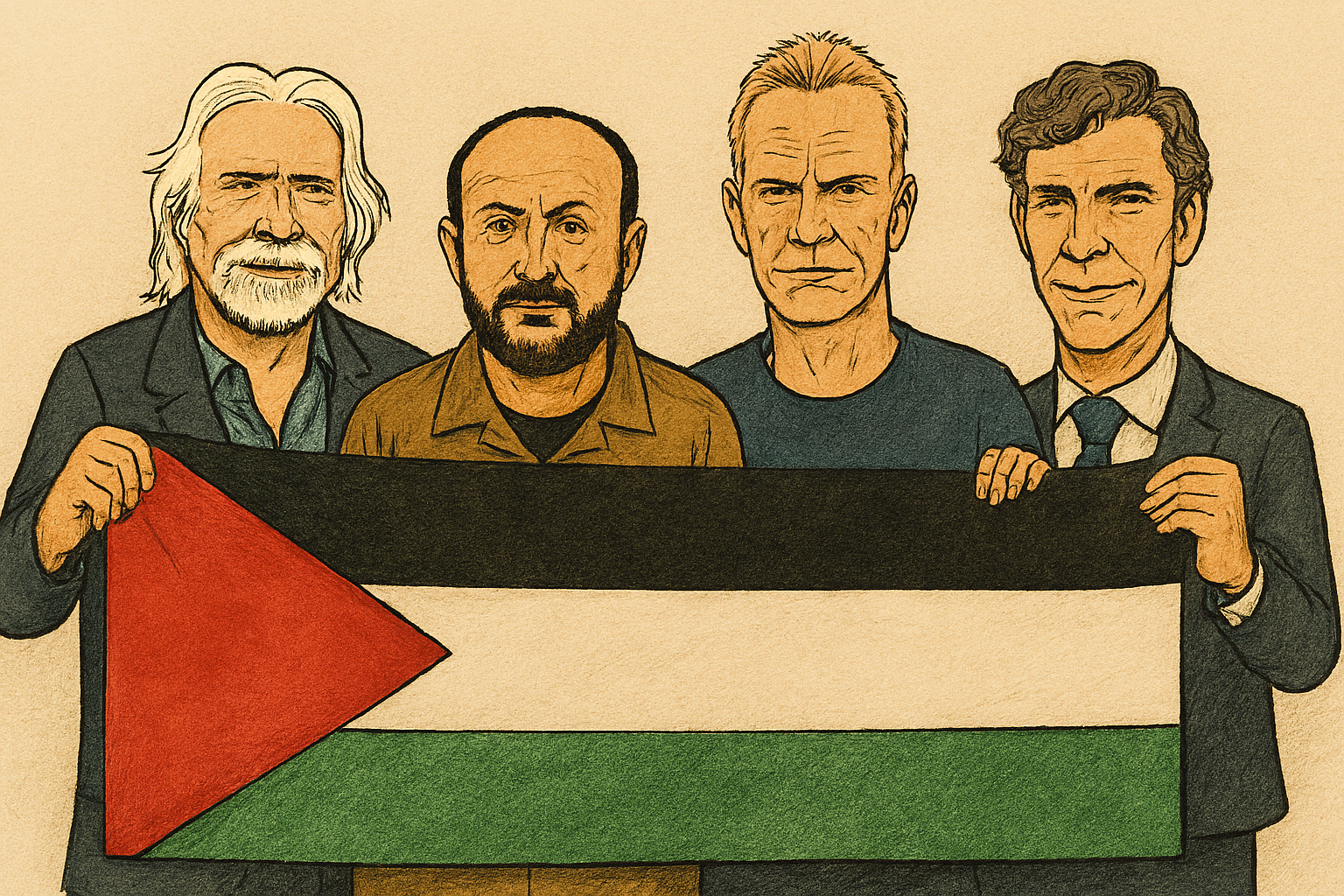
Graphic by author and Copilot AI
The global letter released this week—signed by Sting, Richard Branson, Benedict Cumberbatch, and more than 200 cultural figures—should not be dismissed as celebrity theatrics. It signals a shift. As the Trump peace architecture enters its decisive phase, Marwan Barghouti is being reframed from a convicted terrorist into a Mandela‑like symbol. That change in narrative matters. Israel must make its position unmistakable: if Barghouti is to be released, it must be inseparably linked to the verified, irreversible disarmament of Hamas.
Barghouti has been imprisoned since 2002, serving five life sentences for orchestrating deadly attacks during the Second Intifada. For many Israelis, the idea of releasing him is a moral abomination. That pain is real and must be honored. But statecraft is not a courtroom. It is a security calculation. The question is not whether Barghouti has “reformed”—he likely has not. The question is whether Israel can construct an architecture in which his only viable path to power requires him to deliver what Mahmoud Abbas could not: the end of armed struggle.
Polling from the Palestinian Center for Policy and Survey Research (October 2025) shows Barghouti leading a three‑way presidential race with 49%, ahead of Hamas’s Khalid Mishal at 36% and Abbas at 13%. In a direct matchup, he defeats Mishal 58% to 42%. His appeal rests on perceived authenticity, resistance pedigree, and political maturity. That legitimacy is precisely what makes him risky—and what makes him potentially useful.
The international campaign now casts him in the mold of Mandela. But the real danger is not what celebrities think. The danger is that Washington may adopt the “Strongman as Stabilizer” narrative. The Trump Administration has already shown its willingness to convert enemies into partners when it serves regional stability. Look north: Ahmed al‑Sharaa, Syria’s interim president and former commander of Hay’at Tahrir al‑Sham, was once designated a terrorist for ties to al‑Qaeda. Today, Washington has proven its willingness to sanitize him into a partner. The Trump White House is pragmatic, not sentimental. If they can work with the former head of HTS to stabilize Syria, they will not hesitate to work with the former head of the Tanzim to stabilize Gaza.
If the White House views Barghouti as the Palestinian CEO needed to consolidate Gaza and the West Bank, pressure for his release will intensify. Israel cannot afford to react after the fact. It must shape the terms before others do.
The central question arises immediately: how does Barghouti’s release translate into Hamas disarmament? The answer is political cover. Hamas fighters will not disarm if it appears to be capitulation to Israel. But Barghouti is the only Fatah figure with enough street credibility to offer them a dignified exit. He is the ladder they can climb down. His release, if—and only if—Hamas begins verifiable disarmament, gives him the leverage to make demilitarization politically survivable.
The sequencing matters. First, an internationally monitored, irreversible disarmament process for Hamas must begin. Only then would Barghouti publicly endorse the Trump 20‑Point Plan—Washington’s emerging blueprint for a postwar Palestinian political order. And only after these steps could a phased reintegration be considered, secured by regional guarantees and anchored to Israeli security requirements. This is not a reward for past violence. It is a strategic tool to break the cycle of armed politics.
The risks are real. Barghouti’s release could stabilize a fractured arena—or ignite familiar conflicts under new slogans. But the core issue is not trust. It is leverage. The question is not whether Marwan Barghouti has “reformed.” The question is whether Israel can build a cage of incentives strong enough that his only path to power requires him to deliver the one thing Abbas could not: the end of armed struggle.
Related Topics
Related Posts